
Biopharma Industry Trends: Drug Innovation and Patent Risk in 2026

In 2028, the biopharmaceutical industry will face one of the heaviest patent loss years since the patent cliff of 2012-14. Upcoming hits include blockbuster drugs from Pfizer PFE, Bristol BMY, and Merck MRK.
However, we believe that growth from newer products and new drug launches will more than counter declines.
Obesity drugs drive sales growth from the pipeline, including potential launches of next-generation products from Eli Lilly LLY and Novo Nordisk NVO. In oncology, innovation includes modified antibodies, cell therapy, and gene-based therapies. Advancements in immunology and cardiology are also driving significant industry growth from the pipeline through 2030 and beyond.
Morningstar analysts cover over 40 companies in the biopharmaceutical industry with a wide range of market capitalizations. Here, we break down biopharma industry trends and opportunities for advisors selecting stocks and making investment decisions.
For our complete look, download the biopharmaceutical industry report.
Biopharmaceutical Industry Overview
Biopharma companies research, develop, manufacture, and commercialize novel drug treatments.
The drug development process is lengthy. After initial research defines a target and potential drug and preclinical studies confirm safety in animals, the clinical development process begins, taking 10.5 years on average. The exact path varies by drug and geography, but most drugs progress in three phases:
- Phase 1 focuses on finding a safe dose.
- Phase 2 generates concrete efficacy data and sees the lowest probability of success.
- Phase 3 includes large trials required for regulatory approval.
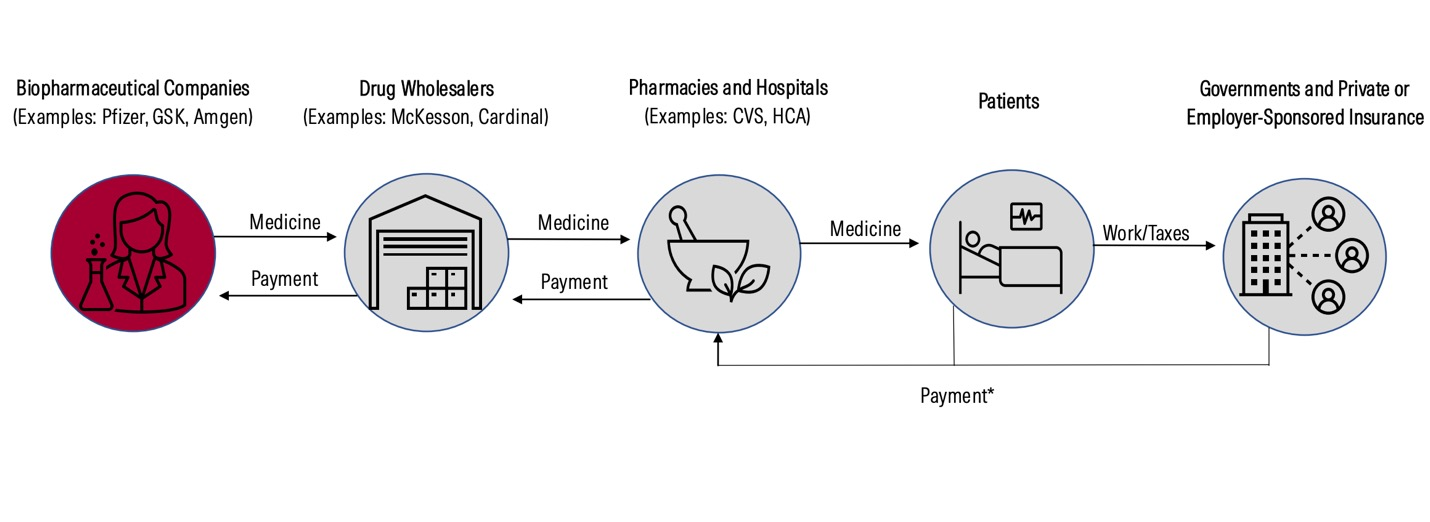
Types of Biopharmaceutical Therapies
Most drugs are either small molecules or biologics.
Small molecule manufacturing uses chemical synthesis to make the active pharmaceutical ingredient and process a final pill. Small-molecule drugs are typically easy to manufacture and don’t require a prescription for an exact drug, which means generics can quickly drop in price and gain share.
Biologics are larger enzymes or proteins created in living cells. Biosimilars are often expensive to manufacture and develop and aren’t all interchangeable with their branded counterparts. They tend to gain share more slowly than generics.
Biologic therapies include:
- Monoclonal antibodies, the most common type. They are similar to antibodies that humans naturally make to fight illness, but designed in a laboratory to attach to a specific target in the body.
- Bispecific antibodies, which bind to two targets instead of one.
- Antibody drug conjugates, composed of a monoclonal antibody attached to a potent chemotherapy “payload” and designed to release their payloads upon internalization by tumor cells.
Gene-based therapies include:
- Messenger RNA, or mRNA, can code for a specific protein meant to trigger an immune response or potentially a therapeutic protein that is missing in a patient.
- Antisense and RNAi are used as treatments in diseases where the body does not manufacture the right amount of a specific protein.
- Gene editing and gene therapy evolution focus on the underlying DNA sequence for more permanent results.
Growth Drivers in the Biopharma Industry
We forecast 4.3% sales growth through 2030 for biggest biopharmaceutical firms as newer treatments offset a steeper patent cliff.
The top 16 biopharma companies under our coverage reported more than $750 billion in global branded drug sales in 2025, reflecting roughly 9% growth from 2024, or 6.5% growth excluding GLP-1-driven sales at Eli Lilly and Novo Nordisk.
Over the next five years, we expect erosion in sales from expired or expiring patents to result in a $139 billion headwind—larger than in prior periods. However, that will be countered by growth of other approved drugs as they broaden labels and increase share. Growth will be further increased by pipeline contributions.
Artificial intelligence may fast-track the drug development process
The use of AI could drastically reduce the time it takes to bring new a pharmaceutical to market, bringing advancements and efficiency to clinical trials.
AI could improve drug discovery, clinical trial design, and regulatory processes, shortening the overall timeline from 14 years to six to nine years. Emerging AI applications include:
- Improved and innovative compound screening
- Large molecule optimization and drug-vector design
- Improved clinical trial design
- Selection of volunteers and patients to match trial requirements from database
- Production of pharmacological submissions; faster FDA dossier submission
In-line cardiometabolic drugs drive strongest growth
Sales in diabetes and obesity drugs drove a more than $75 billion GLP-1 market in 2025. We think market growth could slow with Wegovy's patent expiration in 2032, but we still see sales approaching $200 billion by 2035, with new competitors differentiating on convenience, tolerability, ease of manufacturing, and price.
We expect $42 billion in growth from Eli Lilly’s tirzepatide Zepbound/Mounjaro alone. Pipelines are advancing at incumbents Eli Lilly (Foundayo, eloralintide, retatrutide) and Novo Nordisk (cagrisema, Wegovy pill, zenagamtide) as well as drug candidates from Amgen AMGN (maritide) and Roche RHHBY (CT-388).
Today Eli Lilly and Novo Nordisk dominate the obesity drug market.
Oncology and immunology pipelines are steady drivers
Based on pipeline, oncology and immunology remain significant growth drivers, mirroring the growth we forecast for in-line drugs.
Among our largest biopharmaceutical firms, we think branded global oncology drug sales could peak around $260 billion in 2029. We expect 28% of oncology drug sales to stem from newer modalities by 2030, in contrast to the 14% of sales they represented in 2025.
Strong players in the oncology market include:
We think the roughly $100 billion immunology market for the top 16 biopharma companies is poised to start slowly shrinking by 2030, as biosimilars reduce sales of the most-established drugs.
In some therapeutic areas, sales of new products will more than counter headwinds from patent expirations. Skyrizi’s growth in psoriasis and inflammatory bowel diseases and Dupixent’s continued market penetration in atopic dermatitis, asthma, and new markets make them leading growth drivers.
Mergers and acquisitions likely to play a major role in composition of industry growth
Mergers and acquisitions have significantly affected the growth trajectories of companies historically, and we expect deal activity to continue over the next decade.
Acquisitions are a significant investment method for large-cap biopharma companies to expand their pipelines, reduce costs, diversify, or snag cheap opportunities. Cash levels remain high to enable significant future M&A activity. Moreover, acquisition targets are often willing to sell, especially smaller ones that lack the deep pockets and experience needed to commercialize products.
We think that recent valuations and strategic decisions have been reasonable, with bolt-on or tuck-in deals dominating the ledger. There have not been any megadeals since Pfizer's acquisition of Seagen in 2023, which, in our view, have destroyed shareholder value in the past.
What Are the Biggest Challenges Facing Biopharmaceutical Companies?
Pressure From Expiring Patents on Blockbuster Drugs
The outlook for patent losses is moderate except for 2028, which will bring one of the heaviest patent loss years since the patent cliff of 2012-14.
Johnson & Johnson is growing through the biggest recent industry patent cliff (immunology drug Stelara, 2025), and upcoming hits include cardiology drug Eliquis (Pfizer/Bristol, 2028) and oncology drugs Keytruda (Merck) and Opdivo (Bristol) in 2028-29.
Our forecast for sales declines from patent losses could fluctuate if weaker patents hold up in court. The rate of sales decline can also vary by geography and type of molecule.
We think Pfizer and Bristol’s cardiometabolic drug Eliquis represents the biggest expected decline with generic pressure, contributing to a more than $13 billion decline in annual sales through 2030.
Merck’s Keytruda ($8 billion decline) and cardiometabolic drugs AstraZeneca’s Farxiga and Novartis NVS’ Entresto ($6 billion decline) each also stand out. Since different countries tend to have different patent dates and exclusivity periods, the total amount of sales will not likely fall dramatically once the key US patent expires. Also, the exact trajectory for the sales decline will vary, since some molecules are biologics, which typically see slower sales declines following biosimilar entry.
While we generally target the expiration date that corresponds to the composition-of-matter patent, other patents can hold off generic competition. Patent restoration and other regulatory actions can extend exclusivity periods, as well.
Policy Risks Weigh on Historical Biopharma Valuations, but Relief Rally in Late 2025
Innovation cycles and major patent cliffs affect biopharma valuations. However, price/fair value estimate ratios relative to the broader global market have been driven by economic cycles, policy reform risks, and unique swings in investor appetite for risk during the pandemic.
Biopharmaceutical shares traded at a discount with US policy and tariff uncertainties in early 2025, but individual government agreements in late 2025 provided some relief for large-cap firms.
The Federal Trade Commission has pushed back on major mergers from time to time, such as the 2023 Amgen/Horizon deal, suggesting some ongoing regulatory concerns around industry concentration risks.
However, under President Donald Trump’s administration, we think the regulatory environment is generally receptive to biopharma acquisitions.
Competitive Advantages in the Biopharma Industry
The top five biopharmaceutical companies represented 23% of total industry sales in 2025, led by Johnson & Johnson. Economic moats are tied to intangible assets and tend to be wide for larger firms, as companies use research and development expertise and patent protection to guard economic profits.
Smaller biotech companies under our coverage have more difficulty building moats, with some significant competitive advantages tied to small but growing drug portfolios.
The certainty of generating excess returns tends to be higher for companies with lower product concentration risk. Patent losses, branded competition, and unexpected side effects can quickly erode returns for a drug, but diversified firms can more easily absorb individual drug headwinds while retaining excess returns. On the continuum of product concentration for large biopharma, lower concentration is typically associated with wider moats.
That said, individual drug dynamics are the most important determinants for moat ratings.
These companies have earned wide moat ratings from our analysts:
Go Deeper With Morningstar Equity Data
Morningstar equity data helps you surface insights faster with metrics and analytics for classifying stocks. It's all built on a singular methodology for a comprehensively mapped system of securities, collectives, and analytics.
Our exclusive analytics and data include:
- Morningstar's Analyst Ratings
- Quantitative Ratings
- Sector and industry classifications
- Multi-theme exposure scores for stocks