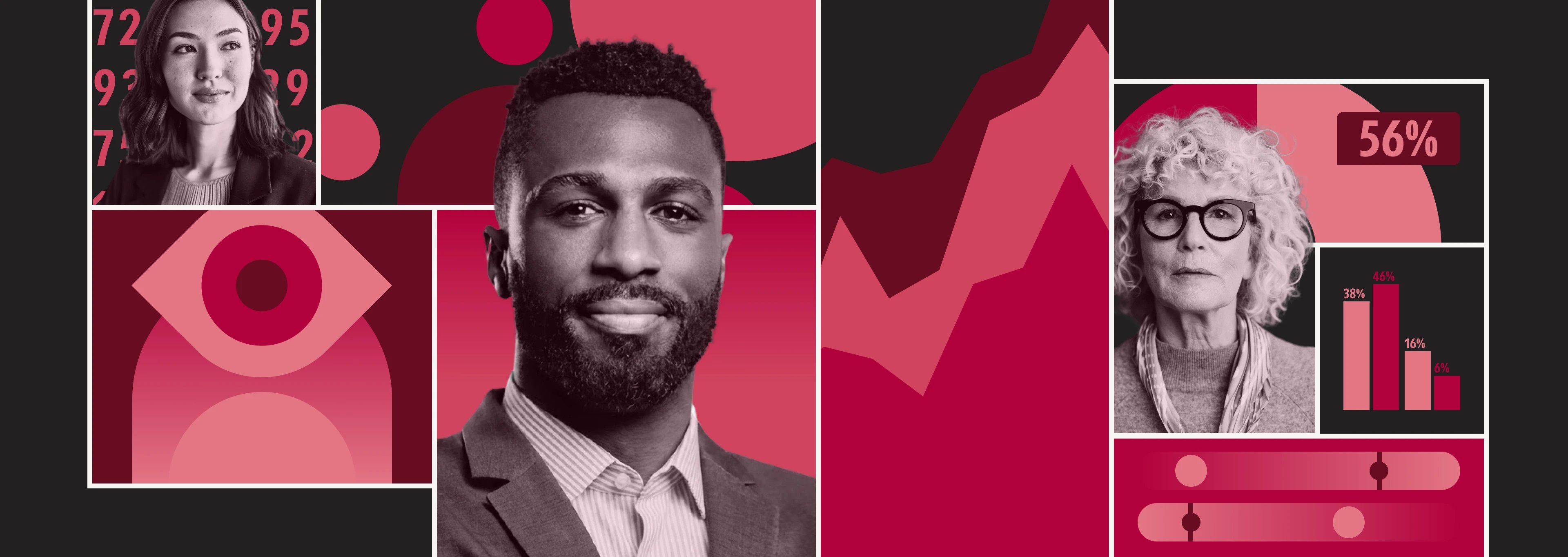
56%
Percentage of US advisors that indicate administrative/operational work as the top barrier to more client engagement.

12 min read
As client expectations and investment opportunities evolve, US financial advisors are expected to adapt to a reality shaped by artificial intelligence and more engaged clients.
And they’re aware of these shifts: Nearly half (47%) of advisor respondents agree that AI will have a significant impact on the financial advisory industry and that competition among advisors is extremely fierce.
Still, this development has not translated into broader market negativity. Only 28% of advisors reported feeling uncertain or nervous about the current market—that is, they think there’s too much volatility to make any decisions or it seems risky right now.
Yet advisors aren’t fully confident, either.
While 73% reported feeling optimistic and steady, this is a drop from 77% in 2025. This trend suggests that advisors are navigating a more complex environment even if they remain largely positive about its direction.
Top market concerns for advisors include the following, which are all directionally or significantly higher compared to what advisors reported in 2025:
Our Morningstar Investor Perspectives: Financial Advisors survey reveals that providing financial advice alone isn’t enough. Advisor priorities are reflecting this change: While 53% of their time is currently spent on client-focused activities, they would ideally spend nearly two-thirds (63%) of their time on these efforts.
This focus on client engagement is even more crucial as investors become more interested in understanding advisor fees and the value they receive in return. Plus, emerging trends such as AI and private markets are creating opportunities and challenges for advisors.
Together, these trends suggest that advisors may need to balance technology innovation with human elements like transparency and emotional support in order to truly meet client needs. By strengthening relationships and offering clarity, advisors can differentiate themselves while helping clients reach their long-term goals.
The Morningstar Investor Perspectives: Financial Advisors survey provides unique insights on the wide-ranging attitudes, behaviors, and preferences of advisors.
Our findings were based on a total of 501 online responses collected across the US between July 21 and August 16, 2026.
The large and diverse sample allowed us to gather information from different subgroups and deepen our analysis and insights.
Changing client needs are shaping advisor priorities. The time that advisors spend on client-focused activities, such as customizing an investment strategy to a client’s goals, has gradually increased between 2024 and 2026 (51% to 53%).
Even so, nearly two-thirds (62%) of advisors still want to focus more time on these efforts, suggesting that advisors view direct client engagement as one of the clearest ways to deliver value.
One major obstacle to doing so may be administrative work. More than half (56%) of advisors cited administrative/operational work as the top barrier that stands in the way of providing clients with the desired level of advice and service, followed by a general lack of time (37%).
Consistent with this challenge, when asked on an open-ended basis, 26% of advisors said they would most like to remove administrative paperwork burdens from their workload to create additional time for clients.
Moreover, 36% of advisors cited client behavior/emotional decision-making as another key factor that impacted their ability to deliver advice. Specifically, this includes emotional reactions to market news (61%), short-term market volatility concerns (40%), and conflicting information from media or social media (33%).
By leaning into behavioral coaching, such as providing a second opinion or acting as a financial teacher, advisors can help clients manage their emotions and stay focused on their goals.
Percentage of US advisors that indicate administrative/operational work as the top barrier to more client engagement.
Additionally, today’s clients are more informed than ever. During our 2026 Morningstar Investment Conference, participants in advisor focus groups noted that client sophistication is rising as clients gain online access to accounts and come to meetings better prepared, sometimes with notes and questions generated via AI.
Yet more information doesn’t directly translate into more confidence. Instead, information overload can make it difficult for investors to separate signal from noise.
Advisors have an opportunity to provide clarity by grounding discussions in investing fundamentals, offering context, and providing ongoing communication.
When asked where they add the most value, advisors continue to highlight:
In other words, advisors continue to recognize that their value goes beyond investment outcomes.
The percentage of advisors who indicated they add value by offering emotional support and guidance during financial or personal hardships has nearly doubled since 2024, rising from 14% to 27% in 2026.
Clients appear to see this impact as well, reflecting an increase in those reporting that their advisor helps them feel more secure about their financial future (34% in 2024, 36% in 2025, and 38% in 2026).
Key actions for advisors:
Reduce administrative burdens where possible to create more time for client-focused activities.
Understanding how advisors are compensated remains an important part of the client relationship, especially as investors become more engaged in evaluating the type and level of service they receive.
Still, fee discussions appear to be becoming less frequent. Fifty-four percent of advisors reported discussing fees with their clients one or two times per year, a decrease from 61% in 2024.
Conversely, the number of advisors who had these discussions less often increased from 26% in 2024 to 32% in 2025 and now 38% in 2026.
Part of the reason for the low frequency of this conversation may be that clients are not proactively raising the topic.
Advisors note that, on average, nearly two-thirds (63%) of their clients rarely or almost never ask about fees. When they do, they tend to raise questions that are focused on the total all-in cost they’re paying (32%), how fees are determined or calculated (24%), and what services are included in the fees (16%).
But low client inquiry doesn’t necessarily equate to lower awareness.
More than half of investors (58%) reported having a high understanding of their advisor’s fees. The frequency of clients reviewing advisor fees on a monthly or quarterly basis also increased from 30% in 2024 to 40% in 2026.
This trend reflects a broader shift in investor expectations, implying that investors want to understand what they’re paying for and how those services contribute to their financial outcomes.
If transparency is what clients seek, advisors must provide clarity on fees in order to build trust and create smoother, more informed conversations.
Put simply, fee conversations may not only be about cost—they may also be a way for advisors to demonstrate value through expertise and guidance.
Percentage of US advisors discuss fees with their clients one or two times per year.
Advisor value has also remained high between 2024 and 2026 for investors with $100K+ in investable assets.
While around half of this population (46% in 2024 and 57% in 2026) reported knowing the amount they pay in fees, many more indicated they consider whatever they pay to be valuable (85% in 2024 and 80% in 2026).
The most effective ways for advisors to justify their fees center on the relationship itself, specifically including:
Plus, clear communication plays a major role in building client trust. Nearly half of advisors (43%) cited fee transparency and explanations (as in, clear fee disclosures and conversations about fees) as the top impact on client relationships and behavior.
At the same time, not adequately explaining fees is one of the most common unintended advisor mistakes. By preparing to answer questions around fee structures and recommendations, advisors can provide clarity that builds trust and leads to smoother, more informed conversations.
Key actions for advisors:
Proactively communicate fee structures and services, even when clients don’t ask.
AI is quickly becoming a standard part of how advisors work. In fact, the percentage of advisors claiming they use AI increased from 67% of advisors in 2025 80% in 2026.
Meanwhile, reported AI usage increased across every measured practice area from 2025 to 2026.
The top areas where advisors are using AI include:
Advisors are not only increasing their adoption of the tool, but they’re also increasingly noted that it has significantly or moderately improved their efficiency, up from 36% in 2025 to 48% in 2026.
While the largest percentage of advisors still feel neutral about whether AI is a help or threat to their practice (46% in 2025 and 39% in 2026), more continue to see it as a help (33% in 2025, 42% in 2026) than a threat (21% in 2025, 19% in 2026).
For advisors who view it as a threat, their top reasons center on client behavior like preferences for human versus automated service and relationships (36%), workforce and professional impact including task automation (29%), and market dynamics and commercial impact such as pricing pressure (22%).
Concerns are understandable: Investors may be less willing to pay an advisor using AI the same rate as one not using it.
Advisors can address this challenge by highlighting the ways AI helps free up time for client services and explaining their procedures in place to review AI output and ensure quality.
These tools also offer clients the ability to conduct their own research and ask more detailed questions. But AI can generate noise. This means it’s crucial for advisors to understand how clients are using the tool and help them make sense of the information they receive while maintaining alignment with their long-term goals.
More than half (57%) of advisors reported the most positive impact of AI was improving efficiency in client communications, by facilitating tasks such as summarizing notes and generating follow-ups.
This suggests that advisors see the functional benefits of AI and are also prioritizing its use in areas that can strengthen client engagement.
Looking ahead, advisors noted that AI and advisory work, such as more efficient advisor decision-making and AI in client advisory services, will have the most significant impact on the financial advisory industry over the next three years.
Percentage of US advisors who use AI for internal productivity.
As adoption continues to grow, the question for advisors may shift from whether to use the tool to how to apply it in efficient ways. Morningstar’s latest framework helps advisors examine where AI can fit into their workflow and how its value stacks up against its costs.
Key actions for advisors:
Private markets continue to grow in both size and influence. As of August 2026, 1,754 private companies worldwide qualified as “unicorns,” meaning their valuations exceeded $1 billion.
This trend reflects the expanding presence of private investments in portfolios and creates a need for advisor guidance on where these investments may fit within a client’s broader financial plan.
But challenges with these investments persist, and in some cases have become more pronounced since last year.
The top barriers for advisors to conducting private market due diligence include:
These findings suggest that success isn’t only about understanding private markets—advisors must know how to evaluate and communicate opportunities.
Yet factors like liquidity constraints, unclear product selection, and inconsistent valuation can add complexity when assessing private markets.
That’s not all: Only about one-quarter (24%) of investors say they understand how private market investments work. In other words, education may be just as important as investment selection when discussing private markets with clients.
This lack of confidence around private markets extends to advisors. Sixty-one percent of advisors reported feeling somewhat comfortable or extremely comfortable explaining the private investments they offer to clients compared to 68% in 2025.
This decline suggests that more discussion around private markets is amplifying the challenges faced by advisors.
Despite these issues, the percentage of advisors offering private markets to their clients increased from 35% in 2025 to 40% in 2026.
Meanwhile, advisors who offer private market investments anticipate client allocation to remain the same (50%) or increase to some degree (46%).
Percentage of US advisors feel extremely comfortable or comfortable explaining private investments.
Even as transparency and education remain key issues, demand for private market investments continues to grow.
As a result, private markets are becoming a more established part of client conversations, increasing the importance of advisor expertise, due diligence, and client education when evaluating where these investments fit within portfolios.
Key actions for advisors:
Today’s advisors need to deliver more than good financial advice—they must also meet investors’ needs and provide clarity on emerging trends. Our findings from the Morningstar Investor Perspectives: Financial Advisors survey highlight key opportunities for advisors to strengthen client trust and adapt to a shifting market.
Morningstar supports advisors and their goals. With Morningstar Direct Advisory Suite, advisors can address these top areas of concern through a unified investment workflow that combines research, portfolio construction, and practice support in one experience.