
4 min read
Navigating Investment Trends in the Global Defense Sector Landscape
Geopolitical tensions are driving a new supercycle for global defense markets.

A recent surge in global defense spending has ushers in a new defense supercycle. We’re going to dive into the key drivers of this supercycle, as well as a look into the future of defense spending.
The comprehensive Global Defense Sector Landscape sheds light on defense spending, top defense contractors, and the differences between US and European defense industries.
Rising Global Defense Spending Trends and Investments
The top 15 global defense contractors have a significant sway on the market, with US firms commanding the lion's share. US companies account for a staggering 59% of the top 15 defense contractors by revenue.

Geopolitical Tensions and Security Threats Drive Defense Spending
US Defense Spending Outpaces Europe, but Maybe Not Forever
US defense spending outpaces Europe's, paving the way for a more consolidated defense industry in the US. The data also spotlights the trend toward consolidating fragmented procurement in the country, forecasting that the market share of the top four contractors may experience a slight drop, paving the way for smaller OEMs to seize opportunities. This consolidation reflects a more streamlined and focused market landscape within the US defense industry.
However, European defense budgets are set to increase by an annual 5.8% from 2024 to 2034, surpassing the growth rates of the US, Russia, and China.
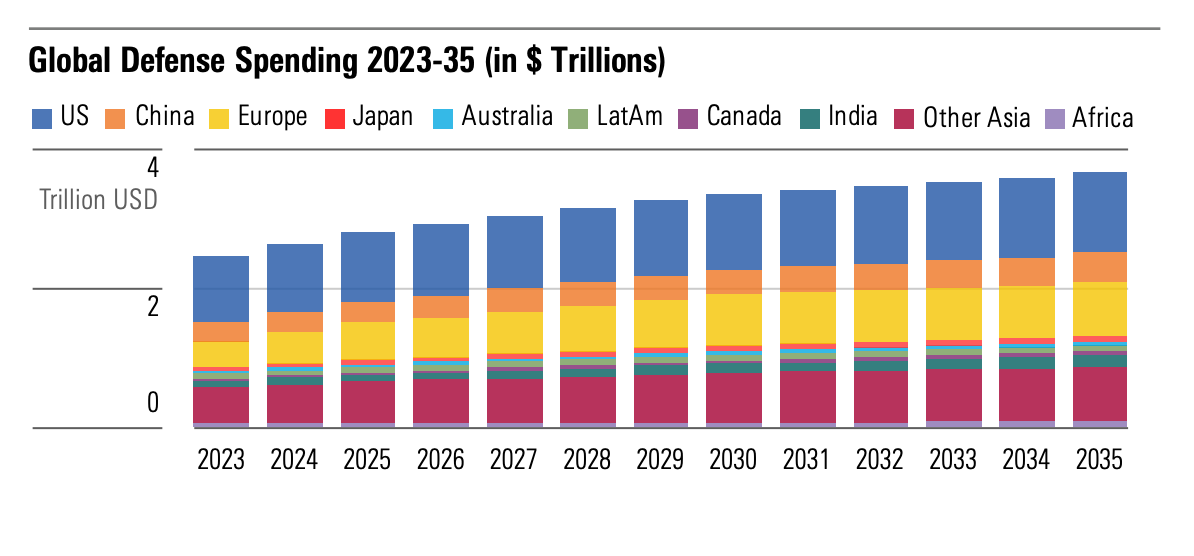
The US has steadily increased defense spending since 2017 and is projected to increase its budget in line with GDP, reaching 3.3% by 2035.
This increase in European defense spending is poised to boost the revenues and profitability of US and European companies. That enables scale economies through augmented production and higher-margin aftermarket services like maintenance and upgrades.
Despite the forecasted upturn, previous underinvestment has marred European defense budgets. An investment gap of $1.8 trillion has prevailed from 1992 to 2022. Although defense spending has recently gone up, European nations have generally spent less on defense.
What’s Been Happening Lately?
The US defense budget is projected to rise, benefiting firms with less dependency on contractors. The four primary US contractors accounted for a considerable portion of total available contracts in 2024.
In Europe, defense budgets are expected to outpace GDP growth. Although Germany's underinvestment in defense equipment poses challenges, collaborative initiatives are striving to mitigate this issue.
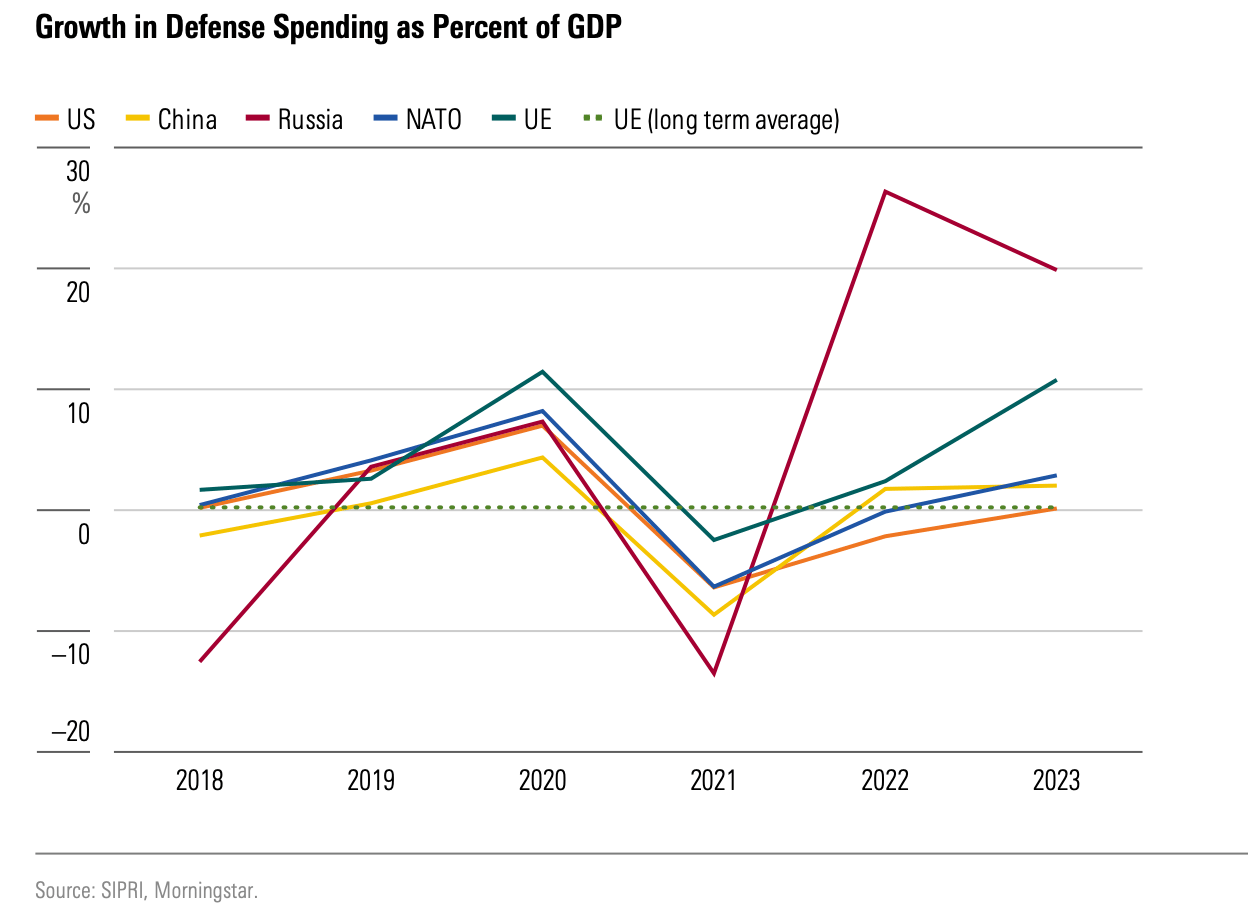
Defense budgets fluctuate with the GDP, rising in prosperous times but often constrained during downturns.
Where Is Defense Budget Demand Focused?
There’s a significant demand for artillery and ammunition, spurred by the requirement to restock depleted supplies in Western nations. The United States faces around $40 billion in opportunities across the 155mm artillery ecosystem.
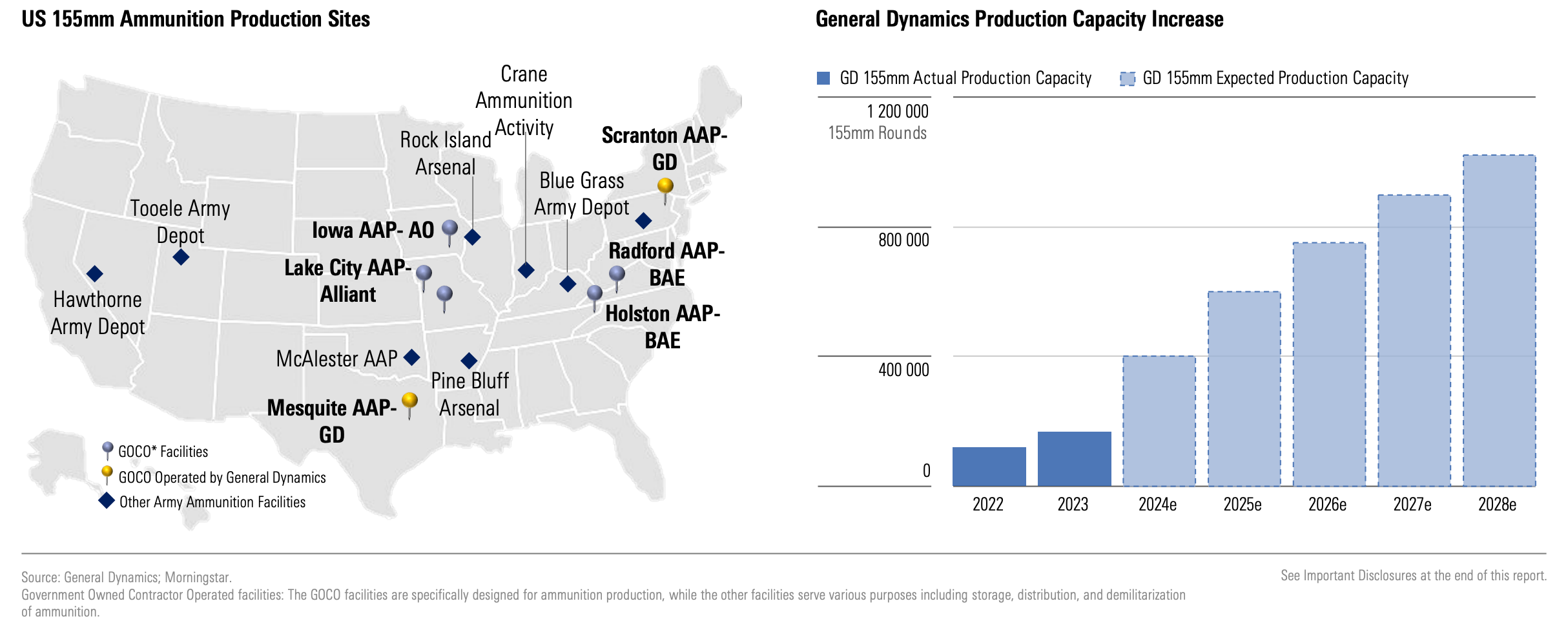
To meet NATO's 30-day stockpiles requirement, we expect the US will need 11 million 155mm artillery shells for its 1,100 systems in service.
Over the next decade, the Global Aircraft Fleet is expected to grow by 4% with approximately 15,000 new builds. And the land defense sector shows growth opportunities through 2030, especially for heavy-weight tracked, medium-weight tracked, and medium-weight wheeled systems. Finally, we anticipate the expansion of defense budgets to boost naval defense spending, especially in the US and European sectors, focusing on submarines and combat ships.