
Europe Equity Outlook: Opportunities Become More Selective

European equities have regained their footing after a volatile second quarter.
As geopolitical tensions eased, inflation expectations moderated, and investor confidence returned, markets recovered much of the ground lost earlier this year.
The rebound has been encouraging, but it also raises a new question for investors: Where can you still find value now that European equities have recovered from their second-quarter selloff?
The latest Morningstar Europe Equity Market Outlook report finds that while broad market discounts have narrowed, attractive opportunities remain for investors willing to look beyond headline performance. From mid-cap stocks to overlooked sectors and AI-driven technology trends, here are six themes shaping the European equity market in the third quarter of 2026.
Regional Price Movements Over Q2 2026
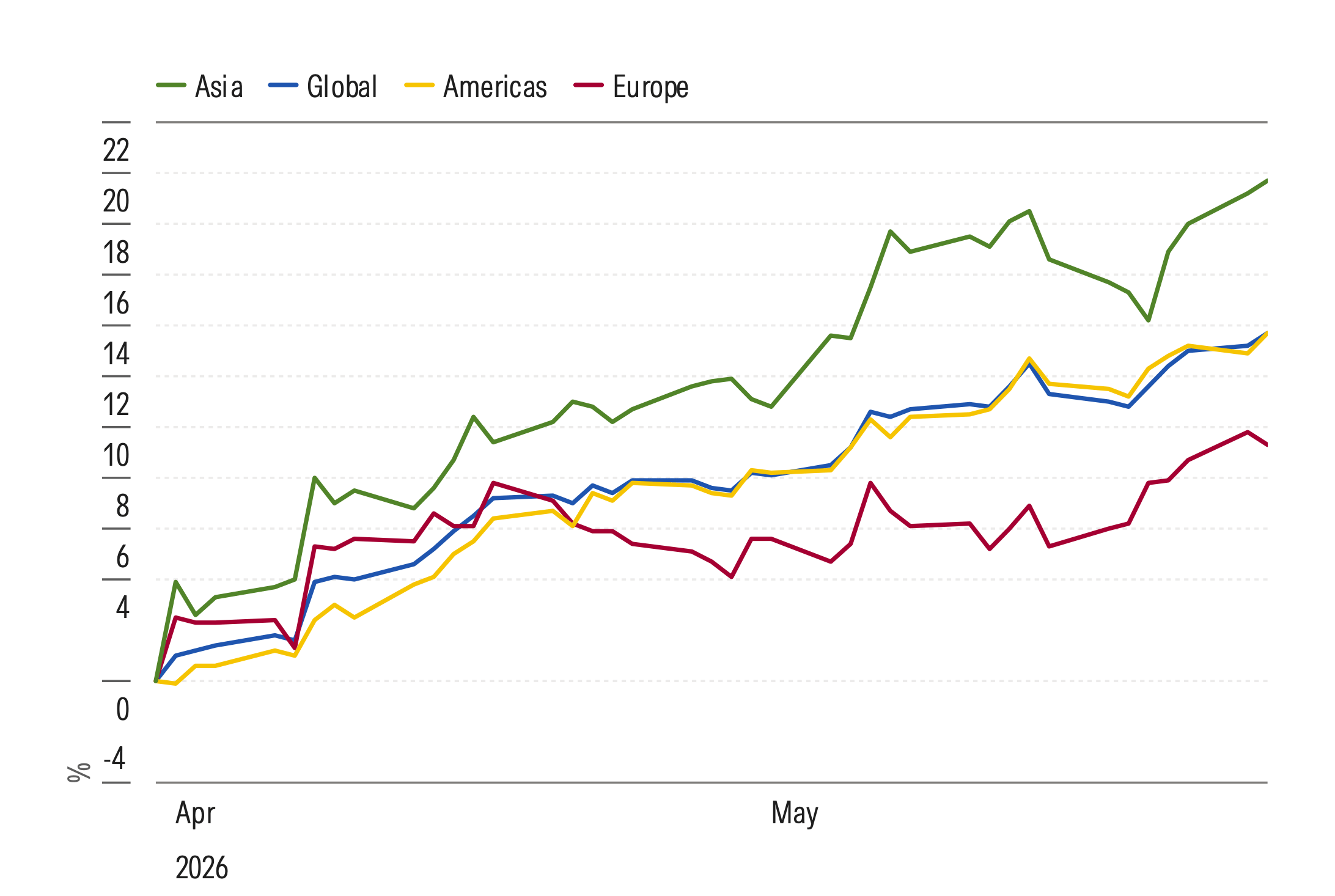
Source: Morningstar. Data as of June 22, 2026. Regional price/fair value estimates as of May 2026.
Are European Stocks Still Undervalued?
Yes, but the margin of safety is becoming smaller.
European equity valuations have shifted dramatically over the past several months. Markets entered 2026 trading above Morningstar's fair value estimates. But geopolitical tensions in the Middle East triggered a sharp selloff, creating buying opportunities. As concerns eased, investor confidence returned, fueling a broad market recovery.
Today, European equities trade at approximately a 4% discount to Morningstar's fair value estimate.
That's enough to suggest the market remains modestly undervalued, but considerably less attractive than it appeared earlier in the year. As uncertainty has faded, investors have become increasingly willing to pay higher prices for European companies.
Intrinsic Value-Weighted Price/Fair Value Estimate for Morningstar Europe-Domiciled Coverage
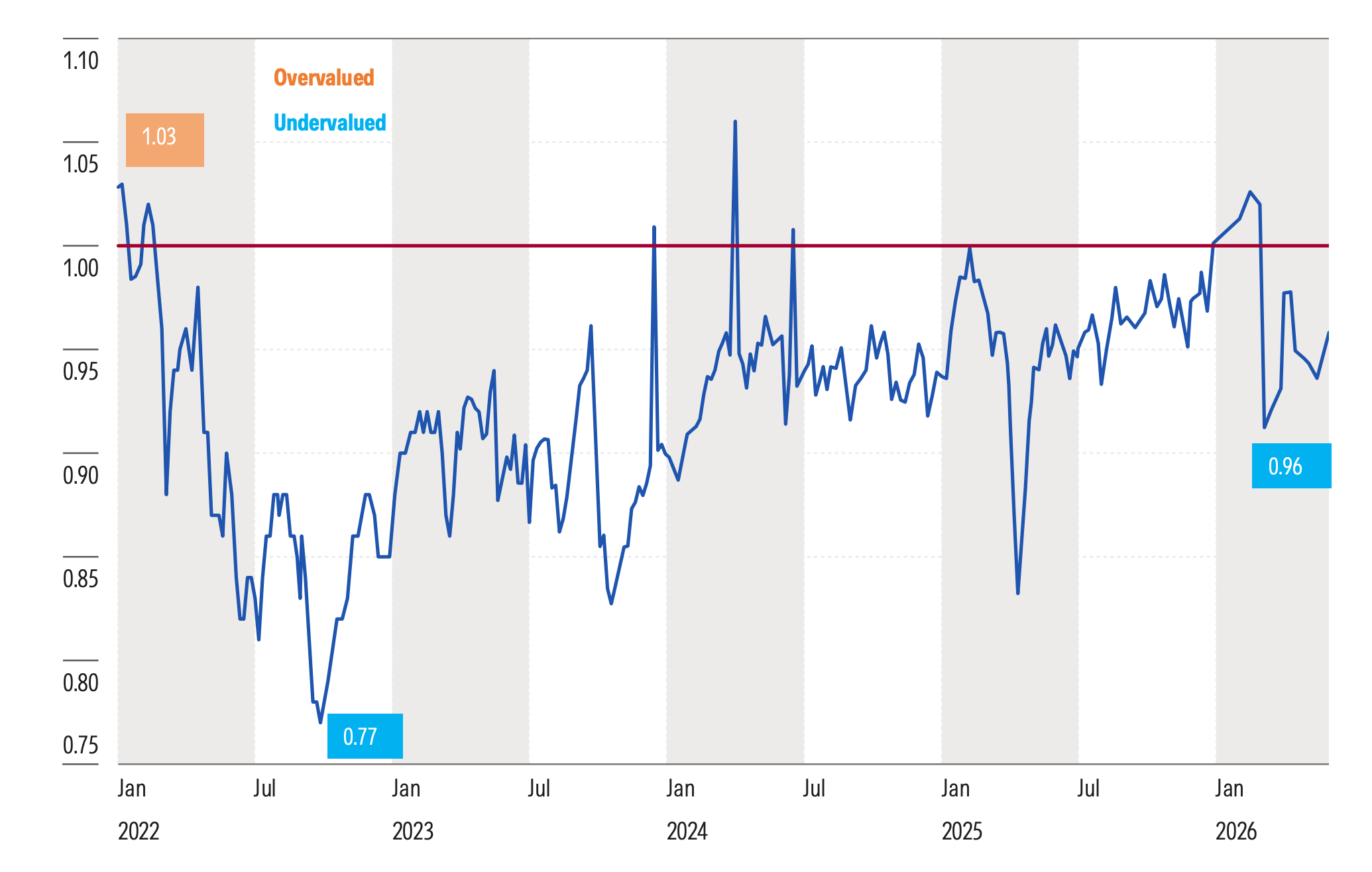
Source: Morningstar. Data as of May 2026.
The result is a market where broad bargains are becoming harder to find. Rather than relying on rising market valuations, investors may need to be more selective and focus on companies whose prices remain disconnected from their long-term intrinsic value.
Has the Worst of the Geopolitical Uncertainty Passed?
Markets appear to believe so.
Investor sentiment improved significantly following the interim peace agreement between the United States and Iran, which reopened the Strait of Hormuz and reduced concerns over prolonged disruptions to global energy supplies. As fears surrounding oil shortages eased, expectations for future inflation declined alongside them.
That shift has meaningful implications for equity markets. During the height of the conflict, investors worried that elevated oil prices would force central banks to maintain higher interest rates for longer, putting pressure on both economic growth and equity valuations.
While the European Central Bank raised rates in June, markets generally expect any additional policy tightening to be relatively short-lived before rates eventually begin moving lower.
Still, this outlook depends on inflation continuing to moderate. Our analysts caution that this expectation could prove overly optimistic.
If inflation remains persistent or energy-driven price pressures keep inflation above central bank targets, interest rates could stay higher for longer, forcing investors to reassess today's equity valuations.
Geopolitical risks have diminished, but they have not disappeared, and inflation remains a key variable investors should monitor in the second half of the year.
Where Can Investors Still Find Value?
Although the overall market has become more expensive, opportunities remain across several sectors that have yet to fully participate in this year's rally.
Consumer Cyclical remains Morningstar's most undervalued sector, offering roughly 20% upside relative to fair value estimates. Despite ongoing concerns around slowing Chinese demand and weaker vehicle sales, analysts believe the cyclical downturn is nearing its end.
Luxury brands continue to benefit from resilient affluent consumers, while improving long-term demand drivers support an attractive entry point for patient investors. European automakers also trade at meaningful discounts despite near-term pressure on profitability.
Healthcare is another area where valuations remain compelling. The sector has lagged the broader market as investors favored technology and AI-related companies. Steady innovation in biopharma, diagnostics, and medical technology should continue supporting long-term growth.
Regulatory uncertainty has created volatility; analysts still see attractive opportunities across several healthcare industries.
Morningstar European Coverage: Average Price/Fair Value Estimate by Sector
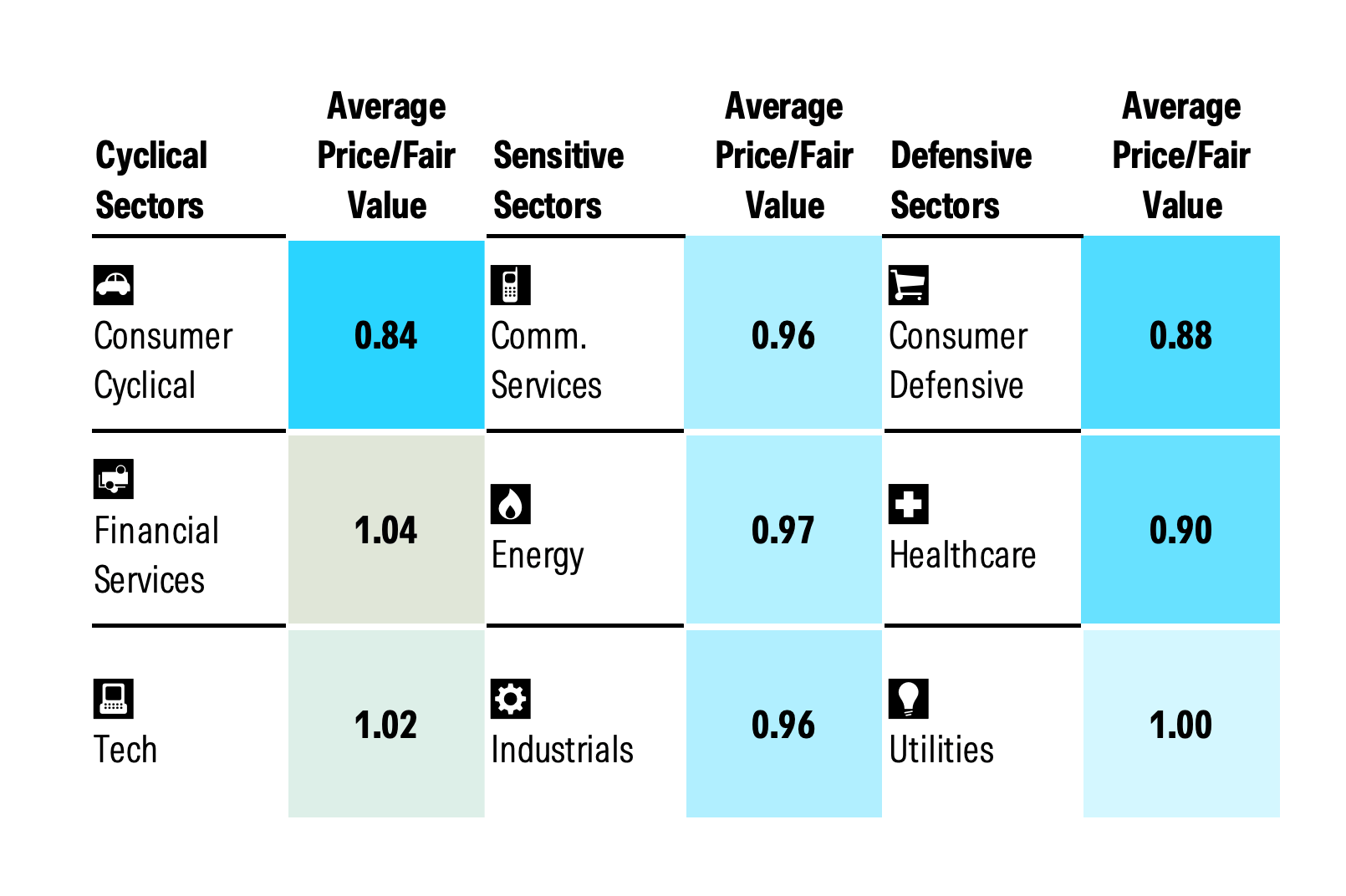
Source: Morningstar. Data as of May 2026.
Consumer Defensive stocks have also underperformed as investors rotated toward higher-growth sectors. We expect many of the industry's current headwinds to prove temporary.
Consumer demand continues to improve gradually, premiumization trends remain intact, and innovation across food, beverage, and household products continues to support long-term growth. The recovery in alcoholic beverages is also expected to benefit from increased demand surrounding the 2026 FIFA World Cup.
Meanwhile, sectors that posted the strongest gains during the quarter have become less attractive from a valuation perspective. Technology delivered one of the strongest performances during the quarter, while Financial Services also experienced significant valuation expansion.
Investors may find better long-term opportunities by focusing on sectors where fundamentals remain strong, but valuations have yet to fully recover.
Why Are Mid-Cap Stocks Standing Out?
Small-cap stocks posted gains during the second quarter, narrowing their discount to roughly 8% below our fair value estimate as investor confidence returned.
In contrast, growth stocks saw their strongest gains primarily in the United States, where large technology companies drove much of the market's advance. European mid-cap companies, however, remained relatively overlooked despite maintaining solid business fundamentals.
Analysts estimate that European mid-cap stocks continue to trade at roughly a 12% discount to fair value, while value stocks trade at approximately a 9% discount.
Mid-Cap Stocks Price/Intrinsic Fair Value Estimate
.svg)
Source: Morningstar Research Services LLC. Data as of May 2026. Price/fair value is calculated using the intrinsic valuations as determined by the Morningstar equity research team and weighted in proportion to their portfolio weight within the relevant Morningstar equity index.
Those discounts suggest investors can still find attractive opportunities outside Europe's largest companies, particularly among businesses with durable competitive advantages that have yet to participate fully in the broader market recovery.
For long-term investors, mid-cap companies may offer one of the market's most compelling combinations of quality fundamentals and discounted valuations.
Is AI Still Driving Europe's Technology Sector?
The opportunity set is becoming increasingly selective.
Artificial intelligence remains the dominant investment theme across global markets, driving unprecedented spending on infrastructure and helping propel semiconductor companies to another quarter of exceptional performance.
Strong results from ASML and more than $600 billion in planned hyperscaler capital expenditures continue to reinforce confidence in demand for AI infrastructure.
That optimism has also pushed many semiconductor companies toward or above fair value.
Fears surrounding AI disruption have created opportunities elsewhere. Software, information services, and IT services companies have experienced greater volatility as investors questioned how quickly AI could reshape their businesses. Many of those concerns have become disconnected from company fundamentals.
Customer retention remains healthy, long-term growth expectations remain intact, and improving business conditions are supporting a recovery in IT services as organizations move from experimenting with AI to deploying it at scale.
Rather than avoiding the technology sector altogether, investors may benefit from looking beyond semiconductor leaders toward high-quality software and information services companies whose valuations have not kept pace with their long-term growth potential.
Stock Selection Matters More Than Ever
Earlier this year, investors could find attractive opportunities across much of the European market. Today, the picture is more nuanced.
Although more than 40% of Morningstar's European equity coverage still earns a 4- or 5-star rating, that percentage has gradually declined as markets recovered.
Meanwhile, the share of overvalued stocks continues to climb, particularly within technology and financial services, two sectors that have experienced significant valuation expansion.
As broad market discounts continue to narrow, generating excess returns is likely to depend less on broad market exposure and more on identifying companies whose market prices remain below their intrinsic value.
For investors with a long-term perspective, disciplined stock selection is one of the greatest competitive advantages in the second half of 2026.
Looking Ahead
Broad market valuations have become less compelling than they were earlier in 2026, though Morningstar research suggests meaningful opportunities remain beneath the surface.
Advisors who look beyond headline performance and focus on long-term fundamentals may still find attractive value across select sectors, mid-cap companies, and businesses positioned to benefit from structural trends such as artificial intelligence.
Download the full Europe Equity Market Outlook for a deeper analysis of regional valuations, sector outlooks, market risks, and Morningstar analysts' highest-conviction investment ideas across European equities.