
3 min read
Semiliquid Funds Are Surging. What Do You Need to Know About Them?
Asset managers and fund companies are unlocking investor access to this previously uncharted territory.

Semiliquid funds are a key way to gain exposure to private markets. These funds balance the potential for higher returns with certain limitations. As these semiliquid funds continue to grow in popularity, understanding their benefits and restrictions is essential.
The chart below highlights the growth trajectory of semiliquid fund assets, offering valuable context for investment decisions.
Semiliquid Fund Assets Surged in 2025
Source: Morningstar Direct, SEC filings. Data as of Dec. 31, 2025.
These funds offer potential for excess returns, but they also have restrictions. Here’s what to know if you’re considering adding semiliquid funds to your lineups.
What Makes a Semiliquid Fund?
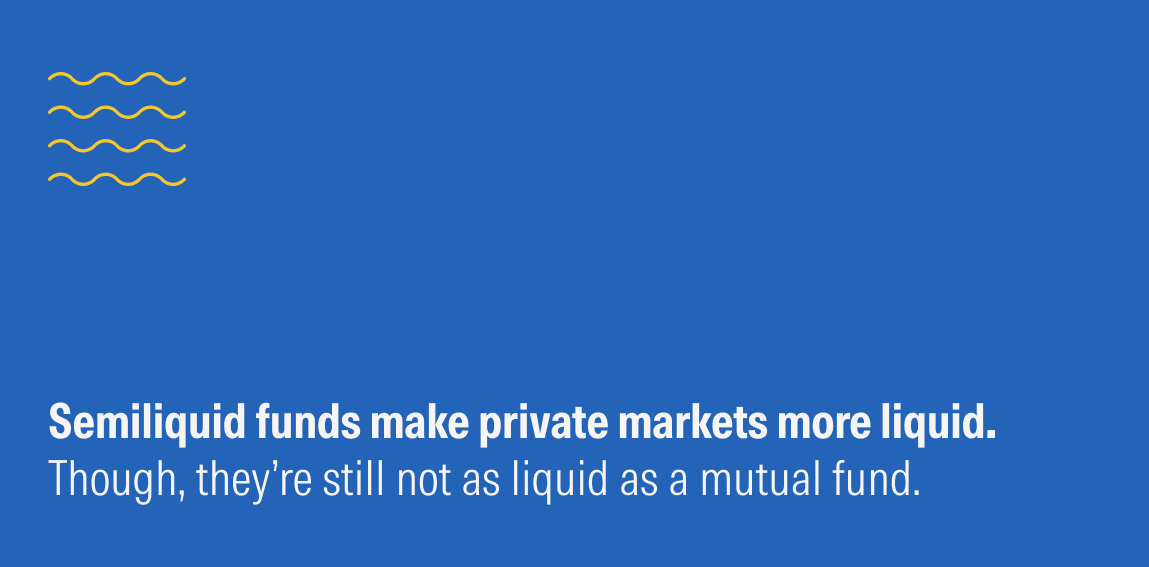
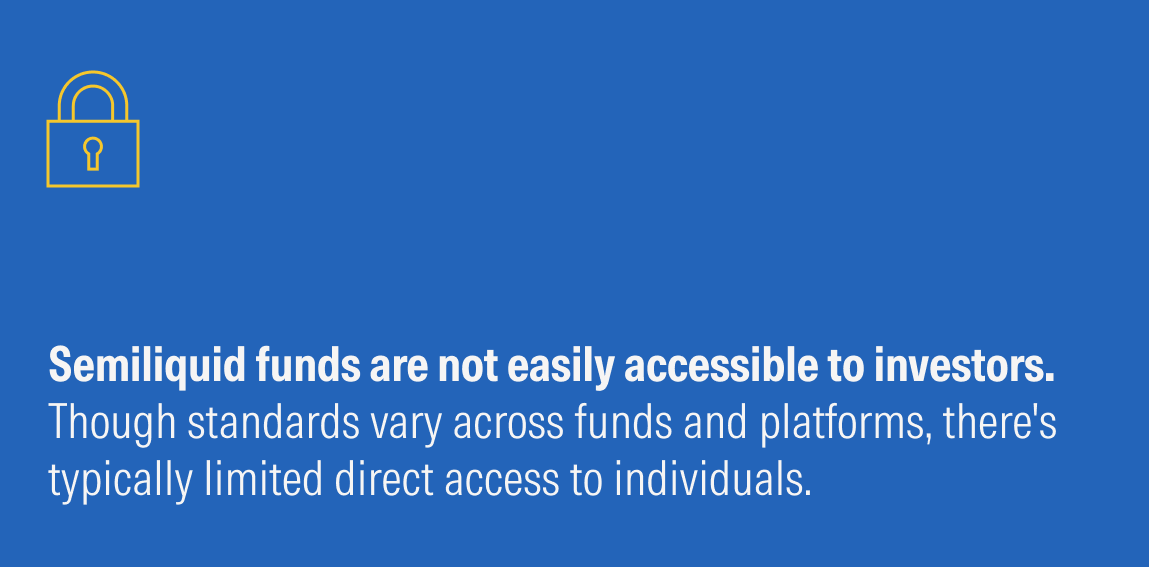
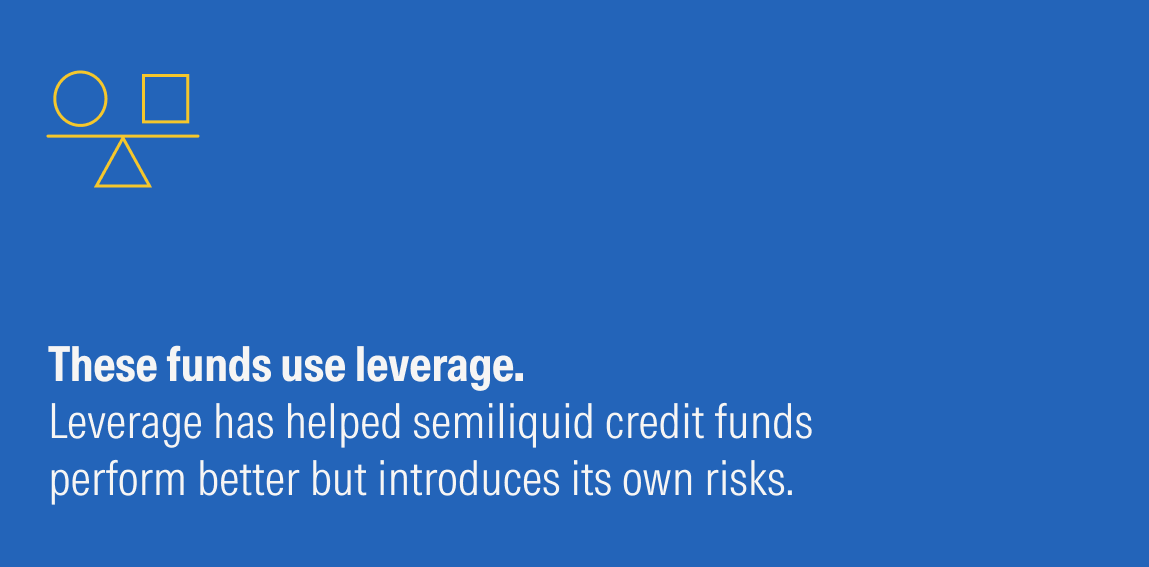
Semiliquid funds are registered funds that invest in asset classes like private credit and private equity. Below, see some of the key features of semiliquid funds.

What Are the Types of Semiliquid Funds?
What to Know About Navigating the Cost of Semiliquid Funds
1. Understand what’s driving any fees
Though semiliquid funds make private markets more accessible, they don’t make them more affordable. Semiliquid funds’ fees can be complex, so proactively explain their nuances to clients.
Expect to Pay a Premium for Semiliquid Funds
Source: Morningstar Direct. Data as of Dec. 31, 2025.
2. Focus on the total incentive fee
Semiliquid funds often come with hefty incentive fees—that is, a percentage of the fund’s return that the fund company keeps once a fund clears its “hurdle rate.” But these fees are charged on the whole return, not just the excess return beyond the hurdle rate. So it’s important to consider the total incentive fee, which is the bar a fund needs to clear before it’s worth it.
Investors Should Focus on the Incentive Fee, Not the Hurdle Rate
Source: Morningstar Direct. Data as of Dec. 31, 2025.
3. Be aware of the leverage you’re exposed to
Semiliquid fund managers often use leverage to reach their goals, which is where most excess returns have come from. But leverage can amplify losses just as much as it amplifies returns, so be aware of your exposure.
Fund-Level Leverage is More Common in Private Credit, Less Common in Private Equity
Source: Morningstar Direct, SEC filings. Data as of March 31, 2025.
4. Unpack fees outlined in a fund’s prospectus
Some semiliquid funds charge fees on total assets—which includes assets purchased with money borrowed by the fund. So emphasize the net number to investors.
In Certain Scenarios, Charging Fees on Total Assets is Highway Robbery
Source: Data is for illustrative purposes.
Should You Consider Semiliquid Funds?
Are semiliquid funds worth it? It depends.
Long-term private market performance has been mixed, and because most semiliquid funds have launched within the last three years, it's hard to analyze their track record.
But the space is only continuing to balloon, and standout funds have seen solid gains.
Use Morningstar’s Medalist Ratings for Semiliquid Funds to uncover the best opportunities in this universe.