
Spencer Look and Jack VanDerhei: The Assumptions That Can Put Your Retirement at Risk
Morningstar’s retirement researchers explain why your plan needs to account for potential Social Security changes, long-term-care costs, and a longer life.




Subscribe to Morningstar’s The Long View from your mobile device: Apple Podcasts | Spotify
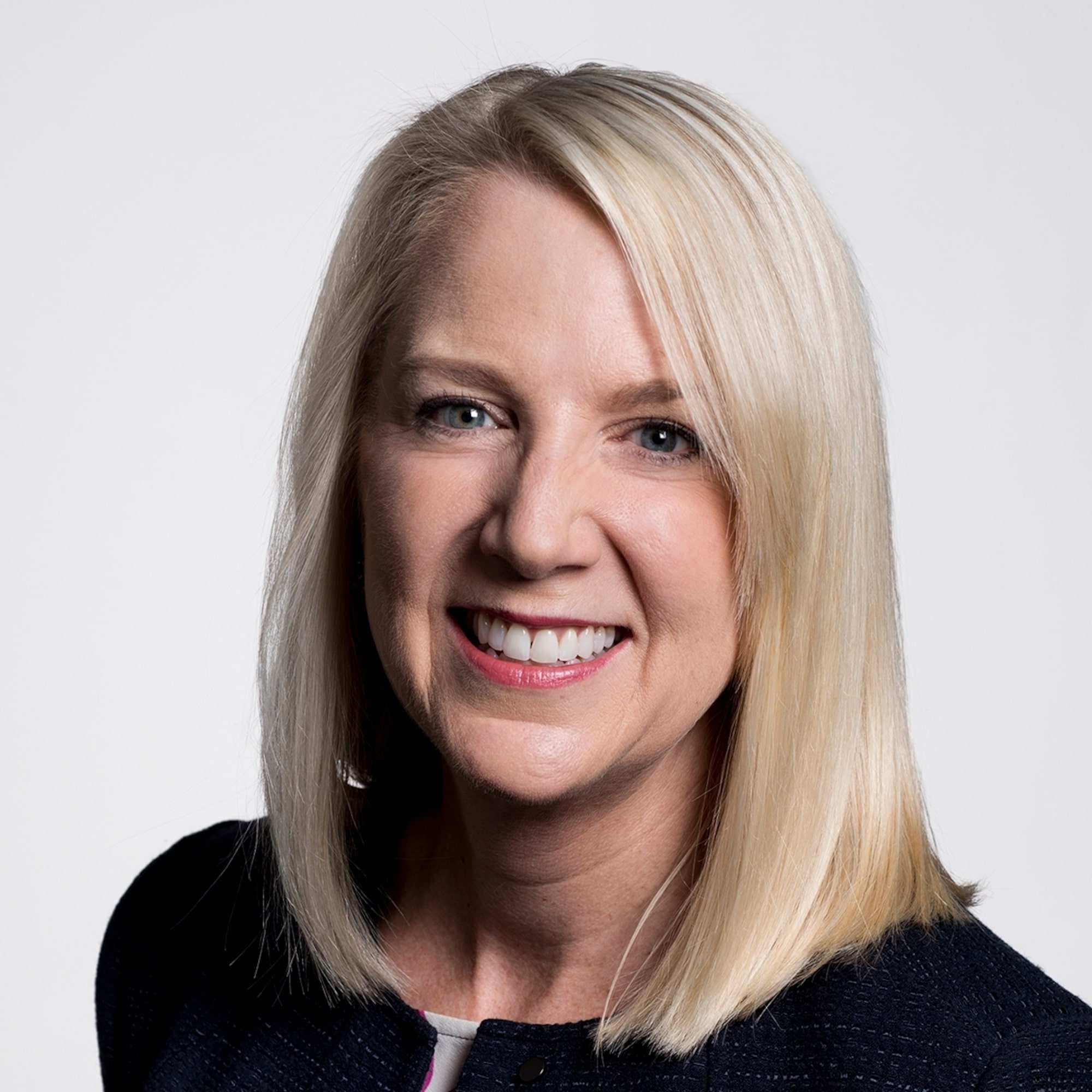
Today, we’re happy to welcome two guests from the Morningstar Center for Retirement & Policy Studies. Spencer Look is the associate director of retirement studies and public policy for Morningstar, and Jack VanDerhei is the director of retirement studies and public policy. Jack previously worked as the research director at the Employee Benefit Research Institute from 1996 through 2022. Spencer and Jack both produce a lot of really helpful research on retirement outcomes, Social Security reform, and retirement policy. One of the highlights was their more balanced take on whether there’s really a retirement crisis in the US. We hear a lot of really dire warnings about that, so we appreciated their perspective on where there’s room for improvement, as well as data on things that aren’t quite as bad as some people might have us believe. You won’t be surprised to hear that we really enjoyed the discussion about long-term care. Spencer and Jack have both concluded that the retirement planning community has underrated long-term care as a risk factor for people’s retirement plans.
Episode Highlights
- Modeling US Retirement Outcomes
- Is There a Retirement Crisis?
- Evaluating Retirement Policy Reform
- Planning for Social Security Changes
- Access, Auto‑Enrollment, and Accumulation
- How the Saver’s Match Works
- Turning Savings Into Retirement Income
- Planning for Long-Term-Care Costs and Longevity
If you have a comment or a guest idea, please email us at TheLongView@Morningstar.com.
Transcript
Amy Arnott: Hi, and welcome to The Long View. I’m Amy Arnott, portfolio strategist for Morningstar.
Christine Benz: And I’m Christine Benz, director of personal finance and retirement planning for Morningstar.
Arnott: Today, we’re happy to welcome two guests from Morningstar Center for Retirement & Policy Studies. Spencer Look is associate director of retirement studies for Morningstar. And Jack VanDerhei is director of retirement studies for the center and previously worked as the research director at the Employee Benefit Research Institute from 1996 through 2022.
So, Christine, Spencer and Jack both produce a lot of really helpful research on retirement outcomes, Social Security reform, and retirement policy. We’ll get into all of those topics in our discussion. One of the highlights was their more balanced take on whether there’s really a retirement crisis in the US. We hear a lot of really dire warnings about that, and so I appreciated their take on where there’s room for improvement, as well as some data on maybe things aren’t quite as bad as some people might have us believe.
Benz: You won’t be surprised to hear that I really like the discussion about long-term care. Spencer and Jack have both concluded that the retirement planning community has underrated long-term care as a risk factor for people’s retirement plans, so I like delving into that.
Arnott: All right, so let’s get into the discussion. Jack and Spencer, welcome to The Long View.
Spencer Look: Happy to be here. Thank you so much for having us.
Arnott: Well, thank you so much for joining us. Maybe you could start by giving us some quick background on the Morningstar Center for Retirement & Policy Studies. How did the center first get started, and what’s the mission you’re trying to accomplish?
Jack VanDerhei: I’ll jump in first, if you don’t mind, Spencer. The Morningstar Center for Retirement & Policy Studies actually started about four and a half years ago. And what it is is a center that allows us to provide empirical evidence that lets policymakers, plan sponsors, and other stakeholders understand the trade-offs in terms of proposed legislation, proposed regulation, and different types of plan designs. Instead of just coming up with a single headline number, we provide very, very detailed information.
Modeling US Retirement Outcomes
Benz: Spencer, I’m wondering if you can talk about one of the linchpins of the work that you two do at the center, the Morningstar Model of US Retirement Outcomes. Can you talk about how it works and what makes it different from more traditional retirement analysis?
Look: Yes, I love this question. The model that you just referenced is our flagship model for the center; it powers a lot of the work that we do. It is a household-level microsimulation model—think a Monte Carlo type of approach, for the audience out there. We built this on top of a government survey, the Survey of Consumer Finances, which is a representative sample of the US population. And then we model and project as people go forward and work, do their careers, and go into retirement. We are very granular with what we’re doing, echoing what Jack was saying with the mission and goal of the center. We incorporate people’s wages, savings, job changes, upon job change. Do they cash out their retirement plan? We reflect preretirement withdrawals. Of course, moving into retirement, we incorporate Social Security spending models, longevity, long-term care; it’s a very detailed model that goes through a lot of this, really, messiness, in reality, to produce a distribution of outcomes on retirement-income adequacy.
The goal here is to analyze retirement-income adequacy. We don’t just stop at a wealth balance or a replacement rate. We use that approach to look at how likely it is people can run short of money in retirement. The really big differentiator for us is leaning into the behavior. Instead of assuming people follow a set schedule—they always save 5%, 6%, just as a simple example—our frameworks are going to be dynamic. They change and reflect as people have a new job, a new type of plan, as they make more money, get older. Very clearly, the empirical data shows that people’s behaviors can change. We’re reflecting that in our framework, and I think that’s what really differentiates us with our modeling approach.
Arnott: Jack, as Spencer alluded to, when you’re building a model of retirement outcomes, you have to make a lot of assumptions, not only about markets, but also how people behave. How do you, Spencer, and the rest of your team try to make sure that you’re making reasonable assumptions around things like savings, retirement age, Social Security, et cetera, when you’re trying to project retirement outcomes?
VanDerhei: Well, we’re very fortunate when it comes to working with 401(k) participants. One of the other simulation models we have, not the one that Spencer already talked about, is something that’s built literally on millions of participants from thousands of different 401(k) plans. When it comes to the ability to actually observe how participants are going to react to various types of plan designs as well as different types of investment options and different types of markets, we have probably the largest database for that available. In terms of some of the other things that we model, we obviously are able to deal with the Morningstar capital market assumptions as well as having a very, very rich database of different household behavior, whether it’s during the accumulation stage or once they retire. And something I’m sure Spencer’s going to get into in more detail later, we’re able to do a very, very detailed job looking at what kind of expenses individuals will have in retirement, whether it’s just basic consumption or whether it might be something like long-term-care expenses.
Is There a Retirement Crisis?
Benz: Let’s talk about how people are doing. One topic we’ve discussed with a number of guests over the years has been whether we have a retirement crisis in the US. Spencer, maybe you can talk about what the data actually tell us about that. Are Americans broadly underprepared for retirement or is the problem concentrated among certain groups?
Look: Yeah, thanks for the question, Christine. This is exactly what the Morningstar Model of US Retirement Outcomes can answer. We can answer this question. The discussion and discourse in the media on the crisis, I do think there are very clear perspectives. We fall, I think, somewhere in the middle. We do think there are very clear groups of people who our model is showing are underprepared, higher rates of retirement income inadequacy. There is a concentration. We do see it among lower-income workers, single women, Black and Hispanic households, groups such as these where there’s a higher likelihood of running short of money. Our overall status quo model shows that about 40% to 45% of the population are at risk of shortfalls, so a pretty sizable number.
That being said, what we did find in our research is that those who are consistently saving—so in our framework, we simulate people saving and participating in a plan, regularly saving over time—the people who follow those paths tend to be in pretty good shape. So, participating in a plan, saving—whatever that looks like for a worker, that can help quite a lot. I think pretty intuitively, just the power of compounding and putting money aside. An interesting finding that I thought I’d mention here is that Gen Z workers in our status quo analysis, they actually, they’re looking a little bit better than some of the later, or I should say older, age cohorts where there was more disruption in terms of going from the DB to the DC system. With Gen Z workers, as more DC plans and access is there, we’re actually seeing lower rates of retirement income inadequacy with Gen Z. One last thing I wanted to highlight here is that long-term-care costs have a really, really big impact on these numbers. And so, just to kind of help people as you kind of see this discourse in the media, long-term care has a really big impact.
If you ignore long-term-care costs, we published a piece or redid this, and our estimates from that 40% to 45% number came down around 25%. So, really big impact. Do you think it makes sense to incorporate? There’s a lot of uncertainty with long-term care. It’s a very big issue that I think I can’t speak enough about, just being prepared and educating people on that risk.
Benz: Yeah, we want to delve more into that, Spencer, but sticking with retirement crisis and retirement preparedness, we hear a lot about today’s economy being kind of a K-shape where people who have market exposure have done really well; they’re out there spending and then lower economic strata are not participating in that. Do you see that in terms of retirement preparedness as well?
Look: Definitely. That’s something that, in our behavior estimates or our assumptions that Jack was kind of talking through, you do see that the likelihood of participating or saving into an IRA or participating in a retirement employer-sponsored plan for lower-income workers. As an example, it tends to be less than higher-income, middle-income workers. And so that dynamic definitely is at play. It’s something that does help inform our estimates of lower-income workers. There’s a pretty good chance they could run short of money. That’s also what I think is part of the motivation behind some of the policies that we’ve seen that have come across our desk that are trying to get universal market participation or universal and US workers participating in the market. That’s exactly the thought behind that: Where folks who traditionally may not have access to an advisor, may not be saving, may not really prioritize that, can kind of start and then start building equity and try to help out on that front. It is something that we see, and it’s something that there’s policy initiatives that are going to try to address that. We’ll see how that plays out.
Evaluating Retirement Policy Reform
Arnott: When you’re evaluating those types of policy initiatives, what type of criteria do you think policymakers and researchers should use to determine whether a proposal actually improves retirement outcomes and long-term retirement security?
VanDerhei: Can I start by bifurcating between Social Security reform, which I’m sure is going to be on the top of most people’s list of things they want to talk about soon, and just general retirement plan proposals? If it’s the latter, if we’re not talking about Social Security reform, I think the thing that people have to keep in mind when a proposal comes up is that access has to come first. After that, you can talk about participation, contribution rates, escalation, employer contributions, leakages, job change, retirement age. That all matters. But if they’re not in a plan, basically they don’t have the ability to participate in this. And the thing that I think you really have to keep in mind is that behavior on the part of the participant is going to matter basically as much as the markets. You can have a model that very carefully looks at different returns, but assumes away actual participant behavior, and that is basically going to produce, in essence, a really precise answer to the wrong question.
And then moving over to Social Security, there was a Senate Finance Committee hearing earlier this month that tried to deal with the whole process of coming up with a reform proposal. As I think most people are aware, it’s currently scheduled that in October of 2032, the trust fund will go to a point where it’s no longer able to pay the full statutory level of benefits. What I think one needs to basically worry about when you’re looking at Social Security reform, and happy to go into more detail if you want, but it’s a two-part process. First of all, you have to worry about whether or not a reform proposal is solvent or not and produces solvency, whether it’s for a 75-year period or longer. After that, you have to start looking at how different individuals will be impacted in terms of retirement-income adequacy. Spencer mentioned, basically, our model can look at all these different facets, both on the accumulation and the decumulation side, but currently, all this is being dealt with on a distributional aspect that looks only at who pays more in taxes and whose benefits get cut.
You also have to look at the rest of the household picture, I think, to have a good solution, a good way of looking at these different reform options. And just keep in mind, there’s basically no mathematically optimal reform. Different policymakers are going to have different objective functions, and basically what we’re trying to do at Morningstar is provide a model that can help them look at some of those trade-offs.
Planning for Social Security Changes
Benz: Jack, sticking with that, I do think that investors are confronted with the real problem of factoring in potential changes to Social Security and the implications for their own retirement spending plans. How would you urge them to approach this issue as they think about their own planning? And maybe you can talk about younger investors, those under age 50, say, and those who are over 50 and approaching retirement; it’s getting closer. Can you talk about those two groups, how they should be thinking about this?
VanDerhei: Yeah, happy to do so. The thing that I have to stress is right now, no one has any idea what’s going to happen basically in the next six years. We do know the default: If this isn’t solved basically by October 2032, that it’s scheduled according to the 2026 Trustees Report, that everybody gets a 22% reduction. We’ve done simulations at Morningstar to show basically what percentage of the 401(k) participant base could, in essence, have enough additional savings over and above what they’re already saving that they’d be able to immunize themselves from that impact. And that number is very, very small. Certainly, anybody already over age 50 is not going to have enough time to save enough additional amount in their 401(k) to offset that without having to go over some ridiculously large number, like 25% of compensation per year. What you’re going to have to focus on, I think, is what are the details?
And if there’s a situation where your client is relatively old, you have to start looking at alternative ways of being able to have an adequate retirement income, whether that’s going to mean deferring retirement age or whether that’s going to mean additional contributions, maybe even over and above what you can do in a qualified plan. If you have a younger client that you have the benefit, obviously, of having a much longer planning horizon, but I think that the ultimate answer to your question is you have to do a lot of stress testing. You don’t know whether you’re going to get hit with higher payroll taxes, which is going to reduce your capacity to keep making employee contributions at the current rate. You don’t know if you’re going to get hit with benefit reductions, which obviously is something you may need to replenish through your 401(k) savings, but we’re trying to do a lot of work with both the overall population as well as stylized individuals so that when we come out with our Social Security reform reports, we’ll be able to identify exactly the kind of situation you’re talking about and basically what seems likely to be the best option for individuals once we know what those various reforms are going to look like.
Access, Auto‑Enrollment, and Accumulation
Arnott: Jack, you mentioned the importance of improving access to retirement plans, and you’ve also advocated for broader automatic enrollment approaches. Should the US adopt a system similar to what they have in Australia with the superannuation framework, or are there other types of enrollment-related reforms that you’re in favor of?
VanDerhei: Well, unless we have another five hours to talk about the Australian system, I’m just going to say very quickly, there are so many things in the Australian system that would be implicit and explicit changes for the US system that I don’t particularly think that’s a very likely candidate at this point, but staying with the access, this is something that I modeled a lot a couple years ago when the Build Back Better proposal had the situation where anybody over a particular plan size, about 10 employees, had to either have an auto IRA or have some kind of a defined-contribution plan available for their participants. That goes a long way, but let me just make one really quick distinction. It helps with the headcount in terms of what percentage of the working population actually has a retirement plan. But if you don’t go the next step, and we just recently had an article, Spencer and I, that tried to look at the State of the Union proposal and look at what would matter as they go forward in trying to come up with more specifics.
Automatic enrollment is great, but if people don’t have the high enough default deferral, if they don’t have auto-escalation, and if they’re in a situation where it’s very easy for them to pull out their money—especially if it’s a Roth IRA-type situation—when we did the simulations, when Spencer did the simulations, it was very clear that access alone is simply not going to be the answer for retirement-income adequacy for many of these individuals. Tying together automatic enrollment, high default deferrals, locking up the money if at all possible until a particular age—for example, simulated at age 62 on one of these—and, of course, doing something if there is leakage to try to get them back in the system. Auto-portability is something that’s starting to gain a lot of acceptance among some of the major recordkeepers and plan sponsors. But again, without all these tied together, just looking at a one-year snapshot of what our participation numbers are simply is not going to be an adequate way of looking at whether we’re dealing with this retirement-income adequacy problem.
The Impact of the Saver’s Match on Retirement Gaps
Benz: Spencer, you’ve studied the potential impact of the Savers Match provisions. I’m wondering if you can first talk about what those are for people who aren’t steeped in this and also talk about what effect those sorts of incentives could have on retirement outcomes, particularly for middle- and lower-income households.
Look: Yeah, of course. The Saver’s Match program, this is going to be replacing the existing Saver’s Credit, and it is, as the name implies, a matching program where the federal government will match qualifying contributions. The rules in place: It’s a 50% match up to the first $2,000 of workplace or IRA contributions per individual. That’s a maximum match of $1,000. I guess one other really important thing to highlight with the Saver’s Match: To qualify, it’s based on modified adjusted gross income, and the limits are going to be pretty low. You can’t have a very high modified adjusted gross income to qualify. For single filers, you get the full credit if your modified AGI is less than $20,500, and then it fully phases out by a modified AGI of $35,500. That’s for single filers, and then they go up for joint filers. Part of the idea here is that, looking at defined-contribution data and how incentives definitely matter, the Saver’s Match program will help incentivize lower-income workers to save and get that match, get that money that can help in the long term.
The kind of concern with it, though, is that for a lot of people with that level of modified AGI, saving $2,000 may be well out of reach. That’s some of the work we’ve been doing recently has been expansions on the Saver’s Match program. If you up those limits, change the match rates, what are the potential impacts? Our modeling estimates show that there’s, as with everything, a big range of outcomes. We did publish a report that looked at the existing Saver’s Match program and found that for Gen Z and millennial households, I think you could see a 10%, 12% increase in wealth depending on the scenario. Our upcoming study that we’ll be publishing, I think here in the fall, we’re looking at enhancements on the Saver’s Match, and we’ll be translating that to retirement-income adequacy. That’s what we’ve been looking at here, at taking a step back. Again, it can help a lot with incentivizing, but the things that we’re trying to figure out as an industry is just what the right level is. Can that be changed? And will this really help lower-income workers to save more? We’ll see when the data comes out. The existing limits are pretty low.
Arnott: If a plan sponsor is looking at a smaller change in plan design, something like changing a default contribution rate or changing the employer match, how much can a change like that really move the needle on retirement outcomes for employees?
VanDerhei: Well, I guess the obvious answer is it depends how old the participant is. For those people who are going to be in the plan for several decades, even a small design change can compound in some very large differences of retirement. What we have found, and again, not to get too technical, but Spencer and I have created, in terms of plan design, 43 different plan prototypes to look at things like voluntary enrollment versus automatic enrollment, escalations, default deferrals, match rates, et cetera. And we have found that moving from one match rate incentive to another one can make a huge difference over the decades that a young participant still has until retirement. Obviously, if you’re doing this for somebody right on the verge of retirement, it’s really not going to have enough time to take effect. But the thing I would really suggest to advisors and to plan sponsors who are listening to this is: Don’t just ask for an average effect.
It’s very difficult to determine whether or not that’s going to be helpful in your particular situation. What you want to ask for is who’s going to respond to these changes? How much are they going to respond? Whether or not that change persists over time or whether it’s going to be only a one- or two-year impact. And basically, how long do they have to compound? We’re doing something right now. In fact, Spencer’s going to be doing a presentation for NAGDCA in September that starts to look at some of this for some actual plan data. But again, it’s the type of situation where it’s going to differ dramatically across your various plan participant cohorts. But overall, we can do, I think, a fairly decent job with our model trying to show what the distributions are going to look like. We can do stylized examples in our publications, but I think the thing that you really want to focus on is to look at your actual plan participant information and run them through models like this and see how much of a difference it can make.
And again, especially if you want to focus on what I would consider your at-risk population, those individuals who, under the current plan design, probably are not going to have sufficient retirement income when they finally retire, to basically look at how much impact you can have on that at-risk population just by changing some of these plan design variables. I think in many cases, the plans we’ve worked with, there’s been a very dramatic impact on that at-risk population.
Benz: I wanted to follow up on the system that we have for 401(k)s where, to my mind, it’s pretty inefficient in that each of these companies are trying to sort it out. And sometimes a smaller company might have the same person who’s administering payroll also overseeing the 401(k) plan. How do we deal with that fact that some companies just aren’t in a position to make good decisions about what’s best for their participants?
Look: I’ll jump in, Jack. It’s a great question, Christine. Very fair point. Many companies aren’t positioned to do this, and I think this is where policymakers are trying to step in and find a way to close the coverage gap, get more people into plans while making it less burdensome. The goal is to not make every employer have to figure out all the details of setting up a plan. You want to find a way to lower the friction here. And so, some of the policy proposals that have come out recently have been focusing on this. A recent one was the Retirement Savings for Americans Act, which would introduce a federal thrift savings-like plan into the industry; workers who are not covered by an employer would be defaulted into that plan. There are other similar proposals, at least in theme, the auto individual retirement account proposal from Richie Neal.
This has been an ongoing focus of policymakers to put something in place so that workers can be put into the system where there’s not necessarily an employer. State auto-IRAs: There’s a good number of states now that actually have a state-managed plan that workers who are not covered by a plan at their job can be put in the state plan and participate. That’s kind of the angle that policymakers have taken. We’re finding ways to make sure people who are not covered—think like gig workers, people who are just not going to be in a situation where the employer is going to have a plan for them to make sure that they’re participating. Anything that you want to add on there, Jack?
VanDerhei: Well, again, I’m not quite sure what we’re talking about as far as participant size when it’s considered to be a small plan. But I think the more we get into the whole concept of personalization with respect to these plans, whether it’s through managed accounts or custom TDFs or what have you, I think we’re getting into a situation where, just from economies of scale, we’re going to have a situation that’s going to be more affordable for the small- and medium-sized employers to be able to customize that plan design. I know everyone is going to say, “Well, AI is going to take care of all this,” but until we find out what AI can actually do for plan design, I think it’s a situation where there are situations available now for the small- and medium-sized employer that can basically have the advantage of companies that have gone through this en masse to basically be able to break out what kind of plan designs would be best for the employer. And then, more importantly, once the employer has the plan design for the employee, how to optimize what the employee should be doing within that plan.
Turning Savings Into Retirement Income
Arnott: One big issue that’s very difficult for retirees, even if they’ve been diligent and successful in building up a nest egg for retirement, is figuring out how to put together a retirement spending strategy or figuring out how to spend down those assets efficiently after spending hopefully most of their working lives building up retirement savings. Are there any good solutions out there that you’ve seen that you think can help retirees with that problem?
Look: It is a very tricky thing to figure out decumulation. Comparing it to accumulation, there’s a clear direction. You want to save more, just stay invested, diversify, but there is just a lot of uncertainty. In our work, there are various solutions that we have looked at around spending. If you’ll humor me as an actuary, there are, of course, self-annuitizaiton scheme, which I’m referring to modern tontines, annuities; this is where you’re pooling people’s money, and you’re then able to spend it more efficiently. That’s the kind of idea. In practice, that’s going to be hard to use for everyone out there, given they’re not always available; there’s a lot of confusion. I think the way that I look at this with all my work is to explore different solutions that may help mitigate against longevity risk, such as annuities, that can be a part of a plan.
But overall, having a very adaptive process to planning, I think, is really, really important here. Lifespan is uncertain. That’s something that’s hard to know. Market rates are, of course, uncertain. Needs that come up—long-term care I mentioned earlier—that’s uncertain. Just treating this as an adaptive process and knowing that you’ve tested different things in your planning, when shocks come, when things happen, you have an adjustment that you can make.
Benz: I wanted to follow up on the annuity comment, and Spencer, maybe you can talk about the role of annuities within 401(k) plans. We’ve seen target-date series adding series that include annuities. What’s your take on that whole trend?
Look: Great question, Christine. This is right up my alley. Annuities in 401(k) plans, I do think there’s value there. I think they can be helpful to plan participants. There are a lot of people who could use, I think, some more exposure to mitigate longevity risk to a larger extent. I do think a lot of people, it’s difficult within the defined-contribution plan space in terms of making sure you have the right type of plan to use this solution since you’re really looking for plans where a lot of people have … There’s a meaningful number of people in their retirement with sufficient balances to convert that savings into something that’s meaningful in terms of an income stream from the annuity. I think you need lower turnover. These solutions are designed where you kind of build up an income balance. As you hit your 50s, you build up an income balance so that when you’re in your 60s, you have something meaningful.
You need some things to line up for the employer for the plan, but I do think they can be pretty valuable. Annuities in general, I’ve researched on this topic; they can be an effective fixed-income substitute. It is a personalized thing to look through from a person’s actual circumstances, what other exposures they have to lifetime income, a pension plan. We’ve talked about Social Security, but of course Social Security still is in play here. I do think they can be valuable, but it is something that is hard to deploy in the industry, and you’ve got to be very careful with where you use this. But the research does show—my research, other research that there’s value to participants who use these solutions in retirement outcomes.
Planning for Long-Term-Care Costs
Arnott: Earlier in the discussion, we touched on the issue of long-term care, which is really one of the biggest and most uncertain expenses that retirees might face. How can advisors incorporate long-term-care costs into retirement planning without either understating the risk or assuming that every retiree will face extremely high costs for long-term care?
Look: With long-term care, I think it’s something that I think has to be addressed with scenario or sensitivity analysis. I think Jack kind of highlighted this earlier for Social Security reform, but this definitely applies for long-term care. There’s not one number that I would just plug in and use. I think it does vary by person, by gender, by income level, wealth; all these things can impact how likely it is to need long-term care. I think the best course of action is sensitivity testing. I do think people should think through or talk with your advisor. It’s impossible to know in advance what type of care you might need, but I think it’s still very good to have preferences and have thought out a nursing home versus home healthcare or other arrangements, family support. That’s something that could be thought through in terms of cost estimates.
It’s a tricky endeavor, but you kind of want to play around with the different levers and understand what the cost could be. In practice, a lot of people do spend down to Medicaid. And so thinking through that with wealth levels, with what an investor or a client has, thinking through if that approach should be taken. And of course there’s a whole dedicated space in the planning world: Medicaid spenddown and strategy there. It is something that I think is tricky. In the end, sensitivity testing is, I think, the best way to approach this. One last point I want to mention on long-term care. We do have a study that will be—not a specific publication date yet—but we’re looking at long-term-care insurance, including combination insurance products. So, whole life or universal life with long-term care or an annuity with long-term care, that’s something that we’re studying. Interested to see how that might be helpful for folks as they navigate long-term-care risk.
Benz: Well, Spencer and Jack, you two worked on some research, I think it was published last year, that basically concluded that a lot of the retirement planning research does not adequately factor in long-term care, that it’s a bigger issue for more households than many researchers are assuming. Can you talk about that?
Look: Absolutely. Long-term care, it’s a divisive topic. It’s something that a lot of families in practice will use Medicaid and will rely on family support. If you look at different data sources, you may not see really high costs for every family, even though a lot of people in those families need long-term care but are getting unpaid care from their family, spouse, or children. That’s a very common occurrence where that’s not going to be built into a framework because you don’t see a dollar cost put in the data. Our approach here is that, in our analysis, we have a long-term-care framework that will simulate how likely it is that someone will need long-term care and different types of long-term care. This framework is based on the Health and Retirement Study. So, that study tracks individual people and spouses over a period of time as they kind of enter retirement, so both retirement and different health factors, including the need for long-term care.
We built it based on that framework, and we simulate needing care, and then we use the Genworth Cost of Care assumptions with adjustments to model the costs. That’s our approach to look at how likely it is someone might need long-term care and privately fund it. We think that’s the best kind of way to think about it because then if you start assuming family can take care of it, you assume away a large cost that otherwise the household would’ve had to have paid. That’s our approach with long-term care, but we do run it in our framework multiple ways. We do have a Medicaid functionality built in where, if people qualify based on asset and income limits, they could get Medicaid support for long-term care, can definitely have a big impact on the surviving spouse or the nonaffected spouse. So, we’ve modeled this in different ways, but in general, it’s a very tricky thing to kind of incorporate in a discussion since there are a lot of different perspectives that kind of go into it.
VanDerhei: I agree with everything Spencer said, but Spencer is being way too polite to give a complete answer to Christine’s question, I think. And this actually is going to tie back to one of the earlier questions that you asked about the different conclusions as far as whether there’s a retirement crisis. I have been doing this for decades, and every time I include long-term care, LTSS, into the retirement-income adequacy model, I inevitably have people who will either complain that we shouldn’t be doing it because it’s “not the 401(k) plan’s problem” or, in essence, that it’s OK if people basically spend down all their assets and they’re financially indigent and then they have Medicaid to pick them up. But if I were an advisor, I’m not sure I would necessarily want to go to my client and say, “You don’t have to worry about long-term care. You don’t have to worry about LTSS because basically we’re going to spend you down to the point where Medicaid’s going to take care of you.” I mean, first of all, that assumes that there’s going to be sufficient assets for wherever state you’re in to be able to handle that.
But I dare say that if you ask most clients whether relying on Medicaid for nursing home care, et cetera, is what they want as part of their retirement plan, I don’t think that’s the case. One of the reasons there’s so much disparity in these overall retirement crisis numbers you’ve been hearing about is that oftentimes they will just assume long-term care, LTSS, is not that big of a deal because people are going to end up getting to the point where Medicaid’s going to take care of them. We have different ways in our model that we look at this, but I would say that that is going to be a really large differentiator in terms of what we end up with on this and what some of the others will look at. The other thing that Spencer didn’t mention is that he’s done a very nice study on the WISH Act, which would take a situation that’s currently being proposed that would allow people the resources to basically stay at home instead of going into a much more expensive nursing home situation.
Again, if people want to go to our webpage and take a look at the publications, I think that’s also a very nice publication to take a look at. It’s not law yet, but again, it does get to the whole differential between having to rely on an expensive nursing home versus being able to stay at home in some of these experiences.
Arnott: For people who aren’t familiar with all the acronyms, LTSS is long-term services and supports?
VanDerhei: Sorry, yes.
Arnott: OK. Spencer, another big variable in retirement planning is longevity. As you mentioned earlier, nobody knows exactly how long they’re going to live. Is there a good way for advisors and individuals to come up with a more realistic life expectancy assumption based on more specific data on health or other factors?
Look: There are definitely tools that have been in development that address various factors that a lot of simpler tools won’t. A simple planning tool for life expectancy, taking age and gender and going from there. But as your question and our discussion definitely show, health, income, and marital status, these are things that can definitely affect life expectancy, and studies show this. The way that I would approach this as an advisor or a client, if you don’t have access to one of these, a tool that has very granular ability to incorporate this would be, again, going back to sensitivity testing. I think as an advisor, if your client is a very high-income earner and you know they’re in pretty good health, high level of wealth, you’re going to want to test assumptions that are, if you’re using 90, an age 90 as a base case, you’re going to want to test something higher.
That’s really the way that I approach this. There’s just so much interaction, too, with this. It’s going to be hard to—you don’t want to rely on a specific number; that’s the theme, I think, we’ve had in this discussion. Even if there was a model that captured everything about yourself very, very well and you arrive at this number, you’re still going to want to have planning around it since it’s not a certain estimate someone will pass at this age. So, that’s the way that I approach this. In our framework, we incorporate all of this based on a lot of different datasets, but it’s not something that is a tool that’s available; it’s a product. But as this becomes an increasingly big focus for the industry and more people are living longer and tools get more mature, I hope there’ll be more out there to kind of get a better sense for people when they’re trying to measure their life expectancy.
Benz: Jack, outside of Morningstar’s own work, what retirement research, new products, or innovations are you most excited about right now?
VanDerhei: Well, having spent four decades doing this before I came to Morningstar, the thing I’m most excited about is that we finally have a database where we can look at the impact of plan design on employee behavior. And it makes such a huge difference, as we had briefly chatted about a couple of minutes ago, in terms of how employees are going to respond to match incentives, to escalation, to default deferrals, et cetera. Variables and things like managed accounts will change employee contributions in terms of once you control for age, wage, tenure, et cetera. Never had that ability in my life. I put together that EBRI/ICI database in the late ’90s, and I was never able to basically combine plan design variables with it. Now that we finally have it, I’m really excited to work with Spencer and continue to develop what’s going to basically be a plan sponsor toolkit, in essence.
If you want to see how, with your particular participant population, changing from your current plan design to one of many of these other types that are available, how that’s going to impact employer costs, because I mean there’s no doubt about it: If you talk about matching contributions, if you’re going to adjust some of these, it’s going to cost the employer more, but what do they get out of it? One of the things that we really focus on again is this at-risk population. If you’re an employer who wants to say the percentage of my population that is simulated to have less than, let’s say, an 80% replacement rate when we combine it with Social Security, then we can show you, basically under status quo, who’s not going to make that in all likelihood and how changing the plan design, including perhaps something like a managed account, can impact that distribution and get the employer a situation where that at-risk population definitely decreases.
That’s what we’re going to be working on, I’m guessing, for much of the remainder of the year, and we hope to have a couple of publications on that hopefully early in 2027.
Arnott: Spencer, before we wrap up, maybe you could just talk briefly about future plans for the center and other areas that you and your colleagues are most interested in researching.
Look: Of course. I think we’ve touched on this topic or the kind of relevant topics a few times today, but really excited about our next publication that’s focusing on access to retirement plans, getting more people to participate and save. We have a publication coming out that’s going to be focusing on that topic. That’s a major area of interest for myself as we look at retirement-income adequacy and see what levers policymakers can continue to work with and try to get rates of shortfalls down. I’m also very excited about our ongoing long-term-care research, probably evident for the audience out there; that’s an area of interest for myself and something that I really think is important. When we do our long-term-care insurance study, that’s something that I’m very interested in exploring. And then our continued work on lifetime income. I have a piece like a modern tontine kind of design, a tontine referring to a solution where people are pooling their money, but there’s not going to be a guarantee in terms of a return or life expectancy.
Everyone is sharing experience in the pool. I have a paper coming out on that, which I’m also quite excited about. A lot of great things that we’re doing at the center. Jack also hit on a lot of it from the plan design angle. Yeah, we’re really, really excited going forward into the rest of 2026 and into 2027.
Arnott: Well, thank you both so much for joining us, and it’s great to have access to all of the really helpful research that you both do on retirement-related topics.
VanDerhei: Thank you for the opportunity.
Look: Yeah, thank you so much for having us.
Benz: Thank you so much for being here.
Arnott: Thank you for joining us on The Long View. If you could, please take a moment to subscribe to and rate the podcast on Apple, Spotify, or wherever you get your podcasts. You can follow me on social media at Amy Arnott on LinkedIn.
Benz: And at Christine Benz on LinkedIn or at @christine_benz on X.
Arnott: George Castady is our engineer for the podcast. Jessica Bebel produces the show notes each week, and Jennifer Gierat copy edits our transcripts. Finally, we’d love to get your feedback. If you have a comment or a guest idea, please email us at thelongview@morningstar.com. Until next time, thanks for joining us.
The author or authors do not own shares in any securities mentioned in this article. Find out about Morningstar’s editorial policies.

 United States