
5 min read
The Role of Semiliquid Funds in Portfolios
Private markets are no longer the exclusive domain of institutional giants. They are becoming increasingly accessible to a broader range of investors through innovative structures.

While the allure of private assets and their potential for higher returns is strong, integrating them into a portfolio requires a significant shift in mindset, particularly regarding liquidity and risk. To successfully deploy these strategies, advisors and their clients must understand the specific mechanics and trade-offs involved in semiliquid funds.
For a deeper dive into portfolio construction and manager selection, you can access our full report here: The Role of Semiliquid Funds in Portfolios.
Understanding the Rise of Semiliquid Funds
Semiliquid funds, also known as evergreen funds, expand access to private-market investments like private equity and private credit to a broader swath of investors.
Investors and advisors are turning to alternative assets for different reasons. Many are drawn to the potential for higher returns and possible tax advantages that private markets can offer. Advisors, on the other hand, often look to these assets for diversification benefits and sophisticated risk management solutions.
Morningstar Alternative Investing Wheel
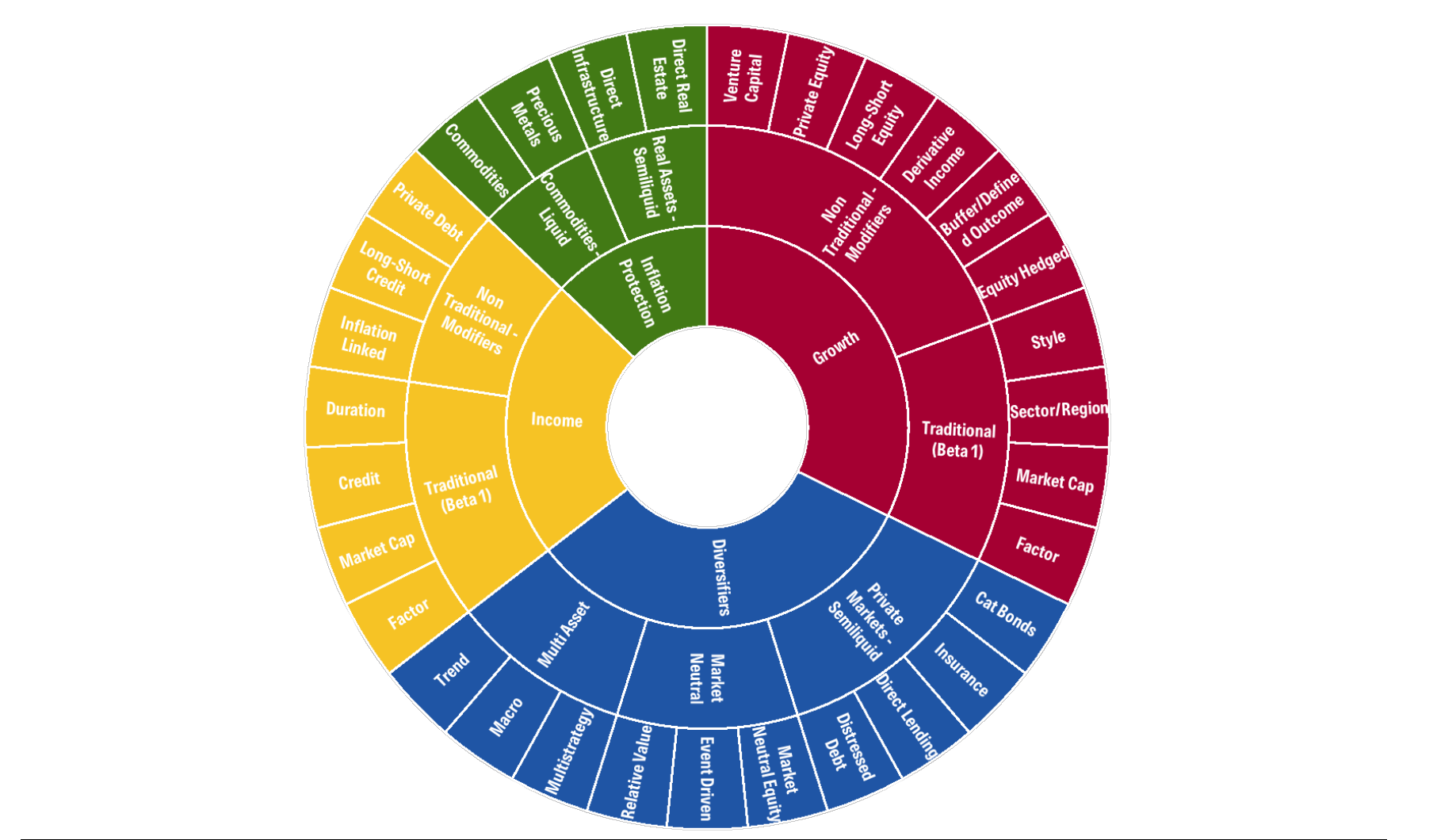
Source: Morningstar.
However, it's crucial to clarify that semiliquid funds often carry risks similar to traditional equity or credit investments. Instead of being a completely new risk factor, they should be viewed as a way to expand the existing equity or credit opportunity set. These funds can provide access to private equity or venture capital opportunities that are not available in public markets. Furthermore, many of these funds include real assets like infrastructure and real estate, which offer the appeal of potential inflation hedging and portfolio stability.
The "Three Ps" of Private Asset Investing
Successfully investing in private assets hinges on three key principles: Patience, Premium, and Proficiency. Understanding these pillars is essential before allocating capital to less liquid strategies.
Patience is non-negotiable. Private markets operate on longer time horizons than their public counterparts. Investors must be prepared for a commitment of at least seven to ten years to weather market cycles and accommodate the lock-up periods inherent in these strategies. This long-term view allows the underlying investments to mature and generate value.
Next, investors should demand a Premium for the reduced liquidity. This "illiquidity premium" is the expected incremental return as compensation for locking up capital and navigating the complexities of private assets. Our research suggests that investors should realistically target an excess return of at least 2% over comparable public market investments to justify the trade-off.
Finally, Proficiency in manager selection is critical. The difference in performance between top and bottom-quartile managers is significantly wider in private markets than in public ones. As our report highlights, picking the right manager can have a profound impact on outcomes, making thorough due diligence more important than ever. You can learn more about how to evaluate semiliquid fund performance to aid this process.
A 4-Step Guide to Portfolio Construction
Here’s a step-by-step guide for advisors to follow:
- Set expectations on risk and returns
- Understand the vehicle to align fund structure, assets, and investors
- Size the footprint
- Build the portfolio
1. Set Expectations on Risk and Returns
Setting realistic expectations is the first step in building a portfolio that includes private assets. It's important to recognize that private assets may appear less volatile due to appraisal-based valuations and pricing lags, but this does not eliminate risk.
Tools like Morningstar’s Direct Advisory Suite for private markets can help advisors and investors better analyze risk and establish return expectations. For benchmarking, reference evergreen indexes or the Modern Market 100 as a baseline for private market return assumptions.
2. Understand the Vehicle to Align Fund Structure, Assets, and Investors
The fund’s structure is a vital consideration. Ensuring that the vehicle’s design—including liquidity terms and fee structure—aligns with both the nature of the underlying assets and the end investor’s financial goals is critical. This alignment helps maintain flexibility and manage liquidity needs. Additionally, utilizing semiliquid fund ratings can guide advisors when evaluating different vehicles. The state of semiliquid funds is constantly evolving, making awareness of current structural trends essential.
3. Size the Footprint
Disciplined sizing is essential to successful portfolio construction. Allocation limits are shaped by the illiquidity of private assets, rebalancing constraints, and potentially higher fees compared to traditional vehicles. According to data from the report, semiliquid funds—including interval funds and tender offer funds—have significantly higher expense ratios than US-listed ETFs and open-end mutual funds. These elevated costs can impact overall portfolio returns and should be carefully weighed when determining allocation. Over-allocating can create challenges if capital is needed unexpectedly. Advisors should carefully assess an investor’s liquidity budget, income needs, and risk appetite before determining how much exposure is appropriate for semiliquid strategies.
4. Build the Portfolio
Finally, assembling the portfolio requires a strategic approach that aligns all components for balanced risk and long-term objectives. Using mean-variance optimization allows advisors to evaluate various asset mixes and identify combinations that balance expected return and risk. However, MVO requires estimates on vol and correlation which are simply not available in private assets. When possible, regular rebalancing is helpful, as market values can drift away from intended targets—especially with illiquid holdings. Building a resilient, diversified portfolio involves not only adding private market exposure but ensuring it complements the entire investment strategy. For more context, explore the allure and risks of investing in private markets.
Mean-Variance Optimization
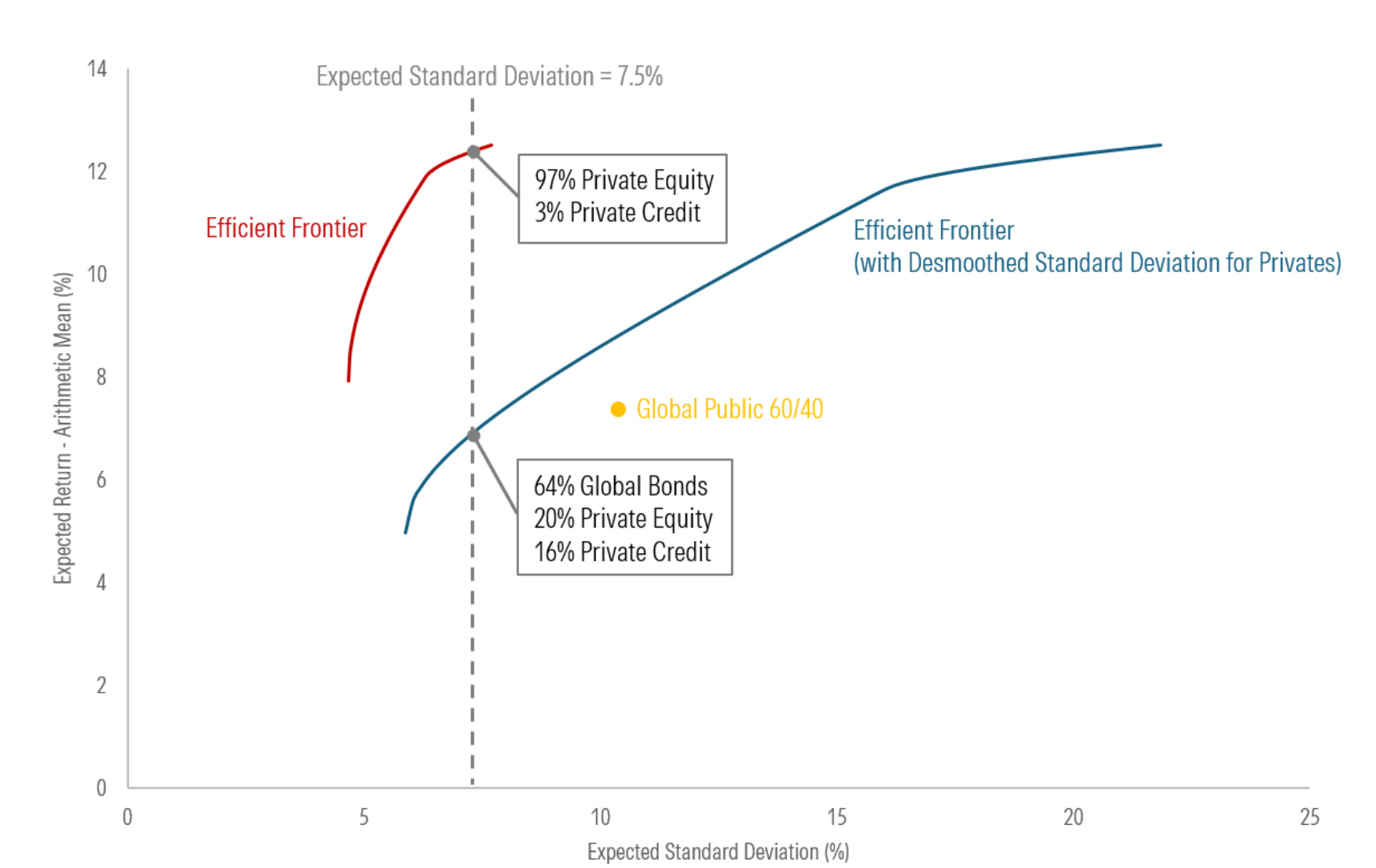
The model includes global stocks, global bonds, private equity (represented by the US leveraged buyout), and private credit (represented by US direct lending).
How Morningstar Helps Advisors with Semiliquid Funds
Integrating semiliquid funds into client portfolios offers a pathway to potentially higher returns and broader diversification, but it demands a disciplined and informed approach. Success requires balancing the appeal of the illiquidity premium with the realities of long-time horizons, complexity, and the critical importance of manager selection. The key is to build the whole portfolio, not treat private assets as a separate silo.
By leveraging comprehensive research and robust analytical tools, advisors can better navigate this complex landscape. Direct Advisory Suite provides the data and insights individual advisors need to evaluate manager performance, understand semiliquid fund ratings, and construct resilient, well-diversified portfolios that effectively incorporate private market exposure.