
JL and Jessica Collins: She Followed Her Dad’s Investing Advice. Then Quit the Job She Hated
When your dad is the author of ‘The Simple Path to Wealth,’ you grow up knowing a few things about achieving financial independence. She stuck with index funds, saved half her paycheck, and left corporate America at 32.


Subscribe to Morningstar’s The Long View from your mobile device: Apple Podcasts | Spotify
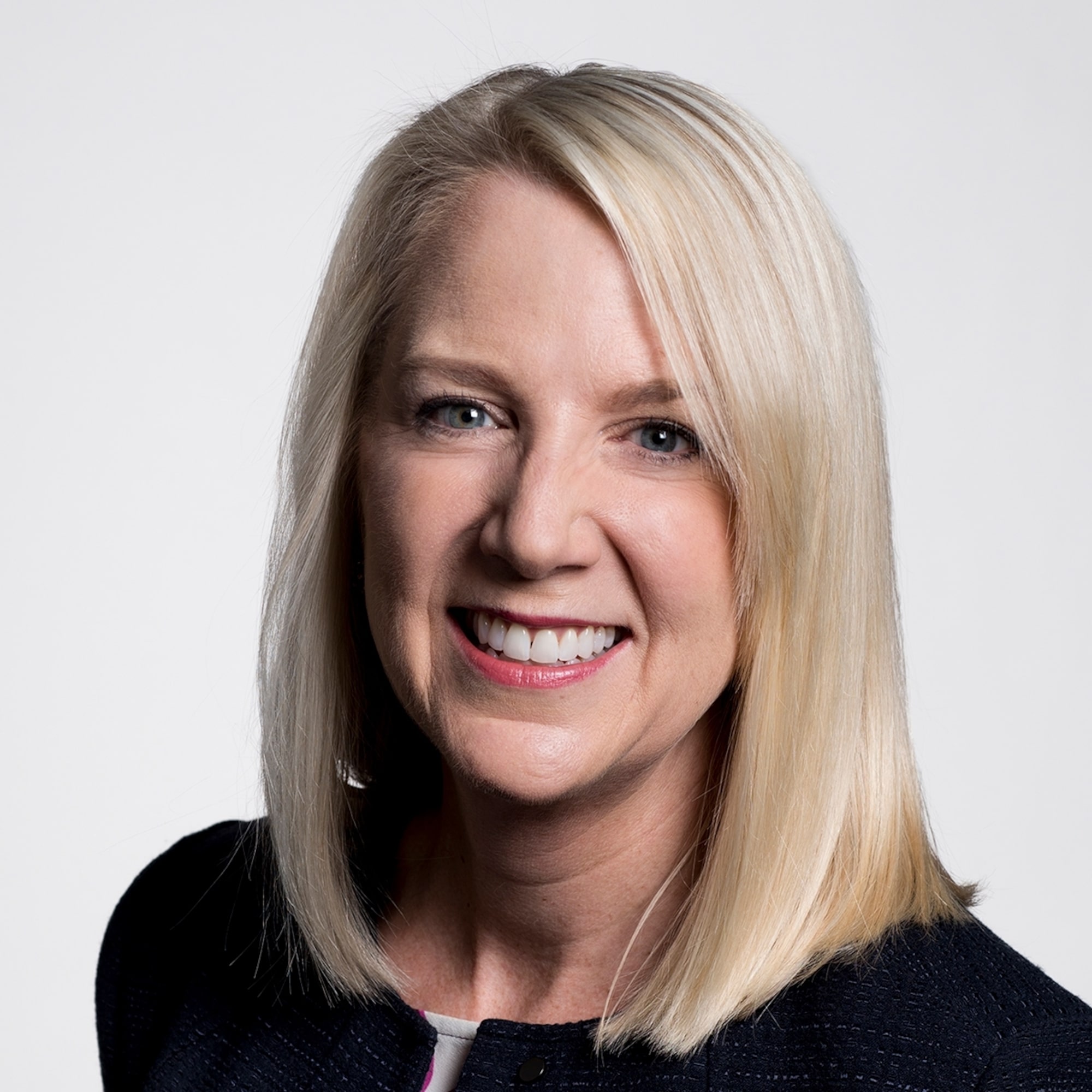
Our guests on the podcast today are JL and Jessica Collins. JL is the author of the bestselling personal finance book, The Simple Path to Wealth, and is often called the godfather of the Financial Independence, Retire Early movement. Jessica is the author of The Simple Path to Wealth Workbook, which is a companion to the book. One thing that jumped out to us from this conversation is that JL seems to be mellowing a little bit on whether it makes sense to invest overseas. We’ve asked him about this every time we’ve talked, and we get the sense that he’s coming around a little bit on international investing. We also liked the point they both made about how a lack of interest in investing and financial matters can actually be a superpower: It can help you avoid the temptation to tinker with your portfolio or chase the latest shiny new fund, which can ultimately be counterproductive.
Episode Highlights
- How Money Lessons Led to Financial Independence
- Rethinking the FIRE Finish Line
- Investing Simply and Spending Intentionally
- Should Investors Expect Lower Returns?
- Global Diversification, Inflation, and the 4% Rule
- Is College Debt Worth the Cost?
- Why a Home Is Not an Investment
- Planning Your Portfolio Without Social Security
Transcript
Christine Benz: Hi, and welcome to The Long View. I’m Christine Benz, director of personal finance and retirement planning for Morningstar.
Amy Arnott: And I’m Amy Arnott, portfolio strategist with Morningstar.
Christine Benz: Our guests on the podcast today are JL and Jessica Collins. JL is the author of the bestselling personal finance book, The Simple Path to Wealth, and is often called the godfather of the Financial Independence, Retire Early movement. Jessica is the author of The Simple Path to Wealth Workbook, which is a companion to the book. Amy, one thing that jumped out at me from this conversation, and I always love talking to JL, is that he seems to be mellowing a little bit on whether it makes sense to invest overseas. This is something I’ve asked him about every time we’ve talked, and I sense that he is coming around to international investing a little bit.
Amy Arnott: Yeah, I thought that was really interesting too. I also liked the point that both of them made about how a lack of interest in investing and financial matters can kind of be a superpower because it helps you avoid the temptation to tinker with your portfolio or buy into the shiny new type of fund that might end up being counterproductive.
Christine Benz: OK, let’s get into the conversation. JL and Jessica, welcome to The Long View.
Jessica Collins: Thank you so much. Happy to be here.
JL Collins: It’s a pleasure to be here. Thanks for having us.
How Money Lessons Led to Financial Independence
Christine Benz: Well, it’s great to have you both here to discuss this new workbook that is coming out. We wanted to start by talking about the original, The Simple Path to Wealth. It was meant as a distillation of the financial lessons, JL, that you wanted to impart to Jessica, and part of the story is that Jessica didn’t care about those lessons. She was the little girl who wouldn’t listen, as you wrote in The Simple Path to Wealth. Why do you think that was? Maybe both can tackle that question.
JL Collins: Well, I’ll go first on that. She likes to tease me these days that had she listened when she was young, I would’ve had no need to put this down on paper. There’d have been no blog; there’d been no Chautauquas, those events that I put together. There’d have been no Simple Path to Wealth, or Pathfinders, or now, Workbook. Thankfully, she didn’t listen when she was young. My take is I just pushed it too hard too soon. In my defense, I did that because if you get money right, your life can be so much better than if you get it wrong. Like all parents, I wanted her life to be as good as it could be.
Jessica Collins: Yeah. I get that a decent amount of, “Well, how could you not listen, or how are you not interested in this?” The honest answer is I was a child. I was an actual child, 4 years old. I mean, I can’t think of many topics that would hold a 4-year-old’s attention span for very long. And the fact that we were having these conversations month after month and then my whole childhood up into my adolescence and even into my young adult life, I think it quickly went from something that I just didn’t have the attention span for to something that I dreaded because it just always felt like a lecture.
JL Collins: Well, in fairness, because it was.
Jessica Collins: I mean, I’m not wrong.
Amy Arnott: Related to that, you note in the book that you’re not really wired to be as obsessed with financial matters as your dad, and that for you, you look at money as a tool. Has your financial journey been different from your dad’s as a result?
Jessica Collins: Yeah. I mean, our financial journeys are fundamentally different, strictly from the fact that Dad didn’t have a Simple Path to guide him. I mean, his financial journey was—well, and I’ll let you speak to this—but from our conversations, his financial journey was a mix of trial and error and just knowing that he wanted to buy his freedom. Whereas my financial journey was very much this path laid out for me. This is what we do. We talked about it at a young age, and you build the habits when you’re a child, and you just keep practicing, and you stay consistent and diligent. And so, pretty fundamentally, our paths are different.
JL Collins: Yeah, I think very fundamentally. I mean, I was wandering in the wilderness for 40 years trying to figure this stuff out and finally did. Once I did and laid it down, then Jess had the path to follow. Very, very different experiences. That’s the reason that when the idea for the workbook came to light—which one of the guys at our publisher, Authors Equity, came up with it and broached it with me—we all rapidly realized that I’m not the one to write this. We have a better person to write it. And that, of course, is Jessica, for whom it was written and who successfully walked it and achieved financial independence at, what were you, 32 or something? At 32.
Christine Benz: Yeah. Jessica, I wanted to ask you about your journey. Maybe you could tell us a little bit about your life in the corporate world and then hitting financial independence in your early 30s. I’d also like to hear JL’s side of that story because it sounds like JL, you pushed back a little bit when Jess indicated that she did want to step away from corporate life. But maybe, Jess, just share a little bit about your background.
Jessica Collins: Yes. I was as shocked as everyone else when Dad pushed back, but we’ll get to that. I had a very typical career in corporate America as a sales executive. I was selling software to businesses. B2B software, if anybody’s familiar; I was selling SaaS, nothing too luxurious or romantic about it, just selling software, you’re making a pretty decent amount of money. Because I was in corporate America in my 20s, I already had these tools under my belt, so I was already pretty well-versed and comfortable with aggressively saving. I was saving 50% of my paycheck. As my paycheck grew, I just kept saving. And I was just practicing these things that my dad had been teaching me my whole life.
It wasn’t until I’d been in corporate America for a few years where it finally clicked like, I actually don’t like this, and I actually don’t want to do this for the rest of my life. What do I do? Do I just have to deal with this and suck it up and say this is my life now until I retire in my 60s? And that’s when everything—FIRE and financial independence—kind of clicked for me. That’s when I had my moment of, oh, this is what everybody is talking about. This is what my dad meant about buying your freedom and being able to choose the life that you want. And oh, this is what the 4% rule actually looks like in practice. I had been in corporate America for a few years before all of that clicked.
And the only reason it ever clicked for me was because I was in a position that I was pretty deeply unhappy with. I had to have that moment of reflection of, OK, I’m not happy. What do I do? How do I rectify this because I don’t want to live my life like this? And when I realized that all of the aggressive savings and actually being diligent and consistent and making the right choices with my money had paid off, that’s when I had the, oh, OK, I can walk away. And then a year after I realized I could walk away was when I actually walked away. It took me a while to be completely comfortable with it, but that was two years ago.
Rethinking the FIRE Finish Line
Amy Arnott: For people in this situation where they’re really not happy in their job, obviously, if you have the option of walking away and you realize that you’re financially independent and can do that without having another job lined up, that would be one possibility. But if people don’t have the means to just walk away, should those people really focus on finding another job that they do like better?
JL Collins: Let me take that one because I’ve had a lot of those kinds of conversations over the years. That’s the interesting choice, of course. Do you say, OK, I don’t like my corporate gig—as an example—and it’s really making me unhappy, and I can either buckle down, endure it, get to FI as quickly as possible, and then step away and go find or go to the thing that I really want to do that might well pay less money. Or you can just go to the thing you really want to do that pays less money and do that now and go forward. And I think it depends on the individual and the individual’s temperament. There’s no definitive right answer; whatever feels best to you.
What I will say is during the Chautauquas, which were these events that I had put together and ran from 2013 to 2022, we would have one-on-one sessions, and people could elect me or one of the other speakers to spend the time with. And very frequently, in the ones that had chosen me, there’d be something along the lines of, I have, say, $1 million invested and using the 4% rule, that suggests that that’ll throw off $40,000 a year that you can live on and you can expect the portfolio to survive. And then they’d say, but I need $50,000 a year, which would be a 5% withdrawal, not 4%. But I’m in this soul-crushing job, what do I do?
My response to that question was always: I’d quit that job yesterday for a couple of reasons. You are very well positioned at that point. You do have a million dollars. These are mostly young people who have a lot of flexibility to do things going forward. If you look at the Trinity study, which explored the 4% idea in further depth, you find that a 5% withdrawal rate succeeds, if memory serves me, 86% of the time as opposed to 96% of the time, I think, for the 4%. That’s still high odds. And if it’s me, I’m in a soul-crushing job, I’m rolling the dice on that 86%.
The other thing I would say to those people is, do you think there is something you could figure out to do during the course of the next 12 months after you quit your corporate job that would throw off an extra $10,000 a year to make up the gap? I never once had anybody, when they were asked that question, say, nah, I don’t think I could do that. Again, people who choose to walk this path, they’re smart, engaged, creative, successful people. The idea that they couldn’t figure out a way to make a little extra money to close the gap is kind of silly. There’s a lot of flexibility around this 4% rule, and I hesitate on the word rule because I’ve never been comfortable with it.
I think of it as a wonderful guideline. And even Bengen—I think I’m pronouncing his name correctly—the guy who came up with the idea, is now saying that that’s too conservative and people can be more generous with their withdrawal rates. He himself, when he created it—and this is something that I’ve tried to drum home in my writings and conversations—the 4% that he came up with originally is extraordinarily conservative. It was designed to allow a portfolio to survive during the worst possible situations that we were likely to expect.
Amy Arnott: Even for someone who really is more comfortable sticking with a 4% withdrawal rate, that could be a really good argument for Barista FIRE, where you find a lower-stress job, like working in a cafe or whatever, where you can easily earn $10,000 a year to close that gap.
JL Collins: Yeah. Amy, that’s a wonderful point. When I first started writing about all this stuff back in 2011, the idea of Barista FIRE, as an example, didn’t exist. But since then, in the intervening … what, it’s been 15 years, a lot of people have come up with very creative ways to look at this. Barista FIRE, as you mentioned, is a great example. You quit the high-pressure job, and you take maybe a part-time job that throws off just a little bit extra money you need to make ends meet, and you’re good. And then there’s Lean FIRE and Fat FIRE. There are all kinds of different ways to approach this that I think it’s wonderful to see that creativity come to play.
Christine Benz: JL, can you talk about why, then, when Jess was saying that she was ready to leave her corporate job, why you didn’t think that was such a great idea?
JL Collins: Yeah, so I think that’s a reflection of me and my experience and my background coming to the fore without thinking through how different her situation is. What I mean by that is, as we discussed earlier, I wandered in the wilderness for 40 years trying to figure this stuff out. That meant that when I was 32, I was not financially independent and I had to keep working. There was no other option. I enjoyed my career, not because it was a great, glamorous career, but it was one of those things that, OK, I have to do something to earn a living, so I’m going to pick something that pays me relatively well, and I’m going to be the best that I possibly can be at doing it. That creates a certain satisfaction. And so I enjoyed my career. So when, at this young age, she was stepping away, I was a little concerned: Is she going to give up that enjoyment?
The other thing, frankly, is my perspective on the job she had and hers are different. Because the job she had, from my perspective, just seemed awesome. I mean, she worked from home, she set her own hours, she got paid commission, she was extraordinarily good at doing it, and so she made a lot of money, and it didn’t seem to take that much effort on her part to do this. I’m sitting there saying, “I would never have given up a job like that.” But on the other hand, you have to sit back and realize that that’s the power of the Simple Path I created, even though I never got to walk it myself; she could do this for a decade and suddenly be in this position where, even objectively having a really good job, it just wasn’t working for her, and she didn’t have to do it anymore. That’s my defense. I think I came around pretty quickly, but for all those reasons, it took me a minute.
By the way, sitting here now, I think she absolutely made the right decision. Among other things, she wouldn’t have been able to help with the new edition of The Simple Path to Wealth, and she did a lot of heavy lifting on that with my publisher. And of course, the workbook that she just finished writing wouldn’t exist had she stayed on that corporate path. When you leave your traditional career, when you’re able to do that, suddenly all these other opportunities tend to present themselves in unexpected ways.
Amy Arnott: Jessica, I’m curious, do you think about ever possibly going back to work, or do you think that people who retire early should keep a toe in the working world to give themselves options if they want to go back to work 10 or 20 years down the line?
Jessica Collins: Well, I’m not one to tell people what they should do. I think it’s your life; you make whatever decisions feel good for you. I also will say that somebody who has walked this path, who has retired early, and I always say retired early in quotes because to me that doesn’t mean you never work again, you never make a paycheck. It just means maybe you stepped away from the main source of income in the most recent years of your life. But anybody who has achieved this is, in my definition, hardworking, disciplined, driven, pretty exceptional. You’re going to find something to keep you busy and to keep you productive. I mean, I just don’t see a world where somebody who achieves financial independence is then happy sitting at home all day eating bonbons and watching TV. Those two just don’t equal in my brain. If you want to keep your toe in the job market, I don’t see why not.
I’m sure that looks different depending on what career you walked away from. I have no desire to ever go back into sales. I have no desire to ever go back into corporate America, but never say never. I might change my mind tomorrow. Somebody else might have a different career that maybe they would want to go back to. And sure, if that’s something that speaks to you now, keep those doors open, keep those bridges up and sturdy, and keep fostering those relationships that you’ve built. But yeah, I just don’t know that that’s something that somebody who has walked this path successfully is really going to have to worry about much because I think if you want to work or if you want to do something productive with your time, whether it’s the career you had or finding a new career or even just finding a hobby to dedicate yourself to, I think your diligence on the path shows that you’ll be able to fill your time in whatever way you want when you decide what that’ll look like.
Investing Simply and Spending Intentionally
Christine Benz: It seems like you two are very aligned with respect to targeting a heavy savings rate while you’re working and focusing on index funds or sort of US total market index funds. I’m curious, are there any areas where you disagree on how to approach financial matters?
Jessica Collins: Absolutely not. It’s funny because somebody else asked me this question recently, and I thought about it for a few seconds, and I said, “Well, no, because in full transparency, the topic of finance is not something that I enjoy.” There has never been a part of me at any point in my life that thought, maybe I’ll go research something else or maybe I’ll go down a rabbit hole of a different strategy I’ve never been interested in. There is nothing financially related that—Dad and I disagree on a lot of stuff; that’s a different conversation—when it comes to finances, no, we agree on everything purely because this is just what I grew up with, and I never had an interest or a desire to even consider something other than what I was raised on. I don’t know. Can you think of something?
JL Collins: Well, as you said, when it comes to investing, we are well aligned. There are any number of other subjects where we’re not so much. But yeah, I think Jess is—I tell her her superpower is that she’s never going to be tempted to tinker with what The Simple Path to Wealth calls for because she is not interested in it. The Simple Path was designed for people like her who know that it’s important. If they get money right, they know their life will be better, but they’re not really interested in investing, and they don’t want to have to think about it all the time. That’s why it’s The Simple Path: so you can understand a couple of basic concepts, which she understands very well now, and you implement a couple of very simple strategies, and then you are done. The less you tinker, the better you will do.
It’s really gratifying to me to see, because I think of all the people that I’ve met over the last 15 years and talked to about this stuff, I think Jessica has followed the Simple Path to wealth in its purest form of anybody else. Almost everybody else says, “Wow, this is great, and this is wonderful, but …” And then they tinker with it a little bit, and she’s never done that, and she’s gotten a stellar result, I think, because of it that she hasn’t tinkered with it.
Amy Arnott: Yeah, I think that’s a great point that investing and personal finance is probably one of the few areas of life where lack of interest is a big advantage.
JL Collins: As long as you get a couple of basic things right.
Amy Arnott: Right.
JL Collins: Yeah.
Amy Arnott: Jessica, we often hear people giving the advice that you should spend money on experiences instead of things, but you write in the book that you think that’s actually one of the biggest myths in personal finance. Can you discuss that a bit?
Jessica Collins: So, I don’t think there’s a myth in spending your money on experiences over things. Actually, that’s how I spend my money. I would much rather spend my money on experiences over things. That’s how my parents spend their money. That’s what I saw; that’s how I was raised. The myth that I’m trying to bust is, I guess, it’s not even a myth. It’s this idea that when you’re walking the path, it’s a path of deprivation. What I’m trying to get across with the workbook, and my ultimate goal, is I don’t care what you spend your money on.
Like I said earlier, I’m not here to “should” anybody. You spend your money whatever way you want. You might read the workbook or somebody might read the workbook and say, “Actually, I have done these exercises. I feel very clear about my relationship with money and where I want to spend my money, and this path doesn’t feel right for me.” And that’s cool. I am A-OK with that because it’s your money and your life. What I really want, my goal, what I was trying to get across is that you can spend your money on whatever you want. Just make sure you understand the why behind it.
I think the conversation around experiences over objects or things is kind of not a necessary one because, at the end of the day, you’re still spending money, and that’s money that is going somewhere. It’s money that has opportunity costs, and it’s money that could have gone into investing or saving for your future, buying your freedom.
All that I am hoping that readers can figure out and gain clarity around is, well, what do you actually want? What do you want to spend your money on? If you would rather spend your money on experiences, which, as I said, is what I do, that’s fine. From an emotional point of view, I 100% relate to that. If you would rather spend your money on things, that’s OK too. But I think it’s important to understand that if you are spending your money on a very expensive thing or if you’re spending your money on a lot of things, that money cannot go toward your freedom. When you have conversations with people who say, “Oh, the simple path to wealth is, I know what I have to do, but it just feels so difficult, and I can’t do it,” well, now you know why, because we know where our money is going.
JL Collins: I think another way to think about that is there is nothing magically more noble about spending money on experiences than on things. It’s a matter of personal preference. The classic experience, of course, is travel. Well, not everybody enjoys travel. Not everybody finds that satisfying or desirable, and just because Jess and I happen to, doesn’t mean that’s the right thing for everybody else. Whether you spend $10,000 on an amazing trip or $10,000 on remodeling your kitchen, there’s nothing inherently more noble or better about one over the other. It’s just that you’re still making a choice to spend money, and there’s an opportunity cost to that. But as I’ve also said, every decision doesn’t have to be driven by the money, but you should understand the financial impact of those decisions.
Christine Benz: One thing I think about in the context of the spending on experiences mantra is just that when I reflect on the most important experiences in my life, they were not expensive ones. I don’t know if other people feel that same way, but spending time at dinner with some lovely friends and family—that’s one of my favorite ways to spend time and money, but it’s not costly. I just want people to reflect more on those kinds of things.
JL Collins: Agreed. Could not agree more.
Jessica Collins: Agreed.
Should Investors Expect Lower Returns?
Christine Benz: Yeah. I wanted to delve into The Simple Path a little further. There is this advice to invest in broad market index funds, US market, total market, but the US market has been on a tremendous tear and now has 15% annualized gains as of early or mid-October over the past 10- and 15-year periods. Is there a concern? Are you concerned that the next decade or so could be difficult for investors and that they may want to ratchet in their expectations for what stocks might be able to do in the US market in particular?
JL Collins: So, am I concerned? Yes. But if you go back 10 or 15 years, that same mantra was being put out there. In fact, Jack Bogle, who is my personal hero, and I think a fiscal saint, kind of to my amazement, a little bit to my disappointment, was actually one of the people saying in 2015, “Investors are going to have to expect much lower returns over the next decade.” Well, with all due respect to Mr. Bogle and all those other people who were saying it, what I was saying at the time is, well, maybe, and I understand what you’re looking at that brings you to that conclusion, but nobody knows what the market’s going to do.
And of course, what we know now, because here we are in 2026, is the market had a phenomenal decade, even though it went through a pandemic and a crash and the bond crash and what have you. It’s just been phenomenal. I have no idea what’s going to happen in the next decade, and neither does anybody else, regardless of all the many people you can find on television telling you what the next decade is going to do. Nobody knows what’s going to happen.
What I will say is we will have another bear market at some point. We will have another crash at some point. These are a natural part of the process. They are not to be feared. They are to be expected. The problem is you can never predict when they’re going to happen. A lot of people are predicting AI is a bubble. I don’t know. Maybe they’re right, but I don’t know.
Even if they’re right, the question then becomes, OK, it’s a bubble. When is that bubble going to burst? Is it going to burst next week? Well, of course, that’s one thing. Is it going to burst a decade from now? Well, if it’s going to burst a decade from now, the market will be up dramatically from where it is. After that bubble bursts, it will probably settle at a point that it’s higher than it is now. You just can’t predict those things. Part of the Simple Path is understanding that and not trying; just know that they’re going to happen, and know when they do, you just tie yourself to the mast, and you stay the course because you know, like all storms, that storm will blow over and the sun will come out again.
Global Diversification, Inflation, and the 4% Rule
Amy Arnott: For people who do want to take a very simple approach, what do you think about a total world stock index fund like Vanguard Total World Stock Index VT? Do you think that’s a good option for someone who wants to get a lot of diversification and exposure to global markets in one package?
JL Collins: That’s a really interesting question at this point in time because my thinking on it has shifted a bit. I’m a little bit famous or perhaps infamous for making the case that as Americans, you don’t need to own international stocks. Of course, if you own a world fund, then you are buying a fund that is, if you get Vanguard, you’re going to be roughly 60% in the US and 40% scattered around the rest of the world. I’ve gotten a lot of pushback on that, by the way, probably as much on that as anything else I’ve ever said.
All along, at the same time, when I am talking to an international audience, when I’m talking to any audience other than an American audience, I say something very different because there is no other market that is large enough and dominant enough where an investor can get away with investing only in their own home country. The US is the only one that has that ability. If you’re in any other part of the world, what I am saying and have said ever since I’ve been speaking about this stuff is you want a world fund because your market is going to be too small to just invest in it. Personally, if I wasn’t living in the US, I would not be comfortable in investing entirely in a country that was not my own. I don’t have any problem with world funds inherently.
The other thing that I have frequently said is that at some point in the future, even Americans will want to look at a world fund because, as the world economic pie continues to grow, the US share is going to continue to shrink. This has happened ever since the end of World War II, when the world economy was essentially the US economy because the rest of the industrialized world was in ashes. As the rest of the world built up, the pie got bigger and bigger, and the US share got smaller and smaller. That’s not bad for the US, by the way, because the pie is so much bigger.
I think I’ve changed my feeling on this a little bit recently, because regardless of how anybody feels politically about the policies of Mr. Trump with tariffs and with changing our trade relationships with the rest of the world, it is fundamentally changing the American relationship with the rest of the world. It’s changing it in a way that after World War II, by design at Bretton Woods, the United States was made the center of the earth and everything orbited around that. That’s the way it was for the next 70, 80 years. That worked very well for America.
But the current administration is actively changing that. And you can argue whether that’s good for America or not. I think it is fundamentally good for the rest of the world because it is forcing them out from under the American umbrella in a way that is going to make their economies more dynamic, and they are seeking out other trade relationships with other countries rather than everything focusing back in on the United States.
Canada is a great example of this. Canada is very aggressively looking for other trading partners, whereas forever the United States has been large enough to sort of play that role, and they don’t feel comfortable with that at this point. That’s probably going to be good for Canada. They’re going to have a much more diverse range of markets for their products and a much more diverse range of trading partners to draw products from. Of course, I think this is going to make Canada stronger.
Europe’s going through this. Of course, a big beneficiary is China because China is welcoming these kinds of opportunities that didn’t exist before. Anyway, that’s a long-winded way of saying that, in fact, I now own some VT, so that I’ve shifted a little bit. Now, to be clear, I am still very dominantly invested in the United States, and I am still very, very bullish on the United States.
Christine Benz: So, VT being a total world market index. Sticking with current events, we’ve seen inflation be a little higher than I think anyone would like to see. Can you talk about how that relates to, say, the 4% guideline? If we’re worried that inflation could be higher for longer, would that suggest that if I’m just embarking on retirement and have a long time horizon, I should be a little bit more conservative with that base withdrawal percentage?
JL Collins: No, because again, remember 4% is an extraordinarily conservative withdrawal rate, number one. And number two is stocks are a pretty good inflation hedge. Inflation is when the cost of goods and services rise. If you have companies producing things, well, that means they can sell their goods and services at a higher price. There are few better inflation hedges than a broad-based stock index fund.
Now, the exception to that, of course, is if inflation gets too hot, if you get into something like hyperinflation, then all bets are off, and then there’s really no shelter from that storm that I can think of. But in normal, even in fairly high inflation scenarios, and where we are now is certainly higher than we would like. It’s, I think, 3.6% or something, and the Federal Reserve targets 2.0%, and you want a little bit of inflation as kind of grease for the economic wheels. So, 3.6% over time erodes the value of money, but it’s not so dramatic that stocks and companies and people can’t keep up with it. It’s not ideal. If you get up in 40%, 50%-plus levels of inflation, that’s a whole different kind of animal.
Is College Debt Worth the Cost?
Amy Arnott: Jessica, in the book you talk about your aversion to debt. And I’m curious, what type of advice would you give to young people who are thinking about whether or not they should take on debt to pay for college or grad school?
Jessica Collins: I would probably give the same advice that I remember my dad giving me when I was at that age, because we had this conversation a few times when I was going to my undergrad, and then there was a period of my life where I was thinking maybe going into getting a master’s. And really I think it comes down to thinking about, well, why do you want to go to college? I think I was in a generation where it was just expected that everybody was going to go to college. Nobody in my high school had conversations about doing anything other than going to get their bachelor’s.
I think now times have shifted, and honestly for the better, because I don’t think college is for everyone. That was something that Dad and I talked about: Is this for you? And there are a lot of things to think about, right? Is it the experience that you want? Is this the degree that you want when you think about what you might actually want to do with your career? Because we know that a lot of people go to college and don’t actually use their degree. Now, it’s a very expensive piece of paper that you potentially have student loans for. I think having a moment, and probably a few moments, to really reflect on, well, is college even for you? There were a lot of people who I know in my life now who ended up not going to college or even regretting going to college because it just wasn’t the environment that they wanted. They didn’t know what they wanted to do with their life, or they did know what they wanted to do with their life and college wasn’t going to help them get there, but they ended up going because that was just the thing that you did.
Unfortunately, doing the thing that you just do because society tells you to do isn’t a good enough reason to go through with that. That’s a long way of saying, if you’re somebody who thinks, “I know what I want to do; I know that this degree is going to help me get a leg up in the career that I’m hoping to achieve. I know that the college experience is one that I’m looking forward to.” Sure, go to college. But if you’re somebody who you don’t think college is going to be for you—those types of class structures, that type of exam taking, you don’t know what you’re going to do—then I would probably reconsider going or at least waiting a year because that’s going to be a lot of student loans for something that you’re really just not sure that it would be useful for you or that’s a place that you would thrive in.
Why a Home Is Not an Investment
Christine Benz: Sticking with debt or something that’s debt adjacent, JL, you’ve been skeptical that homeownership is a must for people who are seeking financial freedom. Can you summarize your thinking on that?
JL Collins: Sure. I think one of the reasons that Jessica is financially independent is she didn’t fall into the trap of buying real estate, of buying a home. She continued as a renter. Full disclosure, I’ve owned homes for most of my adult life. I probably started owning them much too soon, but again, I was a product of that environment that, well, this is, of course, just what you do. Clearly, looking back, I would’ve been financially better off if I had not bought those earlier places. I think what people need to understand is that a house is not an investment. It’s a lifestyle choice. It’s an expensive indulgence. There’s nothing wrong with expensive indulgences as long as you can comfortably, easily afford them, as long as you can buy them from what I call a position of strength. But they’re not investments.
Now, to be clear, the pushback I get is, “Well, I bought my house in such and such a year and now it’s worth so much, much more money, and it’s been a great investment for me.” Well, first of all, if you run those numbers and you compare it to a broad-based index fund, you probably underperformed in the vast majority of cases, even if you had that scenario of watching your house appreciate nicely.
But the other thing to realize is that not all houses do that. I mean, if you bought a house in Detroit 30, 40 years ago, you didn’t have that experience. If you bought it in San Francisco, you did. Now, going forward, Detroit seems to be in a renaissance, and San Francisco seems to have some struggles. I don’t know, and just like I don’t know what the stock market’s going to do, but it may be within 20 years, the people who bought in San Francisco are going to be the ones licking their wounds, and the people in Detroit are going to be saying, “Wow, I made this great financial decision.” But it’s not the way to think of your house.
I just got a comment on one of my posts where this came up from a guy who said, “Well, it’s worked out really well for me because I bought a house and then I took on roommates and I house hacked and I made money.” Well, OK, that’s great. If you’re willing to do that, now you’re not talking about a personal residence exclusively anymore. You’re talking about turning your personal residence into a piece of investment real estate. Investment real estate is an entirely different subject than personal residences. And yes, investment real estate can be a very, very profitable investment to make, but people seem to have trouble drawing the distinction between their personal home and a piece of investment real estate, which can be your personal home if you turn it into a piece of investment real estate by renting out rooms in it.
Planning Your Portfolio Without Social Security
Amy Arnott: We’ve been hearing a lot of worry and concern about the Social Security Trust Fund running out by 2032. Within the FIRE community, there’s also, I think, a lot of debate about whether you should exclude Social Security from your plan entirely and just assume that it’s not going to be there or maybe give your future benefits a haircut. How are you looking at Social Security, Jessica, in your own plan?
Jessica Collins: I’m not. I’m not, because Social Security is something that ends up benefiting people who, A, made a lot of money and B, were in the workforce for a very long time. While I was in a career that was very lucrative, I wasn’t actually in the workforce for a very long time. I walked away when I was 32. The reality is, when I get to that age—and we don’t know what’s going to happen with Social Security—if I’m able to pull Social Security, it’s really not going to be a substantial amount every month because I didn’t pay into it that much. I didn’t pay into it long enough, especially compared with those who will end up paying into it for their full 40-year career. Personally, it is not even a factor that I think about when I think about my portfolio, and I think about my future.
Christine Benz: JL, The Simple Path to Wealth has been a blockbuster personal finance book. It’s perennially near the top of the charts in all of its categories. Which aspects of it do you think have resonated the most?
JL Collins: Yeah, so I’m thrilled at the success that it’s enjoyed, and I get a constant parade of people reaching out to me, telling me how it has profoundly changed their life and the lives of their family for the better, and that’s very gratifying. It’s far beyond anything that I expected when I wrote it. In fact, it took me three years to finish it, mainly because I would set it down and step away from it for months at a time, thinking this was an awful lot of work. Nobody’s going to really care. Why am I spending my time doing this? My editor at the time kept dragging me back to the writing table, saying, “No, this is really important stuff. This is going to help a lot of people. You need to get this finished.” He actually had a lot more confidence and belief in it than I did.
So, I’m a little bit stunned and I have reflected on it. I think one of the things that has allowed it to resonate with people is that it’s not written by a financial guy in financial terms. It’s an investment book written by an English major, which is what I am. I think it’s written in simple, understandable language. That’s the compliment I get about it most often is people will say, “I’ve tried to read investment books before. I’ve tried to read financial books before, and I just couldn’t get through them. And then I picked up The Simple Path to Wealth, and it’s like suddenly, oh, that’s what a bond is.” And so it seems to have—the fact that I don’t come from a financial background, that this has been an avocation for me rather than a vocation—I think has really helped in allowing me to translate the ideas into terms and words that are more accessible to people.
Christine Benz: Well, this was great. We very much appreciated you both spending time with us today. Thank you so much for being here.
Jessica Collins: Thank you for having us.
JL Collins: It was a pleasure, Christine. Thanks for having us.
Amy Arnott: Thanks so much to both of you.
Christine Benz: Thank you for joining us on The Long View. If you could, please take a moment to subscribe to and rate the podcast on Apple, Spotify, or wherever you get your podcasts. You can follow me on social media at Christine Benz on LinkedIn or @Christine_Benz on X.
Amy Arnott: And at Amy Arnott on LinkedIn.
Christine Benz: George Castady is our engineer for the podcast. Jessica Bebel produces the show notes each week, and Jennifer Gierat copy edits our transcripts. Finally, we’d love to get your feedback. If you have a comment or a guest idea, please email us at thelongview@morningstar.com. Until next time, thanks for joining us.
The author or authors do not own shares in any securities mentioned in this article. Find out about Morningstar’s editorial policies.

 United States