
What If Retirees Don’t Get the Returns They Were Hoping for?
How to strengthen your retirement plan for sequence of returns risk and other retirement shocks.
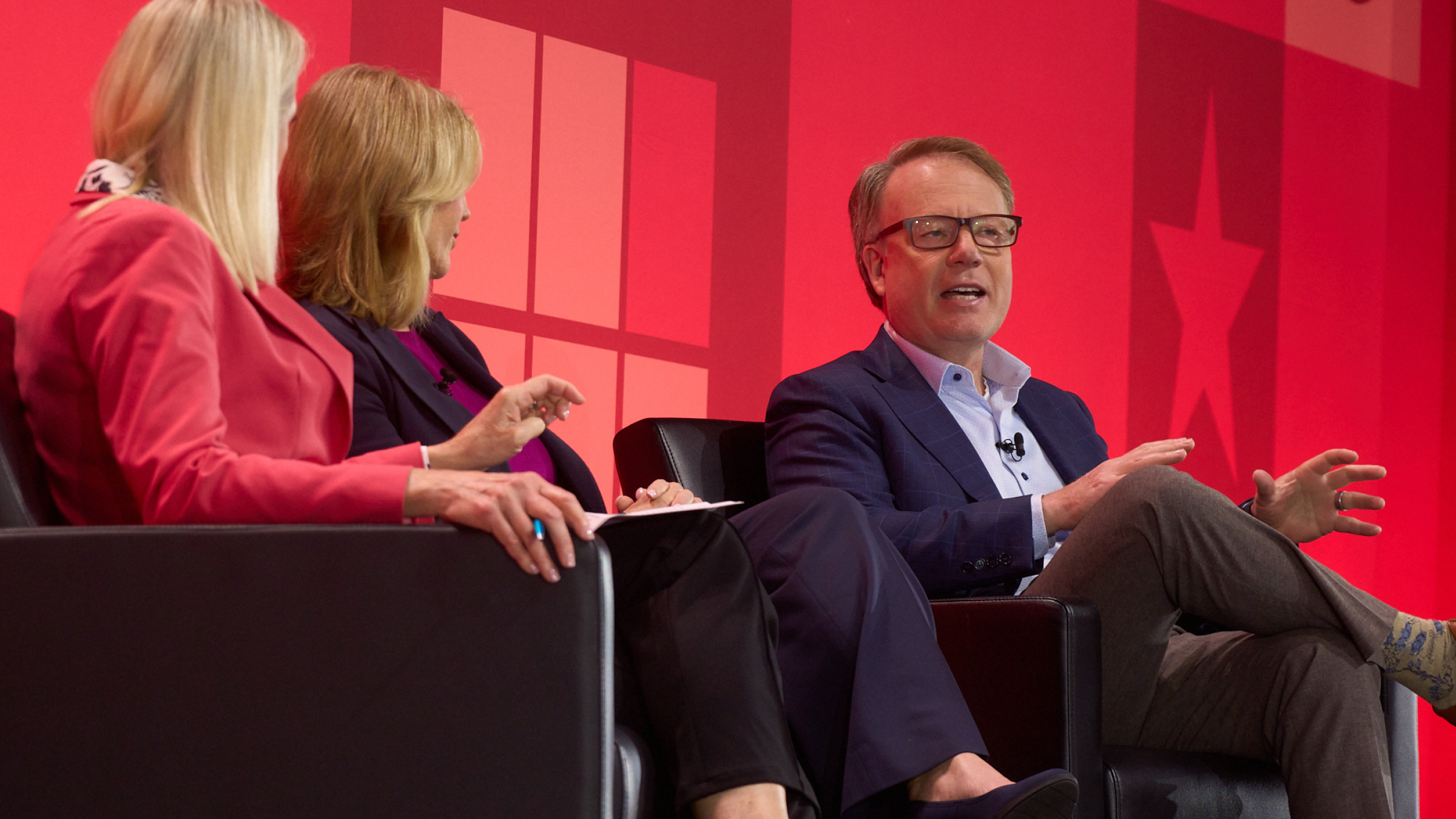
Sequence of returns, unexpected early retirement, long-term-care costs, and inflation can all pose serious risks to retirees. During a panel discussion at the 2026 Morningstar Investment Conference, I talked about those retirement shocks with Dana Anspach of Sensible Money and Michael Finke of The American College of Financial Services.
Today’s excerpt from that panel focuses on sequence of returns risk and how to protect your retirement plan.
The Traditional Market Shock
Christine Benz: I’d like to move on to the next shock that we’re going to talk about, and that is that traditional market shock, especially early on in someone’s retirement. We had someone on our podcast a couple of weeks ago who said that he was most worried about that risk for new retirees, the sort of prospect of potentially another lost decade for people just embarking on retirement. I’d like to get both of your perspectives on whether that concern is top of mind for you today.
Michael Finke: It is. We just did a recent study where we looked at what the most important years are for someone who’s approaching retirement or after retirement, in which years do the returns that you get on your investments have the biggest impact on the amount of income that you can draw from those investments throughout retirement. And it’s really the five years before retirement that are paramount, and maybe the first three or four years after, incrementally, they have the biggest impact on your lifestyle. One of the things that worries me right now is we’re sitting here at a cyclically adjusted price/earnings ratio, a cyclically adjusted P/E ratio of what is it, 42 or 43 right now. Historically, when stocks have been this expensive, they’ve never provided ... a positive nominal return over the next 10 years. It would have to be something that’s never happened before for it even to be a positive return over the next decade.
I sound like Dr. Doom when I’m talking about the impact that I think that expectations of equity returns are going to have on disappointment among retirees who are retiring right now. We’ve got more people than ever in the US who are retiring partially because they’ve met their number. And one of the things I have to remember is they met their number because stocks are so expensive. And when stocks get more expensive, there’s no way the expected return ... I mean, if you think about even like the dividend yield, the dividend yield is approaching 1% right now, whereas historically, it’s been about 4 times that. I think the risk has never been higher that retirees are not going to get the returns that they hope to get to be able to generate the amount of income that they expect to receive from their investments.
Paycheck Replacement Bucket, Reverse Glide Path
Benz: Dana, you try to address the risk that Michael just talked about with using what’s called a paycheck replacement bucket. Can you talk about how you size that bucket, what’s in it?
Dana Anspach: It’s a really common question. I talked about building out this income ladder, which is really the paycheck replacement portion combined with the growth portfolio and how much should be in that income ladder bucket? That’s a common question. I have a paper on this called The Wind Down where we look at how you would go about a process of building the income ladder instead of a specific number of years. There isn’t a magical number. It should be five years, it should be eight years, it should be 12 years. But if you start about 10 years out from retirement and you have a process that says, when I’m ahead of the amount of capital that I need to fund my retirement, I will sell some stocks and buy the first rung on my income ladder. And every year you’re measuring that.
Depending on the particular 10 years you get leading up to retirement, in some years, you’ll end up with a five-year income ladder by the time you get to retirement. In some years, you’ll end up with an eight-year ladder. I think of it as a method that you follow, a process that you follow versus a specific number of years. And I really like the idea of thinking about our risk allocations in relation to that most dangerous time.
Michael Kitces has the concept of a bond tent out there where you’re being more conservative during the riskiest years, the five years leading up to retirement, first three years, and then your portfolio can actually get a little more aggressive again, but you’re managing that risk around the time where it poses the biggest threat to your future income.
When Retirees Pull Out Money at Exactly the Wrong Time
Benz: Michael, what do you think about that reverse glide path idea? Do you think that it works behaviorally?
Finke: I don’t. We actually have done a couple of studies on how, as you get older, you respond to investment risk. And one of the things that we find is that once you reach retirement age, you actually become more likely to want to pull your money out of risky assets during some sort of a downturn. In 2020, we did a study on what people did in March of 2020. We saw that those who were over the age of 60 were far more likely to pull money out of stocks. And when you do that, when your timing is bad, you end up earning a negative alpha on your equity investments. And then the question is like, “Why did you even invest in risky assets in the first place if you’re not actually able to capture the equity risk premium because you’re not behaviorally able to withstand the inevitable ups and downs of equity?”
Anytime someone says, “Well, maybe we should be increasing equity allocations for 80-year-olds,” what’s the point? First, they’re very likely to respond incorrectly when the market does fall and pull money out of risky assets at exactly the wrong time. And the other thing is it makes them unhappy. Nobody wants to lose a significant amount of money when they’re in their 80s; you get fearful. We didn’t talk about that latter stage and experiencing cognitive decline and all of that, but we have to, I think, plan our portfolios for that latter stage of our life, and we have to recognize that the more we can simplify and the more we can take risk off the table, probably the better off we’re going to be.
Valentina Djeljosevic contributed to this article.
The author or authors do not own shares in any securities mentioned in this article. Find out about Morningstar’s editorial policies.

 United States