
After Earnings, Is Applied Materials Stock a Buy, a Sell, or Fairly Valued?
With increasing chip demand and investment in AI, here’s what we think of Applied stock.

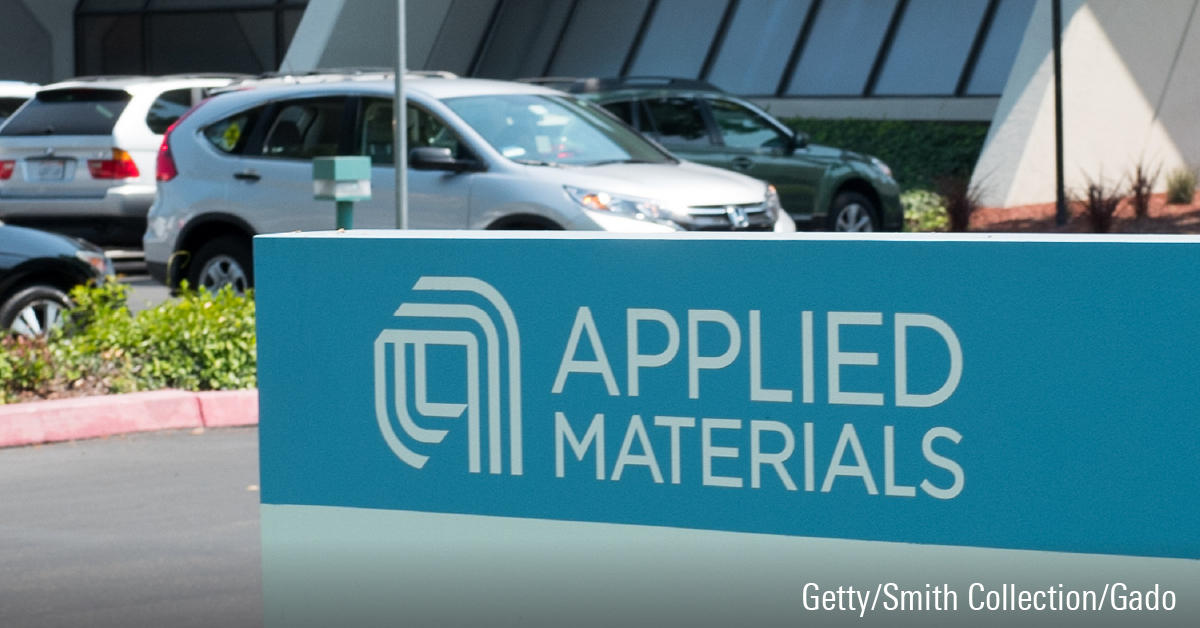
Applied Materials released its fiscal fourth-quarter earnings report on Nov. 14. Here’s Morningstar’s take on Applied’s earnings and stock.
Key Morningstar Metrics for Applied Materials
- Fair Value Estimate: $193.00
- Morningstar Rating: 3 stars
- Morningstar Economic Moat Rating: Wide
- Morningstar Uncertainty Rating: High
What We Thought of Applied Materials’ Q4 Earnings
- Applied Materials posted good October-quarter results, with top-line growth and good profitability. We believe the firm benefits from good artificial intelligence investment and broader demand across semiconductor markets.
- We maintain our fair value estimate of $193 per share, as the October-quarter results fit our longer-term expectations. We believe the stock is lightly undervalued.
- Applied revenues from China have normalized to about a 30% mix of total revenue, which we see as a durable long-term level. We do not believe this revenue is at high risk from national security concerns, given it is all lagging-edge chips for automotive and industrial applications, without any contribution from leading-edge chips for AI.
Applied Materials Stock Price
Fair Value Estimate for Applied Materials
With its 3-star rating, we believe Applied’s stock is fairly valued compared with our long-term fair value estimate of $193 per share. Our valuation implies a fiscal 2025 adjusted price/earnings multiple of 20 times and a fiscal 2025 enterprise value/sales multiple of 5 times. The biggest drivers to our valuation are the growth of wafer fab equipment spending and the firm’s ability to increase market share.
We forecast 8% compound annual sales growth for Applied through fiscal 2029. We project strong growth for Applied Materials in fiscal 2025 and 2026, driven partly by robust capacity expansions at chipmakers to supply AI demand, with midcycle growth in the mid-to-high-single digits thereafter, driven by more advanced designs at chipmakers that rely on Applied’s equipment. Applied’s system sales are the most cyclical, and its services business is quite stable, which helps offset some cyclicality on the top line. We expect this revenue stream to rise in the double digits annually over our forecast.
Read more about Applied Materials’ fair value estimate.
Applied Materials Stock vs. Morningstar Fair Value Estimate
Economic Moat Rating
We assign Applied a wide moat, based on intangible assets and switching costs. The firm’s proficiency in WFE comes from top-notch design expertise, in our view, and we think its embedded services business and long-term customer roadmaps are sticky. We also believe the sheer amount of investment required to remain at the forefront of leading chip development (particularly across so many subsections of the market) creates an immense barrier to entry for all but the largest and best-capitalized chip equipment manufacturers. We expect Applied to earn returns on invested capital well above its cost of capital for the next 20 years.
We think Applied holds the most comprehensive portfolio of equipment for semiconductor manufacturing in the world. Its product lines run the gamut of chip manufacturing, can serve logic and memory chipmakers alike with cutting-edge equipment, and have offerings in nearly every category spanning the spectrum of cost and capability. While many WFE peers occupy one or two corners of the market, Applied meaningfully plays in them all. The only exception is lithography, where ASML Holding ASML has a vise grip.
Read more about Applied Materials’ economic moat.
Financial Strength
We expect Applied to focus on generating strong cash flow while prioritizing research and development investment. We also expect it to remain moderately leveraged. As of October 2024, Applied held a net cash position, with $9.5 billion in cash and liquid investments compared with $6.3 billion in total debt. We like Applied’s strong balance sheet, which is supported by long-dated debt, most of which doesn’t come due until after 2030. Applied also has a $1.5 billion revolver it could tap into if needed.
Read more about Applied Materials’ financial strength.
Risk and Uncertainty
We assign a High Uncertainty Rating to Applied Materials. The firm is prone to the cyclicality of the semiconductor industry, with times of oversupply and lower capital expenditures followed by times of strong demand and more manufacturing buildouts. Applied’s results can fluctuate with semiconductor end demand, but we still believe it can grow over the long term.
Applied also faces risks from geopolitical uncertainty, primarily between the United States and China. The US government has levied export restrictions on advanced semiconductor manufacturing equipment, which limits Applied’s ability to ship to Chinese chipmakers. This impact has already been digested, and we believe Applied can largely compensate through demand elsewhere in the world. Still, there is a risk that restrictions ramp up further and become a headwind to sales.
Read more about Applied Materials’ risk and uncertainty.
AMAT Bulls Say
- Applied Materials is the largest WFE provider in the world, with the broadest portfolio and the largest R&D budget of its peers.
- We expect Applied to benefit from drivers of chip complexity, like gate-all-around transistors and advanced packaging.
- Applied has strong profit margins and cash flow, and it sends most of that cash flow back to shareholders.
AMAT Bears Say
- We consider Applied Materials to be a generalist in WFE. The firm competes with more specialized competitors like Lam Research LRCX and KLA KLAC, which could outcompete it in their respective markets.
- Applied faces cyclicality in the semiconductor market, which can lead to years that see lower sales and margin compression.
- Applied faces risk from geopolitical tensions between the US and China that may further inhibit its ability to ship to Chinese chipmakers.
This article was compiled by Sokhoeun Noeut.
The author or authors do not own shares in any securities mentioned in this article. Find out about Morningstar’s editorial policies.

 United States