
Investing in AI for Financial Advisors
The rise of artificial intelligence may come with attractive investment opportunities.



Artificial intelligence is transforming the world of investing. To find opportunities and stand out from the competition, financial advisors need to stay informed on the evolving industry.
When you have a deeper understanding of how to invest in AI, it can be easier to identify the right AI stocks and improve your business. Here are key insights to consider.
AI in the Semiconductor Industry
Given that AI is expected to be the key growth driver for this market over the next several years, semiconductors are leading the way in driving such innovation. In fact, AI accelerators emerged to become 20% of the total semiconductor market in 2024. Despite US tariffs and restrictions on shipments into China, Nvidia NVDA remains at the epicenter of the AI boom with no signs of slowing down.
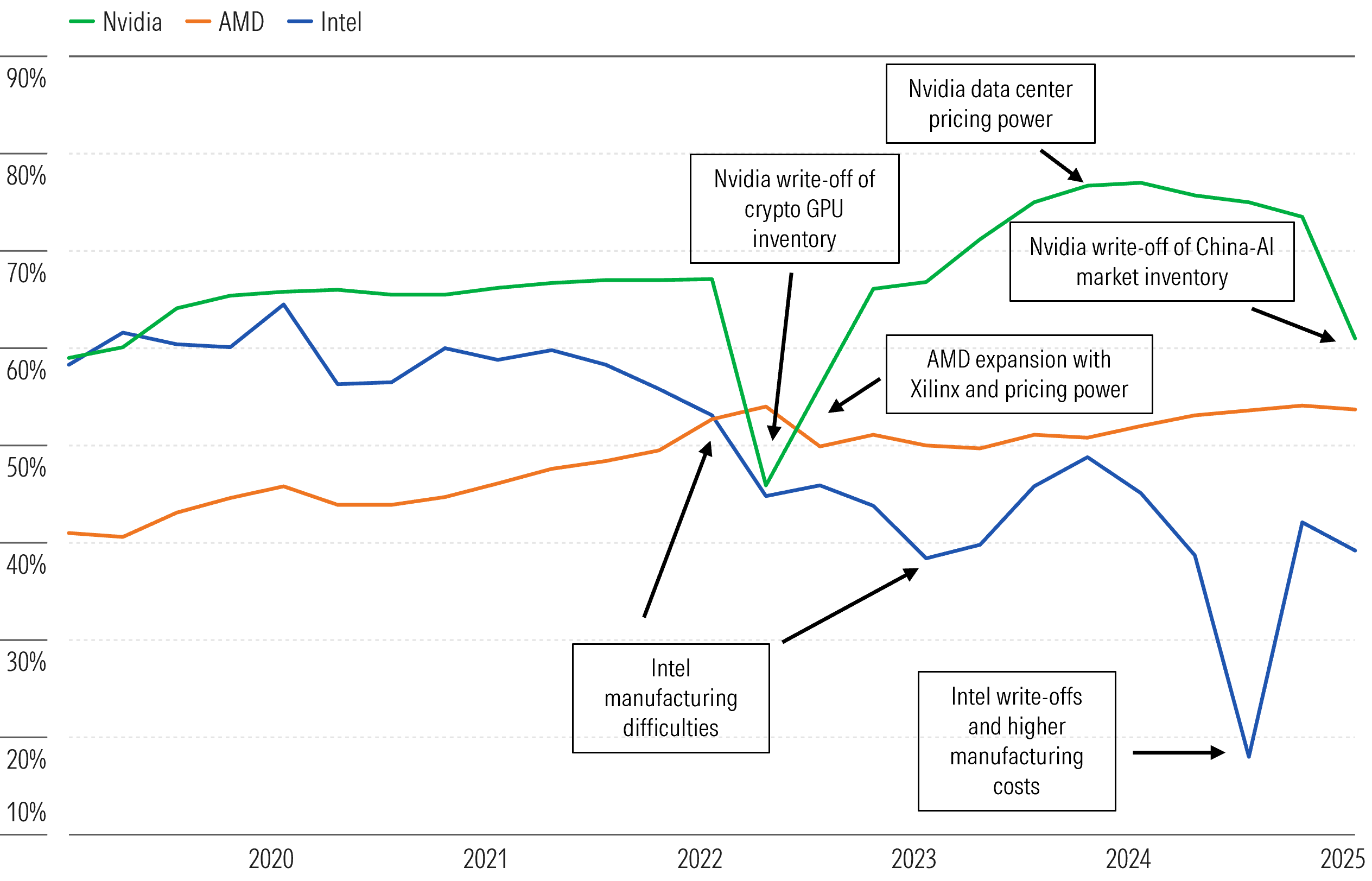
Our latest report dedicated to the Q2 AI semiconductor market finds that on an annual basis, Nvidia’s GPU revenue will rise more than 30 times in just six years. Plus, the firm commands impressive pricing power on its data center products, reaching gross margins as high as 78%.
Gross Margins (Non-GAAP) Paint the Picture of Nvidia’s Explosive Growth
Capital spending on AI continues to be strong in 2025, though we expect this momentum to slow in 2026 as macroeconomic risks intensify. Major cloud service providers still plan to increase AI-related capital expenditures by 35% to 40% this year, but early signs point to more cautious investment next year.
In the Q2 Semiconductor Manufacturing Pulse, we identify Taiwan Semiconductor Manufacturing Co. TSM as a dominant force in the chip industry, particularly as a primary beneficiary of AI-related demand.
The firm maintains a strong competitive edge through its cutting-edge technology and premium pricing power factors that support its superior gross margins even during industry downturns.
We highlight TSMC as a top investment pick among semiconductor manufacturers because of its broad AI exposure, resilient operations, and ability to outperform peers amid macroeconomic and tariff-related uncertainties.
AI in Cybersecurity
When it comes to the cybersecurity landscape, AI will be a new demand driver as attacks become more sophisticated.
Although the AI security market is small right now, we expect rapid growth as the use of applications proliferates. And for good reason—our recent cybersecurity report suggests that the cost of a data breach is almost 50% higher for companies not using AI security compared with those that leverage these tools.
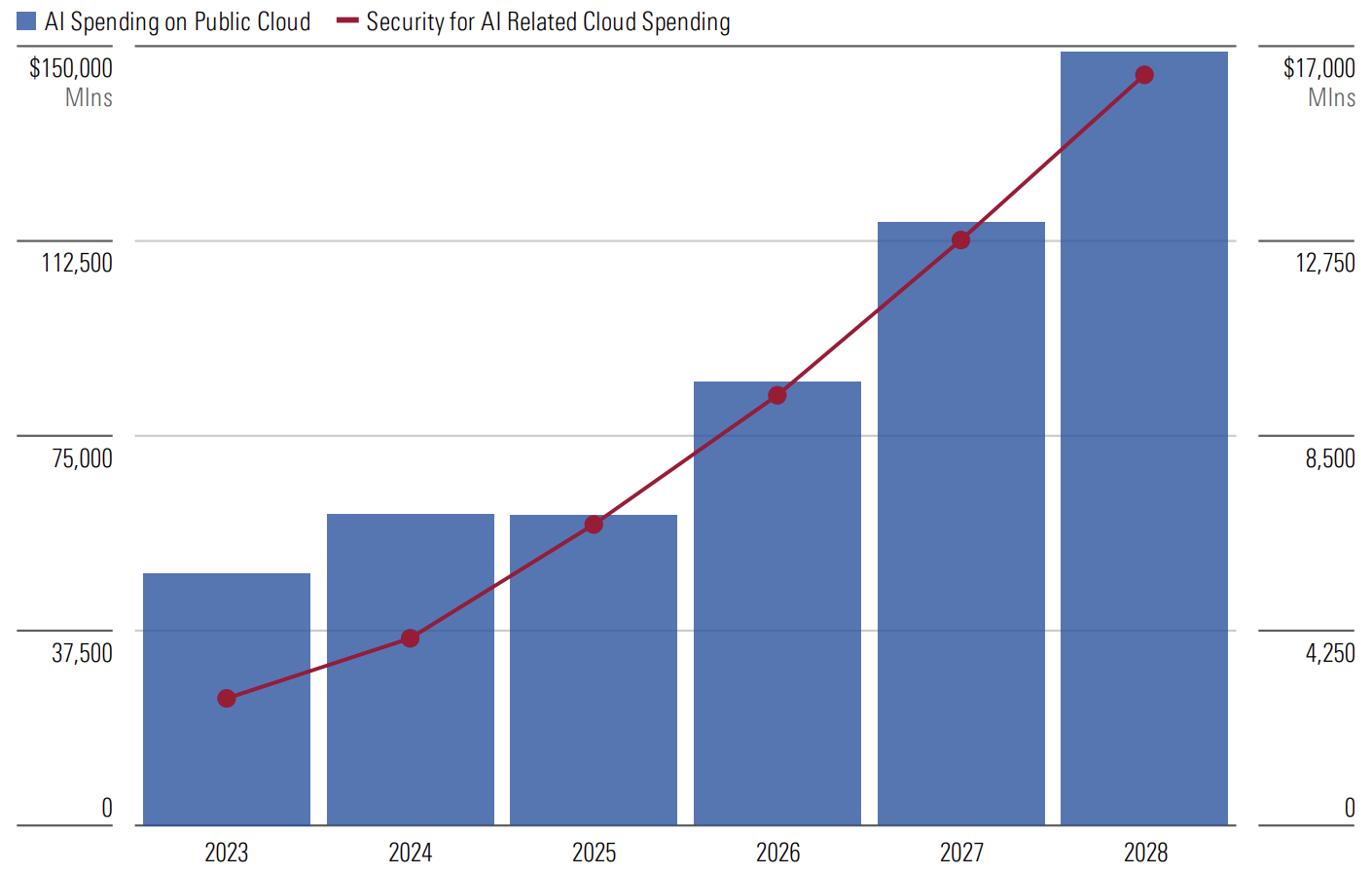
Given that roughly 10% to 12% of public cloud spending is geared toward security solutions, we forecast the public cloud spending catalyzed by AI will add another $15 billion to $18 billion in security spending.
Top-Down Approach to Modeling Security Dollars Generated by Increased Usage of AI
A Look at the Generative AI Networking Landscape
Ultimately, our optimism around generative AI networking, a critical companion in the hardware that undergirds large language models and image-generating models, remains long-term. Our latest AI Technology Observer report finds that generative AI networking equipment spending is expected to reach $34 billion in 2028, up from our estimate of an $8 billion market in 2023.
Marvell MRVL is our top pick to play the generative AI networking trend, though we see robust future growth adequately priced into the stocks of Arista ANET, Broadcom AVGO, and Nvidia. Investors should look to these stocks as ways to invest in rising generative AI networking spending—Morningstar rates all four as moaty and high-quality.
Arista, Broadcom, Marvell, Nvidia Best Positioned for Investing in Generative AI Networking
Deliver Better Service
Investing in AI can help advisors strengthen investment strategies and offer value. By knowing key considerations, you can choose AI stocks and meet investors’ evolving needs with confidence.
The author or authors do not own shares in any securities mentioned in this article. Find out about Morningstar’s editorial policies.

 United States