
With Its Stock Down Over 50%, What’s Next for UnitedHealth?
A return of a former CEO and questions about its Medicare Advantage pricing dominate the outlook for this formerly high-flying stock.
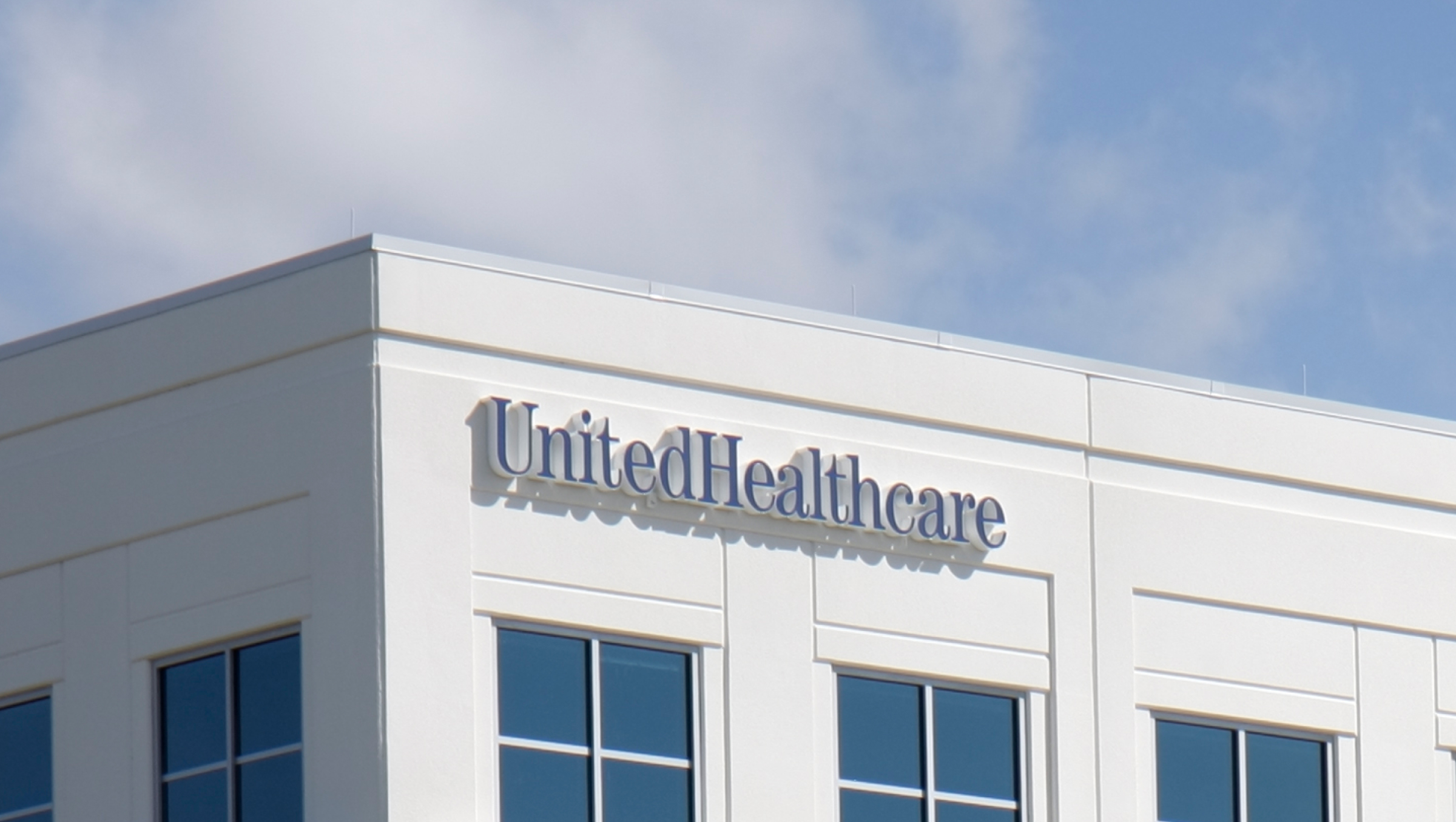
While many stock investors have been focused on tariffs and trade policy upheaval in Washington, one of the most dramatic moves in the market has been unrelated: the more than 50% collapse of UnitedHealth’s UNH stock.
One of the largest insurers in the United States, UnitedHealth had been a big winner over the past decade. At its peak in November 2024, the stock was changing hands at $630 per share, up from around $280 five years earlier and just shy of $100 in November 2014. This kind of dependable performance made it a favorite of many mutual funds.
But in mid-April, UnitedHealth shocked investors by falling significantly short of Wall Street’s earnings forecasts. That news was followed in mid-May by the company’s announcement that it was withdrawing its 2025 earnings guidance and chief executive Andrew Witty was stepping down, to be replaced by board chair and former CEO Stephen Hemsley. The stock fell further on a Wall Street Journal report that the company was facing a criminal probe around its Medicare Advantage program practices. All this followed the shocking December murder of the company’s medical insurance segment leader, Brian Thompson.
Morningstar Key Stats for UnitedHealth
- Morningstar Rating: ★★★★
- Fair Value Estimate: $473.00
- Morningstar Uncertainty Rating: High
- Economic Moat: Narrow
With UnitedHealth stock now trading around $300 per share, we checked in with senior Morningstar analyst Julie Utterback, who follows the company. This interview has been edited for length and clarity.
Tom Lauricella: Let’s start with UnitedHealth’s businesses. How have they evolved over time?
Julie Utterback: They were initially in the medical insurance business, which makes up about half of their operating profits. But they’ve diversified over the decades into other business lines. They’ve got the pharmacy benefit management business, which is about a mid-teens percentage of profits. They are the number one caregiver in the US, and they have a lot of primary care, physician offices, freestanding ERs, and ambulatory surgery centers where they provide caregiving services through their Optum health business. They’re also a major analytics firm related to healthcare. That’s a business that they built on top of the data that they receive in their other businesses, particularly in medical insurance. It’s a very large business for them and has a very high margin.
UnitedHealth is fairly diverse in medical insurance, even compared with some of its peers. The biggest part of their medical membership is employer-based plans. However, they’ve broadened out into providing services and insurance plans through government programs, particularly Medicare, which is for senior citizens, and also Medicaid, which is for lower-income folks.
Lauricella: Coming into 2025, the stock had done very well for many years. What drove that strength?
Utterback: These businesses grow at a healthy pace. Generally, healthcare spending in the US grows in the mid-single digits. So they’ve got that tailwind. The six managed care organizations we cover, including UnitedHealth, are some of the largest, and they have competitive advantages because of that scale that help them grow a little bit quicker than most of the smaller health insurers. There are hundreds of health insurers in the US, and UnitedHealth tends to steal a little bit of share from those on a local basis. And their expansion into some of its other service areas, such as caregiving and healthcare analytics, have tended to be higher growth. They’ve also done a nice job of controlling their costs and growing earnings at a faster pace than sales.
One of the reasons investors loved UnitedHealth was they were excellent operators. I saw a quote recently that they hadn’t missed estimate in a quarter since 2008. So the first quarter of this year was the first time they really disappointed investors in a very long time, and they had a rough go there. And if we even move it back further, there was obviously the December shooting of Brian Thompson. That was a watershed moment for UnitedHealth, and frankly, the industry.
Lauricella: What was the impact of that tragedy?
Utterback: There was a lot of vitriol from the public after that event. It was surprising for executives in the industry. I don’t think anybody thought they were loved, but they didn’t think they were hated. You saw a lot of regulators and politicians starting to speak up after that, and so it seemed to open the door to more regulatory scrutiny. We’re seeing some of that playing out right now in Congress and some of the executive branch decisions.
Lauricella: Tell us about first-quarter earnings.
Utterback: They missed earnings estimates and they cut their guidance at that time. They blamed it on surging medical utilization. We’ve seen the surging medical utilization story a little bit since the end of 2023 in the industry.
Lauricella: Can you explain why medical utilization is so important?
Utterback: Medical utilization is basically just how much people are going to the doctor and receiving care. During the pandemic, people weren’t going to the doctor very much. Then in late 2023, a lot of seniors went back to the doctor in the fall and said, ‘Hey, I need an RSV, covid, or flu vaccine.’ And the doctor said, ‘I haven’t seen you in a while. You need this, this, and this too.’
As an insurance company, part of your job is to estimate how much care your members are going to get. And so if you have at-risk plans, like in Medicare or Medicaid in particular, if medical utilization is significantly higher than you estimated, your profits are going to be lower than you estimated as well. We saw that at CVS and Humana in 2024, and now UnitedHealth is calling out higher medical utilization as one of the reasons they cut their guidance in 2025, and now they’ve suspended it due to these concerns.
Lauricella: As a company, you’re trying to figure out how much you’re going to pay out versus what you’re taking in.
Utterback: Yes, and typically you can adjust your plans for the following year. So it’s not like you’re locked into having this awful situation forever in terms of your profitability. But employer-based insurance is a little easier to change. When you’re dealing with government-based plans like Medicare and Medicaid, it’s a little harder to move that needle. And there are regulations. For example, in Medicare, you can’t push off a certain percentage of cost to your members in a Medicare Advantage plan. So if you’ve missed on price or plan design, you may not be able to get back to target profitability immediately the next year.
On its first-quarter call and in the management call last week, UnitedHealth called out concerns in its Medicare Advantage population, which are at-risk plans for the insurers in that government program. UnitedHealth was seeing higher utilization from new MA members, particularly in group plans.
It also impacts their Optum Health business, and the caregiving side of things. At Optum Health, there are a spectrum of payment options providers can opt into. The easiest way to think about it is that on one end of the spectrum, a doctor can get paid on a fee for service basis. In that case, when utilization goes higher, that doctor purely benefits. On the other end of the spectrum, an insurer can say to a doctor, ‘I’m going to give you X amount of dollars and you’re gonna manage all of that patient’s care.’ And you as a doctor are going to encourage preventative care to try to keep those patients healthier and keep them from needing costly interventions. When a doctor is providing care under that sort of business model, profits can get squeezed when medical utilization goes up. UnitedHealth was seeing that in the first quarter.
Lauricella: Let’s talk about what’s happening at the at the CEO level.
Utterback: The CEO of UnitedHealth, Andrew Witty, stepped down for personal reasons, according to the press release. It was a surprise. He hadn’t been in the position very long. He was a pharma exec for most of his career, including being GlaxoSmithKline CEO for almost a decade. He initially came to UnitedHealth to run the Optum side of the business. Then there was a management shuffle in 2021 and he got the head job, although he didn’t have a ton of experience managing insurance risk—which is the main issue at UnitedHealth today, to be frank.
Now, to resolve those problems, they’ve brought in their former CEO, who’s also the chair of the Board, Stephen Hemsley. He helped build UnitedHealth over many decades. And if you’re trying to adjust the medical insurance business and plan designs—particularly in Medicare Advantage, where plan designs are due in early June—you need someone to come in immediately to make those adjustments while providing a steady hand and getting the ship turned in the right direction.
Hemsley is one of the largest individual shareholders in UnitedHealth as well. He’s got hundreds of millions of dollars at stake, so he wants to get that stock price up just like shareholders do.
Lauricella: And then you have also issues around Medicare Advantage regulatory issues and overpayments. What does that reflect?
Utterback: UnitedHealth is the largest Medicare Advantage insurer. It insures nearly 30% of all seniors in the Medicare Advantage program. Part of their job is to assess the risk of their members in that program, and they get paid more when the risk is higher. Making those risk assessments is fairly subjective. Doctors are making their best diagnoses of their patients, but based on some recent work by the government, such as the office of the Inspector General, it appears that perhaps UnitedHealth is more aggressive than their peers in terms of risk assessments. An OIG report in the fall said about 50% of overpayments went to UnitedHealth in Medicare Advantage, versus their roughly 30% market share.
There have been questions for a while, and the Medicare Advantage program is already going through a risk adjustment period to get rates more in line with the traditional Medicare population. In addition, the Centers for Medicare & Medicaid Services said ‘We’re gonna be more aggressive,’ and they are putting a small army of employees to work. In late May, they said they are going from 40 employees auditing Medicare Advantage to 2,000.
After that, we reduced our fair value estimate, related in part to the idea that the margins in Medicare advantage and some of their other medical insurance operations would probably go lower because of this increasing scrutiny. We’ve also included the potential for clawbacks of some of these overpayments historically. The amount is obviously still uncertain. So we raised our Uncertainty Rating to High from Medium. We reduced our Capital Allocation Rating from Exemplary to Standard as well.
Lauricella: Are there governance concerns here, along the lines of whether there was a concerted effort to improperly get more money out of the Medicare program?
Utterback: That is a big question. Are the incentives wrong broadly in Medicare Advantage, or was UnitedHealth being too aggressive systematically because of a directive? Is there a bad actor, or does the system need to be adjusted? There’s been this question that The Wall Street Journal has brought up: Is there Medicare fraud going on? The company has said they are aware of no investigation, but it’s absolutely something investors are thinking about.
Lauricella: UnitedHealth stock is rated 4 stars, which takes into account the High Uncertainty Rating. How should investors think about this stock right now?
Utterback: We think the stock is moderately undervalued for the risk surrounding it. There could be a pullback in their earnings power, but in the long run, given the trends in the US in terms of healthcare spending, we think they have the opportunity to grow at a decent double-digit rate. Even as recently at mid-May, management endorsed a 13%-16% earnings growth target for the long run. That obviously is not going to happen this year, or maybe even next year. So it’s not a pound-the-table sort of situation, but the stock certainly does look cheap.
The author or authors do not own shares in any securities mentioned in this article. Find out about Morningstar’s editorial policies.

 United States