
Going Into Earnings, Is Home Depot Stock a Buy, a Sell, or Fairly Valued?
Watching for changes in consumer habits and the performance of its wholesale distribution businesses.

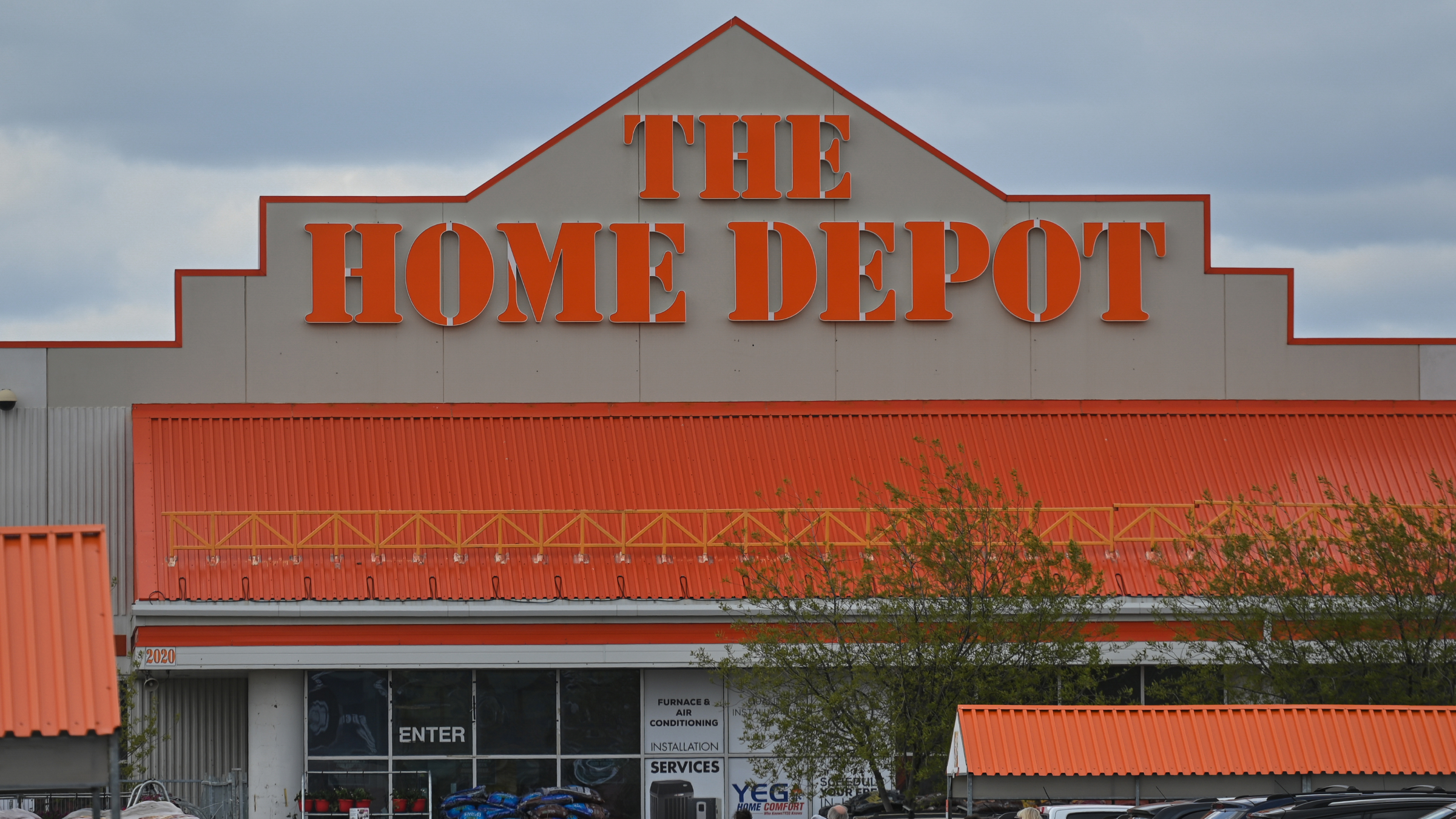
Home Depot is set to release its second-quarter 2026 earnings report on Aug. 18. Here’s Morningstar’s take on what to look for in Home Depot’s earnings and the outlook for its stock.
Key Morningstar Metrics for Home Depot
- : $325.00Fair Value Estimate
- : ★★★Morningstar Rating
- : WideMorningstar Economic Moat Rating
- : MediumMorningstar Uncertainty Rating
Home Depot Earnings Release Date
- Tuesday, Aug. 18, before the start of trading
What to Watch for in Home Depot’s Q2 Earnings
- We will be watching the performance of the pro business, SRS Distribution, and whether other pro businesses (SRS, GMS, Mingledorff’s) are working seamlessly together and facilitating revenue synergies.
- Are customers still highly focused on need-based rather than discretionary projects? And have large-ticket transactions been able to stabilize despite the uncertain macro environment?
- Are any incremental investments needed to support growth?
- With CEO Ted Decker on medical leave, we will look for any updates on strategic actions in his absence or information on his return.
- We think shares are fairly valued, relative to our fair value estimate of $325 per share. Shares are trading at 23 times our 2026 EPS forecast, despite just 8% EPS growth expected (by us) over the next five years.
The following are excerpts from Morningstar’s company report on Home Depot.
Fair Value Estimate for Home Depot
With its 3-star rating, we believe Home Depot’s stock is fairly valued compared with our long-term fair value estimate of $325. Our updated forecast includes 3.9% sales growth and 1.5% EPS growth in fiscal 2026, along with a 12.8% adjusted operating margin (down 10 basis points). Given the maturity of the domestic home improvement industry, we expect total demand to largely depend on changes in the real estate market, driven by prices, interest rates, turnover, and lending standards.
Read more about Home Depot’s fair value estimate.
Economic Moat Rating
We assign Home Depot a wide economic moat. As the largest global home improvement retailer, Home Depot possesses a competitive edge, in our view, owing to its brand intangible asset and cost advantage. We expect Home Depot’s strong brand equity and extensive scale to enable incremental market share gains in a highly fragmented $1.2 trillion North American addressable home improvement market, on top of the mid-teen market share it has amassed thus far (given roughly $171 billion in sales expected in 2026).
We think Home Depot’s impressive same-store sales growth, which has averaged 5.1% over the past 10 years, suggests that a brand intangible asset exists. In our opinion, it would be difficult for another retailer to enter the market and threaten Home Depot’s position, as smaller retailers would struggle to build vendor relationships strong enough to undermine the company’s pricing prowess. Thus, we are confident that Home Depot’s competitive position will continue to benefit the business, indicated by our forward ROIC metrics remaining north of our 7.5% weighted average cost of capital over the next two decades (with ROICs including goodwill forecast to reach 23.4% in 2035, by our calculation), underpinning our wide moat rating.
Read more about Home Depot’s economic moat.
Financial Strength
Home Depot has had no concerns tapping the credit markets to finance the business in recent years. The firm has raised $10 billion in debt to finance part of the $18.25 billion SRS Distribution acquisition in 2024. It also refinanced its credit facilities in 2025. At the end of 2025, Home Depot held total debt of nearly $56 billion. As a result of higher leverage from the SRS acquisition, management has halted share repurchases. However, we model share repurchases to resume in 2027, as Home Depot works its leverage metrics back toward 2 times after digesting the GMS and Mingledorff’s transactions.
Including the impact of recent acquisitions, EBIT is forecast to cover the net interest expense 9 times at the end of 2026. Free cash flow to the firm has averaged about 5% of sales over the past three years, supporting higher leverage, and we expect the company will stay within its targeted adjusted debt/EBITDAR metric of 2 times over the long term. The balance sheet’s $28 billion in net property, plant, and equipment provides an asset base to secure debt if necessary. Given Home Depot’s ability to generate tremendous free cash flow to the firm (we forecast an average of $21 billion in 2026-35), we expect management will have no problem facilitating dividend payments and remaining at or above its long-term dividend payout ratio target of 55%.
Read more about Home Depot’s financial strength.
Risk and Uncertainty
We give the company a Medium Uncertainty Rating owing to its strong brand recognition, which has helped stabilize sales through the cycle. Home Depot’s sales are largely driven by greater consumer willingness to spend on category goods in both necessary and discretionary home purchases. Now, with the MRO and pro businesses (HD Supply, SRS, GMS, and Mingledorff’s), revenue could be less cyclical, as the maintenance side of the business can prove to be more consistent.
Although new competitors could set up shop on Home Depot’s turf, we think new players would be hard-pressed to offer similarly competitive product prices, as they likely wouldn’t have vendor relationships of the same magnitude. In our opinion, Home Depot has minimal environmental, social, and governance risk. Product sourcing, potential data theft, and consumers’ shift in preferences to sustainable product offerings are relevant, but Home Depot should be able to adapt, and we do not see any material financial impact from these factors.
We believe the most significant near-term risks are a continuation of slow turnover in the real estate market and potential tariff impacts. Low home inventories for sale remain problematic, aggravated by higher-than-optimal mortgage rates (a 30-year loan remained near 6.4% in mid-May 2026).
Read more about Home Depot’s risk and uncertainty.
HD Bulls Say
- Home Depot’s continued investments in supply chain and merchandising should improve productivity and support its leadership position in the home improvement market.
- The firm has returned $71 billion to its shareholders through dividends and share buybacks over the past five years, more than 20% of its market cap. We forecast Home Depot will return another $65 billion to owners over the next five years.
- The large professional market is $300 billion. As Interline and HD Supply make up a low-double-digit share, SRS reaches these specialists, and GMS joins the mix, share is up for grabs.
HD Bears Say
- Weak consumer spending, perpetually higher interest rates, or an economic downturn could hinder sales for home improvement projects and affect Home Depot’s growth.
- Productivity improvement gains could prove more challenging to achieve, as simpler efforts have already borne fruit. New initiatives could face some implementation risks, creating inconsistent profitability.
- As Home Depot digests more than one sizable acquisition, integration risk remains, and management could be distracted by idiosyncratic issues at larger tie-ups like SRS or GMS.
This article was compiled by Irza Waraich.
This article was generated with the help of automation and reviewed by Morningstar editors. Learn more about Morningstar’s use of automation.
The author or authors do not own shares in any securities mentioned in this article. Find out about Morningstar’s editorial policies.

 United States