
Consumer Cyclicals: Prospects Remain, Even Amid Near-Term Uncertainty
Our favored stocks in this sector include Kohl’s and Polaris.

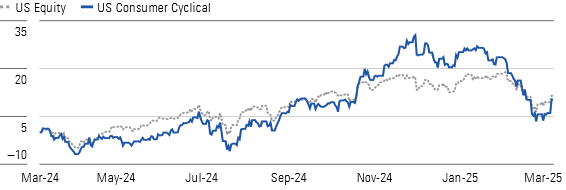
The Morningstar US Consumer Cyclical Index slumped nearly 10.00% in the first quarter, trailing the market’s more muted 1.74% decline. Following the recent collapse in shares, more than half of the sector trades in a range we’d consider undervalued (versus just one-third three months ago), with the median stock trading at an 11% discount to our intrinsic valuations.
Consumer Cyclical Stocks Lagged the Market for the First Three Months of 2025
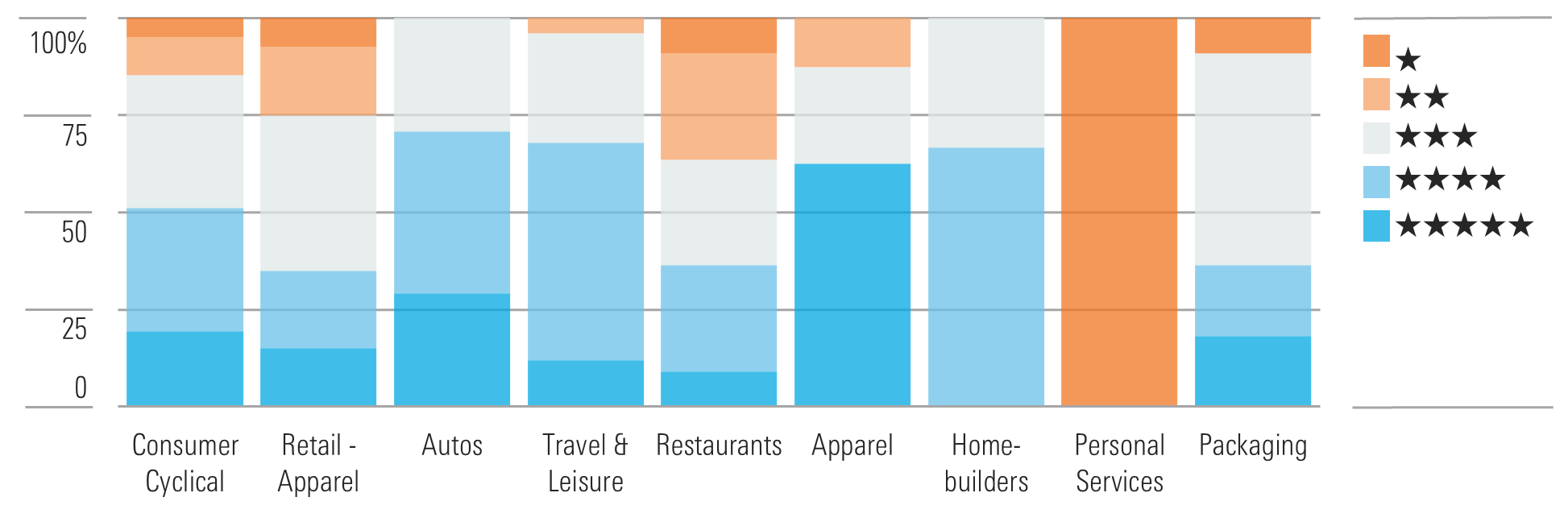
We think the travel and leisure and apparel subsectors look particularly attractive, at 20% and 45% discounts, respectively. From where we sit, investor concern is anchored in the financial burdens consumers face in this uncertain economic landscape, and the potential impact that could have on discretionary spending.
We See Value in the Apparel and Travel and Leisure Enclaves
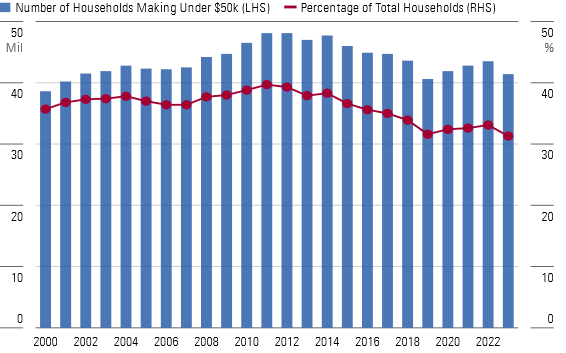
This pressure has been particularly acute for low-income consumers. However, the number of US households making less than $50,000 (in 2023 dollars) has declined in the past several years, from about 43.5 million in 2018 to about 41 million in 2023 (31% of US households). Indeed, the percentage of US households earning less than $50,000 in 2023 represents the lowest figure in the US Census Bureau’s household income dataset, which goes back to 1967. Even as consumers across income brackets have employed some purchasing discretion over the past few quarters, middle-income households aren’t trading down to value channels like dollar stores in droves. Because of this, traffic and sales trends in the channel have weakened, which may indicate that their financial situation isn’t dire. Regardless, we think retailers of all stripes need to invest in the shopping experience while ensuring an assortment that consistently resonates with consumers.
Low-Income Household Numbers in the US Have Dropped Over the Past Decade
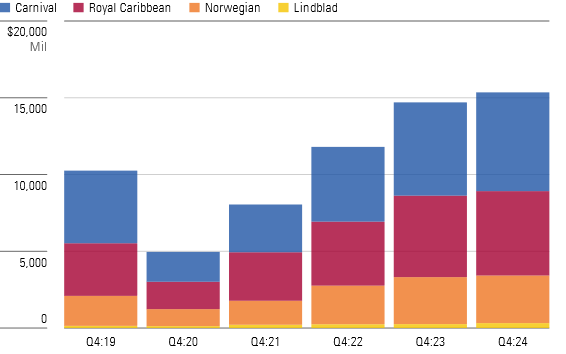
Further indicating the consumers’ resilience, the total deposits held by four publicly traded cruise operators amounted to more than $15 billion in the fourth quarter of 2024, up 4% over the prior year. This figure conveys a higher commitment to cruising than before the covid-19 pandemic (the fourth quarter of 2019), when these operators held just $10 billion in advance ticket sales. This also suggests to us that consumers have not siphoned all discretionary spending, and that travel demand remains high.
Positive Passenger Outlook for Cruise Operators on Stout Advance Ticket Sales
Top Consumer Cyclical Sector Picks
Kohl’s
- Fair Value Estimate: $41.00
- Morningstar Rating: ★★★★★
- Morningstar Economic Moat Rating: None
- Morningstar Uncertainty Rating: Very High
We believe no-moat Kohl’s KSS is an attractive investment opportunity, trading at around an 80% discount to our fair value estimate. Although traditional department stores are struggling, Kohl’s has substantial e-commerce, as its large store base allows it to ship directly from stores and encourages buying online/pickup in stores. In addition, its partnership with Sephora has enhanced its beauty business and made it more competitive with other department stores and Ulta. Recently appointed CEO Ashley Buchanan is expected to maintain Kohl’s focus on its loyalty program, Sephora, inventory management, and debt reduction.
Polaris
- Fair Value Estimate: $75.00
- Morningstar Rating: ★★★★★
- Morningstar Economic Moat Rating: Wide
- Morningstar Uncertainty Rating: Medium
Polaris PII shares trade roughly 45% below our fair value estimate. The company’s favorable brands, innovative products, and Lean manufacturing support its wide economic moat. We think Polaris will continue to capitalize on its research and development, solid quality, and operational excellence to increase demand. Recently, shares have been pressured by headwinds stemming from slowing consumer conversion and cautious dealer behavior, factors we believe will be transitory. Once dealer inventory is optimized, wholesale shipments should more closely track consumer demand. We think long-term demand from product launches will support shipment growth and profit improvement beyond 2025.
Under Armour
- Fair Value Estimate: $14.50
- Morningstar Rating: ★★★★★
- Morningstar Economic Moat Rating: None
- Morningstar Uncertainty Rating: High
Under Armour UA trades in 5-star territory at a 55% discount to our fair value estimate. Controlling shareholder Kevin Plank returned as CEO about a year ago, and he plans to focus on core men’s performance apparel, faster product development, less discounting, and North America. Additionally, Under Armour has cut $200 million in average annual costs and continues to seek ways to operate more efficiently. The firm has room to grow in international markets like China, where it has low market share.
The author or authors do not own shares in any securities mentioned in this article. Find out about Morningstar’s editorial policies.

 United States