4 min read
Simplifying portfolio analysis: How to prioritise key tasks
Part one of a three-part guide for investment teams

The work of portfolio analysis is becoming ever more demanding. The volume and complexity of the tasks required to create, analyse, edit and report on investment portfolios is rising rapidly. Portfolio managers and investment teams must handle more data, new asset classes and more investment vehicles. Clients, meanwhile, are adopting more diverse investment objectives, and demanding more choice and personalisation.
Without action, portfolio managers risk becoming bottlenecks to client and firm success. Investment teams want to win. How do they master their workflows so that they can spend more time on what matters most: outperforming the market?
The Path to performance
At Morningstar, we closely engage with asset managers and wealth managers of all kinds, helping them optimise their workflows. As a result, we see patterns across teams and businesses—in the types of workflows they handle, the impediments to their work and the actions that have the biggest impact on a team’s capacity to master more work and complexity. We wrote this series of articles to share our knowledge of what works and how to build a solution that is right for your team.
In this series, you will learn how to simplify, standardise and automate the key tasks of portfolio analysis. We have broken our method into four steps:
- Prioritise the workflow(s) you want to simplify.
- Describe the workflow as it exists today. Include roles, tasks, and tools.
- Simplify your workflow by removing work, normalising tasks, and consolidating tools and data.
- Automate with software.
In this first article, we address how to prioritise the work you want to simplify. We have also included a worked example to better illustrate our method.
Like many activities, the effort required to simplify and automate work is subject to diminishing returns. Start by prioritising the most impactful opportunities. Ask your team to write down the work they perform. Get them to organise their output into discrete groupings of tasks. Each grouping should represent a full workflow—the entirety of tasks required to deliver a completed piece of work for the person or entity who has asked for it. Label each grouping with a descriptor of the workflow. Examples might include “ad hoc performance analysis reporting”, “model portfolio customisation”, “sub-advised fund performance management” or “quarterly asset allocation rebalancing”.
Get your team to estimate how much time they spend on each workflow. Don’t try to be exact. A rough estimate is better than none. Prioritise a workflow that is both complex and consumes a lot of the team’s time.
Worked example: step 1
A wealth manager’s head office investment team analyses the work they have performed over the past year. They discover that they spend approximately 20% of their time on performance monitoring; 20% on risk management and portfolio analysis; 20% on ad hoc management requests; and 40% customising model portfolios on behalf of branch advisers. The team discusses their findings. They agree that the amount of time they spend customising model portfolios has risen sharply in the past two years; that the work is complex; and that the workflow is a good candidate for prioritisation.
Write down the workflow you plan to improve. Use the template we have provided in the worked example below to describe each step in the process. Arrange the steps in the order in which they must be performed. Make sure you describe the entire workflow, end to end: include all steps needed to deliver the finished work, whether the work is being performed by your team or not. For each step in the workflow, abstract from the specific work to the generalised task. (For example, if the specific task is “create factsheet showing aggressive growth model before and after lowering tech stock asset allocation”, the generalised task might be "create factsheet showing side-by-side model comparison”.) If different teams are needed to complete the work, note which teams perform which work. Finally, note any tools or data the teams use to get the work done.
Worked example: step 2
A wealth manager’s head office investment team analyses the work they are doing. They discover that they spend 40% of their time customising model portfolios on behalf of advisers. To help them describe the workflow required to customise a model, the team focuses on a recent example: an emailed request from a financial adviser to remove all investments in companies involved in animal testing. The team writes down the tasks they performed for the financial adviser, groups them into discrete steps, and abstracts this into a generalised process:
- Analyse the portfolio.
- Apply changes to the portfolio.
- Make a recommendation.
- Create a side-by-side factsheet.
- Compliance.
The team also notes that the factsheet is built by the marketing team; that its recommendation must be reviewed by the compliance team; and that its workflow uses four different data stores, two portfolio-analysis software applications, a business-intelligence application, a digital asset management application and a desktop publishing application.
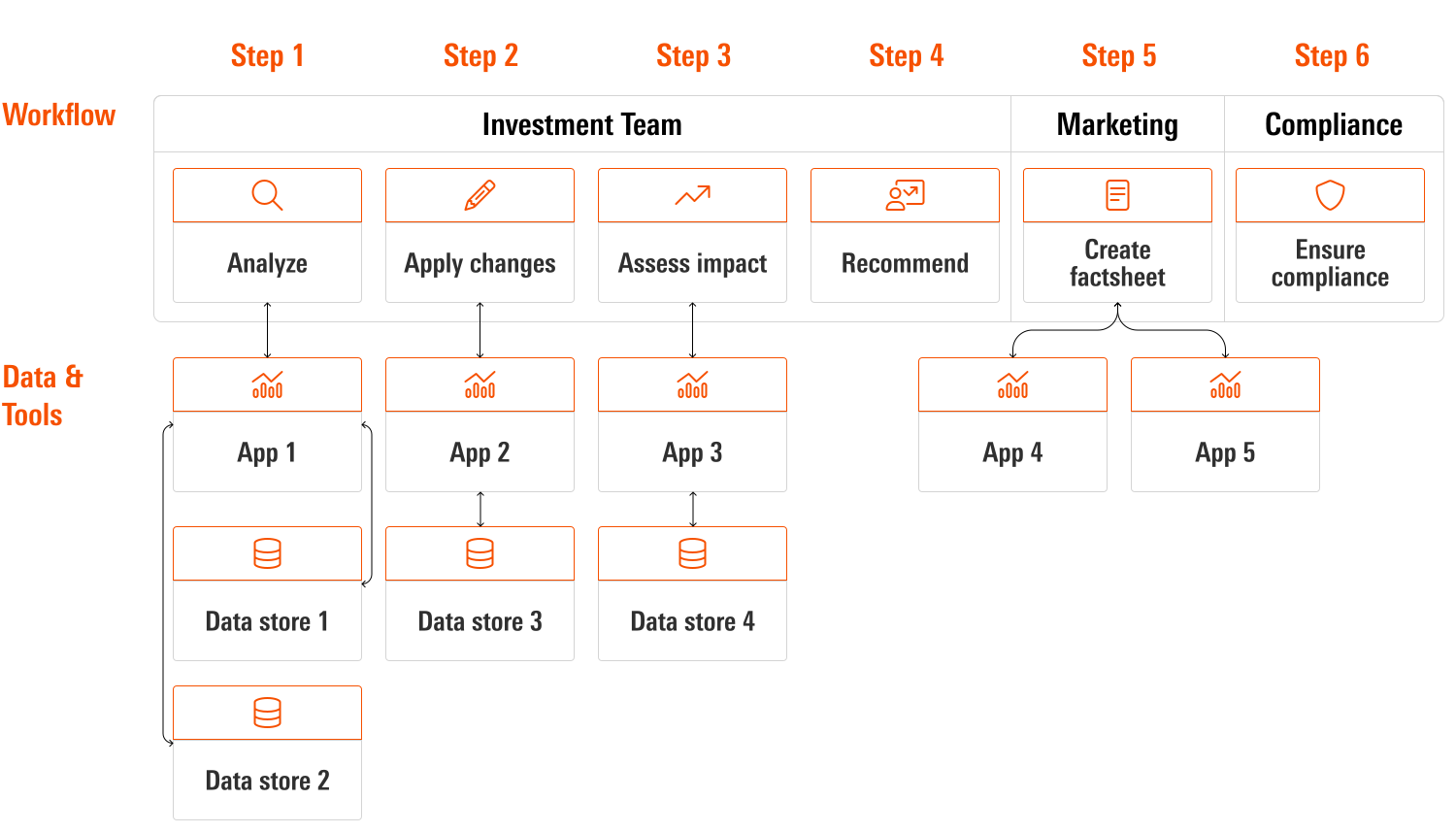
Model portfolio customisation workflow, before optimisation.
This work isn't easy, making efficiency key. Watch out for part two of our series where we discuss how to simplify your workflow.