
What Is Biodiversity Risk and Why Does It Matter for Investors?
Portfolios with high biodiversity risk underperform low-risk portfolios, Morningstar Sustainalytics finds.


What does biodiversity loss mean for investors? As it turns out, a lot, based on Morningstar research into portfolio performance. The loss of biodiversity—which means the decline in the richness and variety of plants and animals in the natural ecosystem—has emerged as a severe new risk for the markets.
Companies facing high levels of biodiversity risk could have a material effect on long-term portfolio performance. Specifically, we looked at land use and biodiversity risk. Biodiversity loss can stem from holding stocks in companies involved in land use changes, such as deforestation to create space for agriculture or industry.
A growing number of firms have been linked to land use and biodiversity controversies over the past decade. That’s partly because of increased reporting by nongovernmental organizations but also because of improvements in our ability to track these incidents. Indeed, since 2012, Sustainalytics has tracked more than 1,600 land use and biodiversity incidents that were associated with supply chain management in such industries as automobiles, food retailers, textile companies, and household products. We also found more than 770 incidents related to company operations, with the food products industry accounting for most of these cases.
How Biodiversity Risk Affects Three Model Portfolios
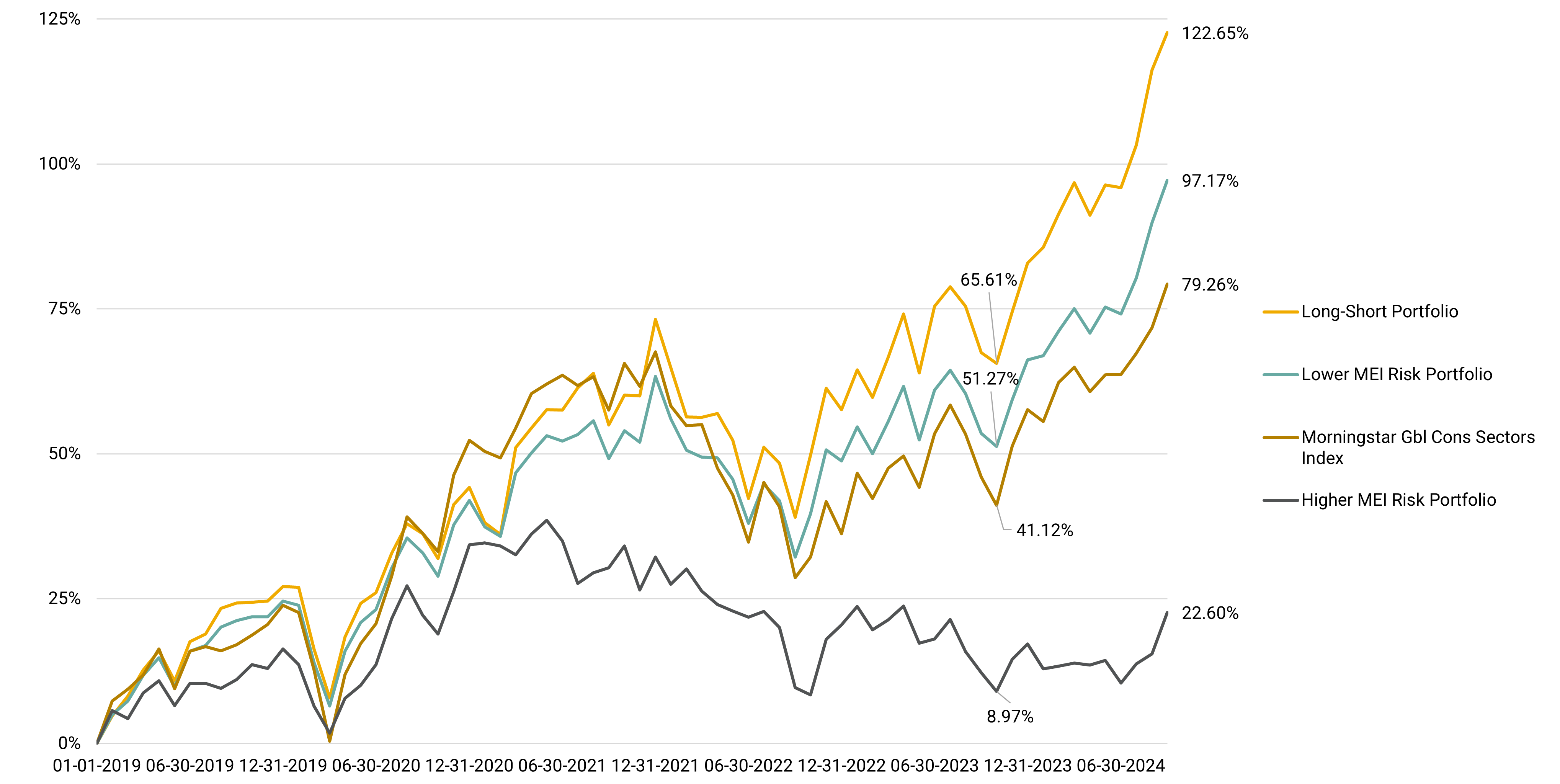
In our initial study, we developed three model portfolios using Sustainalytics ESG Risk Ratings and studied returns between Jan. 1, 2019, and Oct. 31, 2023. The stocks were weighted according to their relative total market capitalization and rebalanced annually to account for things like changes in market capitalization and material ESG risk. Because land use and biodiversity risk applies to only a few industries, the sample consists mainly of consumer goods companies.
The first model portfolio invested in stocks with lower land use and biodiversity risk. The second invested in stocks with higher risk. The third had long positions in stocks with below-median risk and short positions in stocks with above-median risk, following the 130/30 allocation portfolio popular among hedge funds.
Recently, we updated the model portfolio performance to cover the period from Jan. 1, 2019 to Sept. 30, 2024. The lower risk portfolio delivered a cumulative return of 97%, while the higher risk portfolio returned 22.6%. Meanwhile, the long-short portfolio delivered more than 122% cumulative return.
The higher risk portfolio was less volatile than the other two portfolios over the period, with a standard deviation of 12.4%, compared with 13.6% for the lower risk portfolio and 15.1% for the long-short portfolio. However, the higher-risk portfolio had a deeper maximum drawdown at 21.7%, measuring the largest percentage decline in the value of a portfolio from peak to trough.
A Closer Look
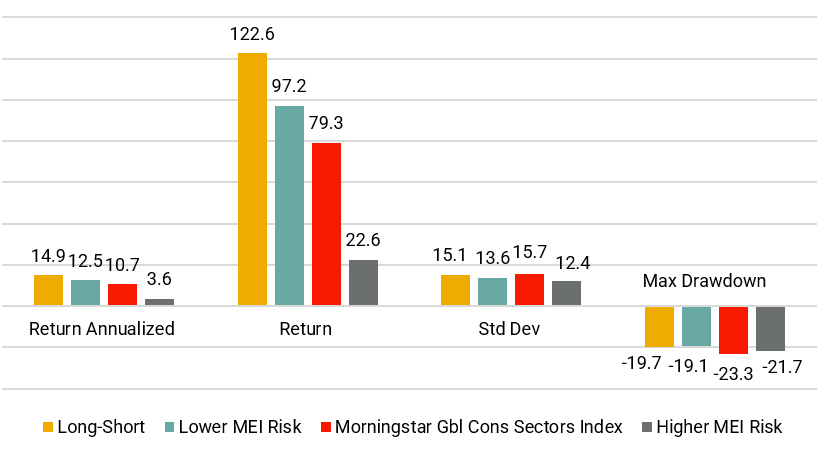
These results suggest that the lower biodiversity risk and long-short portfolios could have provided some protection against downside financial risk. Determining whether factors specifically connected to land use and biodiversity contributed to the differentials in the returns of these portfolios and their constituent stocks was beyond the scope of this study. However, this analysis and the financial metrics that we explored can serve as a starting point for assessing what companies with strong performance are doing to address ESG issues such as biodiversity loss.
For more on investing and biodiversity loss, read this.
The author or authors do not own shares in any securities mentioned in this article. Find out about Morningstar’s editorial policies.

 United States