
‘Truly Staggering’ Weather Disaster Will Occur ‘Someday, Any Day,’ Buffett Says
Buffett adds to his warnings about climate change, even as Berkshire has been criticized on greenhouse gas disclosures.

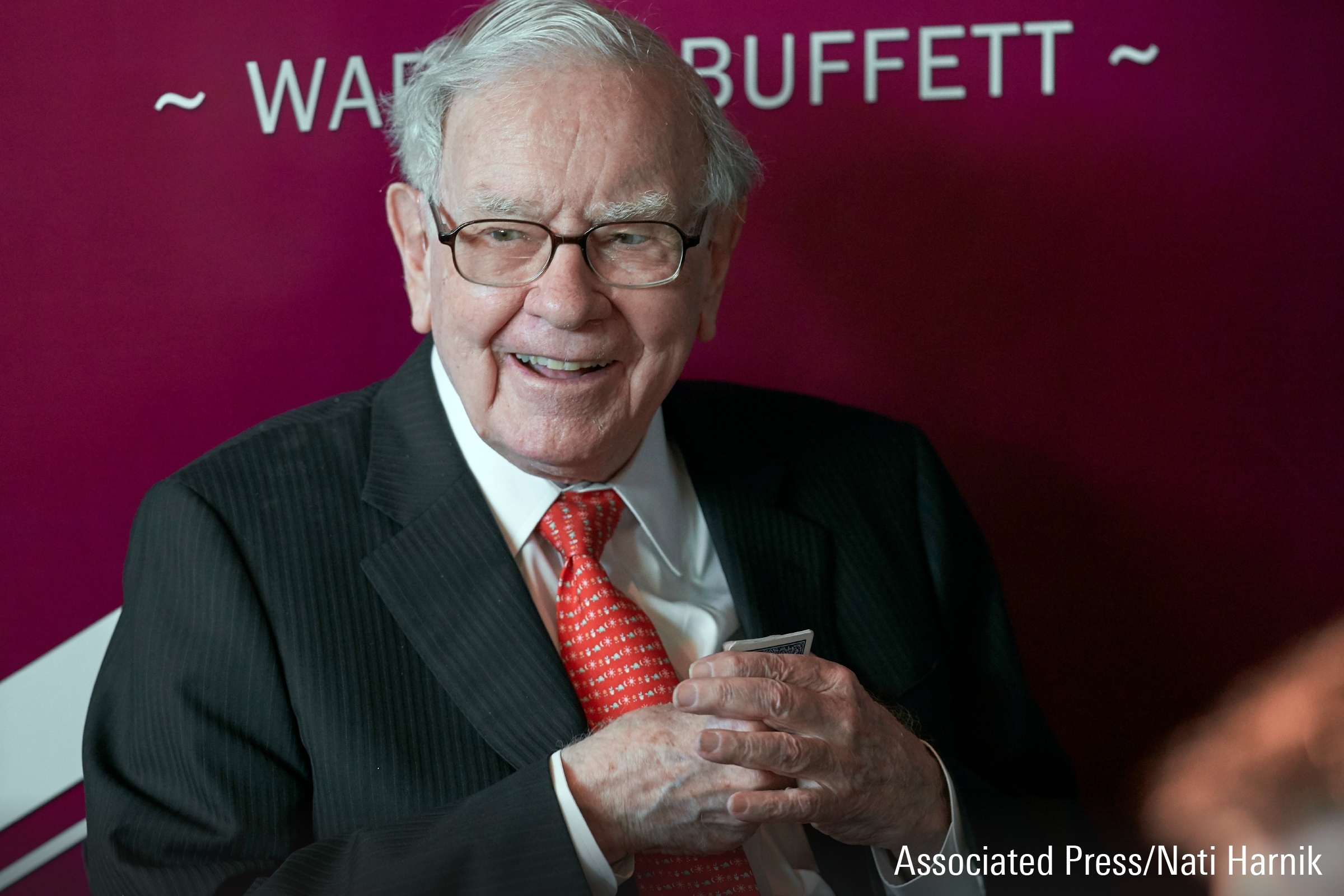
After 2024 was the hottest year on record and a new year slamming Los Angeles with deadly wildfires, Berkshire Hathaway BRK.A/BRK.B Chairman Warren Buffett is on alert.
Property-casualty insurance pricing strengthened during 2024, “reflecting a major increase in damage from convective storms,” Buffett wrote in his closely watched annual letter to shareholders this month. “Climate change may have been announcing its arrival.” Convective storms include severe thunderstorms, tornadoes, and hurricanes. Intense wildfires have also increased the severity of hazardous weather.
While “no ‘monster’ event occurred during 2024,” Buffett wrote, “someday, any day, a truly staggering insurance loss will occur—and there is no guarantee that there will be only one per annum.”
Buffett also wrote that Berkshire is “not deterred by the dramatic and growing loss payments sustained by our activities. (As I write this, think wildfires.) It’s our job to price to absorb these and unemotionally take our lumps when surprises develop.” Berkshire estimates its insurance unit will incur around $1.3 billion in pretax losses from the L.A. wildfires.
Insurance costs are on the rise, owing to hazardous weather. In 2024, direct economic costs from “global natural perils” were around $417 billion, of which $154 billion was covered by private and public insurers, according to Gallagher Re. “The annual average loss from natural catastrophes from 2017 to 2024 has cost insurers $146 billion. This suggests a ‘new normal’ approaching $150 billion per year,” the insurer said. The rising severity and frequency of natural catastrophes highlights “the growing need to better understand the interconnected risks posed by climate change, specific peril loss drivers, and socioeconomic factors,” Gallagher added.
Berkshire Has Highlighted Climate Change Risks For Years, Analyst Says
Buffett hasn’t been shy about pointing out the effects of climate change, according to Morningstar strategist Greggory Warren, who follows Berkshire. Berkshire—which has insurance operations—and its utility/energy subsidiary Berkshire Hathaway Energy have highlighted climate change as a major risk to their business for years.
“Both Buffett and [late Berkshire vice chairman] Charlie Munger were not shy about pointing out that climate change is real at the annual meetings, noting the firm needs to take it seriously because it has an impact on the bottom line and that hiding your head in the sand was not an option,” Warren says.
Warren notes that Berkshire underwrites a substantial amount of catastrophe and supercatastrophe insurance and reinsurance that needs to take into account changes in weather patterns and severity of storms. “An underestimation of these risks would lead to meaningful losses,” he says. Meanwhile, the utility/energy business “has been one of the biggest investors in renewable energy, while also dealing with the impact from wildfires in the Western US, all of which can be tied back to climate change.”
Berkshire Criticized for Not Disclosing Emissions
However, Berkshire has received criticism for its approach to climate change. The firm is often prodded by shareholders for disclosure around greenhouse gas emissions. Last year, for example, such requests were filed by shareholder advocate As You Sow on behalf of the Elizabeth Kantor Trust, as well as Illinois State Treasurer Michael Frerichs, who is also trustee of Illinois’ Bright Start college savings plan.
According to As You Sow, Berkshire owned approximately 12% of all oil and gas assets held by insurance companies in 2019, and the second-largest insurance industry stake in coal. Burning fossil fuels for electricity, heat and transportation is the largest source of greenhouse gas emissions from human activities in the United States, according to the EPA.
These two proposals received the support of 21.0% and 17.7% of shareholders, respectively. If insider votes were subtracted, they would have won 39.8% and 33.7% of the independent shareholder vote, according to analysis by Morningstar Sustainalytics.
The author or authors do not own shares in any securities mentioned in this article. Find out about Morningstar’s editorial policies.

 United States