
Are Critiques of Sustainable Investing Moderating?
Some bright spots from an industry conference. Also, the case for tobacco-free portfolios.


Sustainable investing has been widely criticized over the past two years for practicing “woke capitalism” and abandoning fiduciary duty. Some Republican legislators have passed laws trying to ban it. Yet there’s some evidence to suggest that sustainable-investing themes are taking hold in business.
That’s the belief conveyed by investors and others speaking at the annual conference for Principles for Responsible Investment. PRI, a United Nations-backed body, provides guidance and a forum for investors who are looking to address the risks of a changing climate or other nonfinancial factors that affect portfolio performance. To be sure, they’re a self-interested group. But consider these observations:
- The study of environmental, social, and governance factors as a concentration is now the sixth-largest major at the Wharton School at the University of Pennsylvania. It’s on track to be the fourth-largest next year, says Witold Henisz, Deloitte & Touche Professor of Management at Wharton.
- The momentum driving legislation to block sustainable investing is slowing, says Tiffany Reeves, a partner at Faegre Drinker who leads the law firm’s institutional investor practice. Some 35 such laws were passed in 2023. That fell to seven in 2024. “Less bills are introduced, less bills are passing,” Reeves says.
- The Inflation Reduction Act, the landmark US climate law passed in 2022 that will deploy nearly $400 billion over 10 years to slash the carbon emissions that cause global warming, has attracted 5–6 times the amount of private capital for every dollar of public money committed, observes Kirsty Jenkinson, investment director for California State Teachers Retirement System. The benefits aren’t politically driven. While the law was signed by a Democratic administration, some $40 billion is going to blue states and $160 billion to red states, Jenkinson notes.
- Members of the UN-convened Net-Zero Asset Owner Alliance, a group of major pension funds and other asset owners, have reduced the amount of greenhouse gas emissions they finance by at least 6% a year. Greenhouse gases cause global warming. In addition, about 80% of companies in the Climate Action 100+ group have announced commitments to reach net zero emissions by 2050 or sooner, up from 51% in March 2021, notes David Atkin, CEO of PRI. Awareness of addressing ESG risks “has grown enormously among investors, and now covers over 50% of managed capital globally,” Atkin notes.
- Morningstar’s Voice of the Asset Owner survey shows that 85% of asset owners believe that ESG factors are financially relevant to investment policy, and 70% believe they have become more financially relevant in the past five years.
- A PitchBook survey, based on 500 responses from investors in private markets, shows that ESG investing is alive and well and that they are seeking market-rate returns in addition to reducing ESG risk.
If anything, the so-called anti-ESG movement has forced investors to tighten up on industry greenwashing, or making deceptive claims about the sustainability of their products, says Anna Shelley, chief investment officer of AMP Limited, an Australian diversified financial-services business.
A Voice for Tobacco-Free Portfolios
The tobacco habit is a difficult and painful one to kick, for smokers as well as portfolios. Just take a look at the largest funds that own Altria MO. One reason for their popularity: high yields. Altria yields 8%.
Altria’s Largest Shareholders
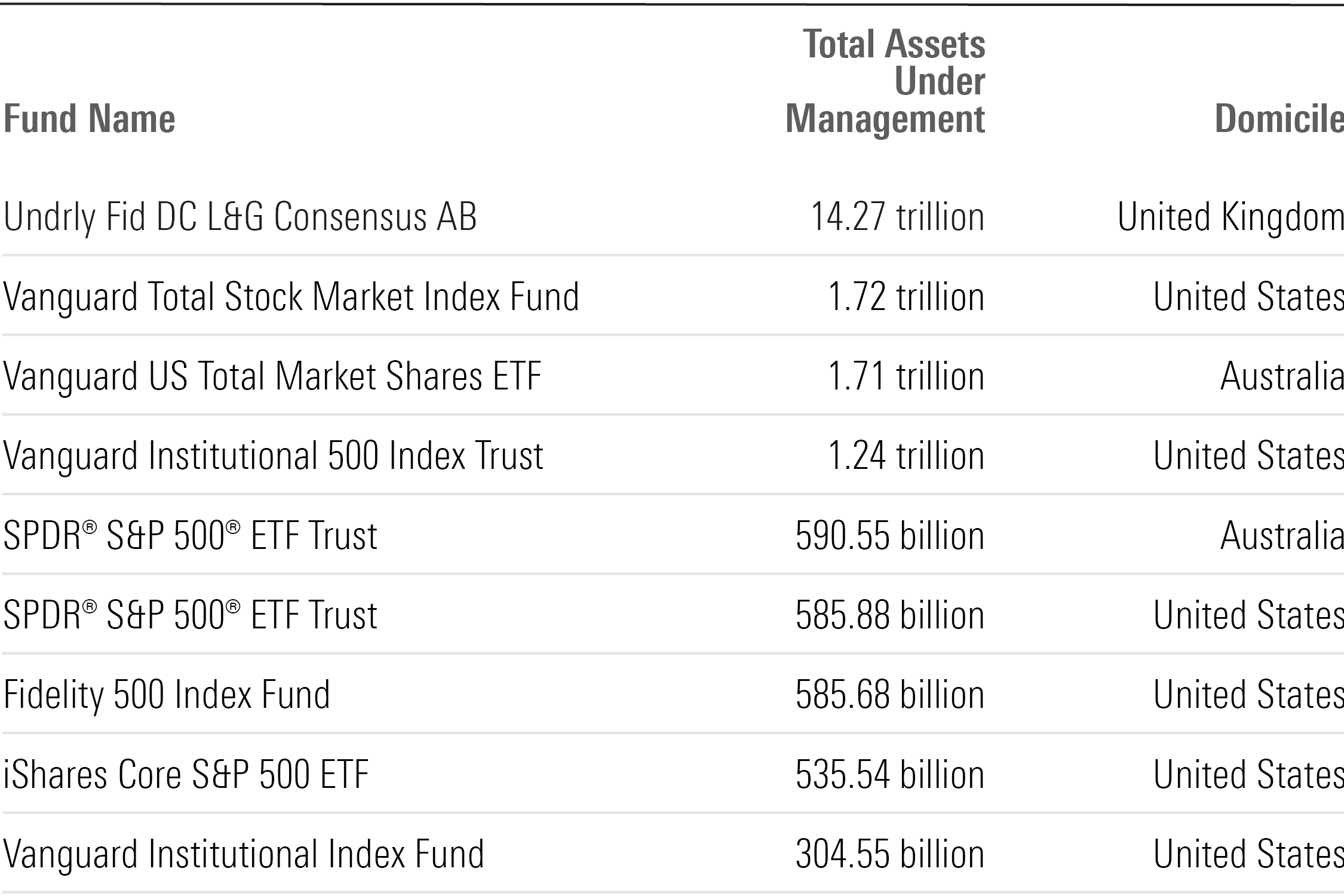
The risks of using tobacco and owning tobacco stocks are already widely known. Nevertheless, there are plenty of misunderstood risks and reasons to divest tobacco from portfolios, says Rebecca Brown, USA director at Tobacco Free Portfolios, a nonprofit. She ticks some off here:
- Vaping is tremendously addictive.
- “The environmental footprint is staggering to produce products with zero-safe use,” Brown says. Cigarette filters are a huge component of ocean plastics, and e-cigarettes rely on lithium-ion batteries and single-use plastics.
- Multinationals in the tobacco business are also subject to supply chain risk in the form of near-slavery and child labor.
Finally, the long-term investment outlook remains troubling, says Brown. And more regulation isn’t out of the question. After all, a World Health Organization framework on tobacco control has been signed by 168 countries.
The author or authors own shares in one or more securities mentioned in this article. Find out about Morningstar’s editorial policies.

 United States