
What to Watch in Nvidia Earnings: Spy Scandal, Data Center Concerns Take Center Stage
Amid an investigation into CEO Jensen Huang and post-election uncertainty about data center development, here’s what we’re keeping an eye on in Nvidia’s earnings.

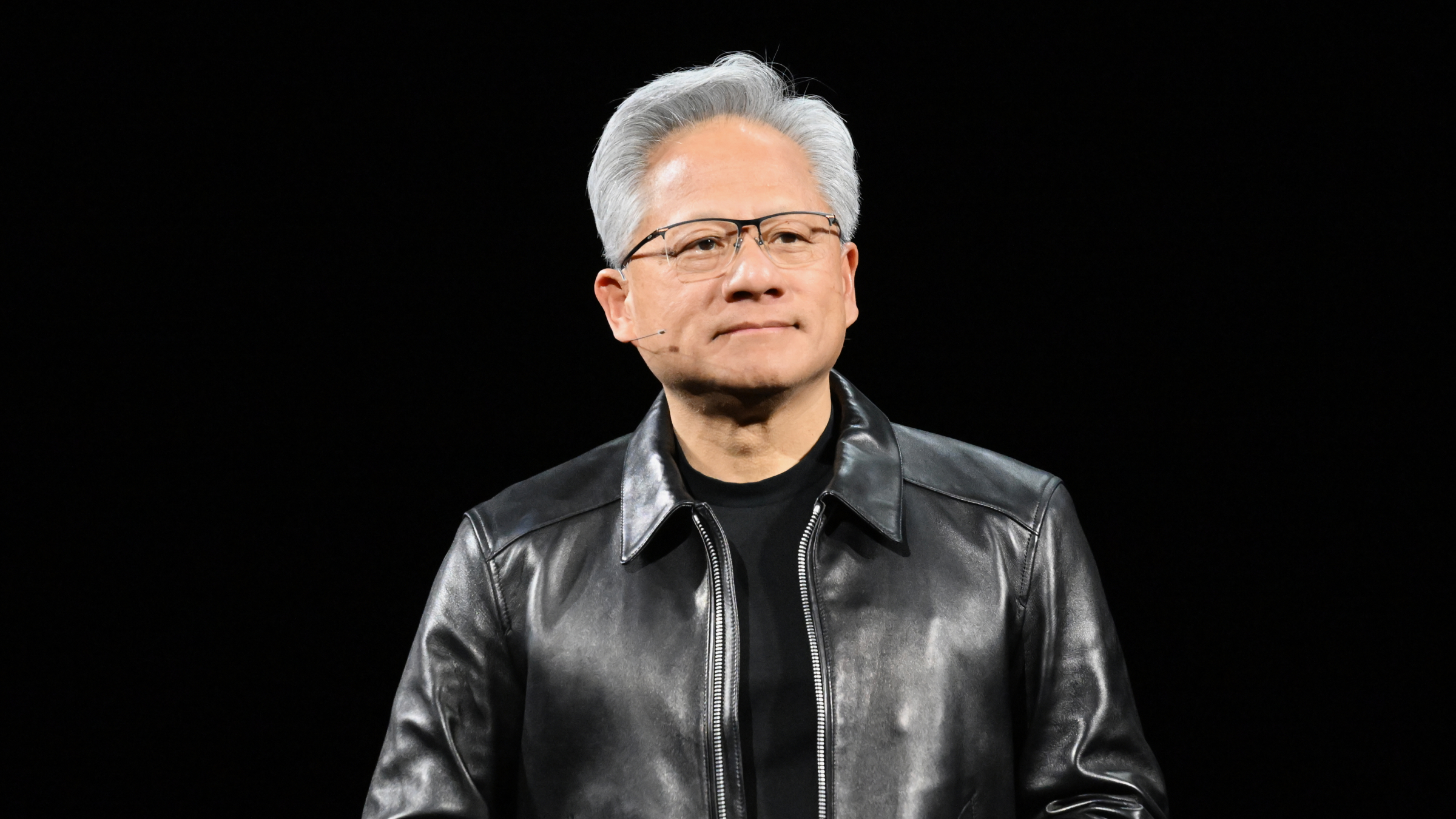
Nvidia is set to release its fiscal third-quarter 2027 earnings report on Nov. 17. Here’s Morningstar’s take on what to look for in NVIDIA’s earnings and the outlook for its stock.
Key Morningstar Metrics for Nvidia
- Fair Value Estimate: $310.00
- Morningstar Rating: ★★★★
- Morningstar Economic Moat Rating: Wide
- Morningstar Uncertainty Rating: Very High
Nvidia Earnings Release Date
- Tuesday, Nov. 17, after the close of trading
What to Watch for in Nvidia’s Q3 Earnings
- Perhaps the most important issue is the independent investigation into founder and CEO Jensen Huang. We might not learn much during the call, as the investigation remains pending, but we’ll see what comes up during the event.
- The other burning issue will be the company’s views on data center development in the United States. In the very near term, we’ll be interested in whether the election has led to any immediate pauses in orders or concern about future demand. Nvidia’s last forecast effectively called for $700 billion of AI revenue in calendar-year 2027. Longer-term, we’ll be interested in Nvidia’s insight into whether the US midterms will truly pause data center buildouts.
- We remain interested in Nvidia’s revenue from the less-obvious pieces of its business, such as ACIE (AI Cloud, Industrial, Enterprise), where we think design wins are stickier. Sovereign government spending is a similar area of interest, as is revenue from new products, like Vera CPUs.
- As usual, we’ll seek insight into sales (or non-sales) in China, especially amid the CEO investigation.
- Shares appear undervalued to us. Nvidia’s stock has lagged this year as investment dollars flowed to other “picks and shovels” AI components makers, such as memory chips and optical products. Now that there are concerns about the AI buildout and the CEO role, Nvidia’s stock faces those headwinds too.
The following are excerpts from Morningstar’s company report on Nvidia.
Fair Value Estimate for Nvidia
With its 4-star rating, we believe Nvidia stock is moderately undervalued compared with our long-term fair value estimate of $310 per share. Nvidia’s data center business has achieved historic growth from $3 billion in fiscal 2020 to $194 billion in fiscal 2026, and we estimate it will be $385 billion in fiscal 2027, representing 99% annual growth. We were amazed by Nvidia’s forecast for 70%-plus growth in fiscal 2028 (or effectively calendar 2027), but we think it’s achievable, and we model $672 billion of data center revenue the following year.
Nvidia’s massive DC growth has been gross-margin-accretive, as we think the firm should achieve mid-70% gross margins in fiscal 2027. In the long run, we anticipate modest gross margin deterioration in the decade ahead, as we lower it to the high-60% range a decade from now. Still, we are optimistic about Nvidia’s ability to retain its pricing power in DC products.
Read more about Nvidia’s fair value estimate.
Economic Moat Rating
We assign Nvidia a wide economic moat. We believe the firm benefits from intangible assets around its graphics processing units and its networking and interconnectivity gear. Nvidia also maintains strong pricing power via high customer switching costs around its proprietary software, Cuda, for AI tools, which enables developers to use Nvidia’s GPUs to build AI models.
Further, we now view Nvidia as an “AI systems” company. The firm not only sells AI GPUs and networking gear, but CPUs, storage solutions, software, and open-source models that can enable any business to pick and choose components to deploy AI. We think Nvidia’s ultimate goal is to expand AI use cases and the AI ecosystem globally (as evidenced by all of Nvidia’s investments in partners and startups). Even if large tech companies develop enough in-house expertise to reduce their reliance on Nvidia, there are a host of smaller cloud vendors (neoclouds), governments, and enterprises that will remain reliant on Nvidia’s full stack. For all of these reasons, we foresee Nvidia remaining at the head of the pack in AI for quite some time.
Read more about Nvidia’s economic moat.
Financial Strength
Nvidia is in outstanding financial health. As of October 2025, the company held $60.6 billion in cash and investments, as compared with $8.5 billion in short- and long-term debt. Semiconductor firms tend to hold large cash balances to help them navigate the cycles of the chip industry. During downturns, this provides a cushion and flexibility to continue investing in research and development, which is necessary to maintain their competitive and technological positions. Nvidia has more than enough cash to cushion against downturns, and we struggle to foresee opportunities for the company to spend this excess cash other than stock buybacks. Nvidia’s dividend is virtually immaterial relative to its financial health and forward prospects.
Read more about Nvidia’s financial strength.
Risk and Uncertainty
We assign Nvidia an Uncertainty Rating of Very High, due to the nascent nature of the AI market. The biggest risk, in our view, is the pace of AI spending going forward. Nvidia prospered from exponential AI growth in recent years, but such spending comes from a handful of customers, and they all have an incentive to eventually optimize, if not reduce, their investments over time. Within these AI buildouts, we also think that tech leaders will turn to in-house chips for at least a portion of their workloads. Diversification is also possible, and among existing semis vendors, AMD is quickly expanding its GPU lineup to serve these cloud leaders.
We also foresee geopolitical risk and uncertainty, most notably with US restrictions that have prevented Nvidia, at various times, from selling its AI products into China.
Read more about Nvidia’s risk and uncertainty.
NVDA Bulls Say
- The AI infrastructure opportunity is massive, and Nvidia foresees $3 trillion-$4 trillion of annual AI infrastructure spending by 2030.
- Nvidia’s data center GPUs and Cuda software platform have established the company as the dominant vendor for AI model training and inference.
- Nvidia is expanding nicely within AI, not just supplying industry-leading GPUs but also moving into networking, software, and services to tie these GPUs into even more-powerful clusters.
NVDA Bears Say
- Nvidia’s customers are a handful of the largest Tech companies in the world, and they all have an incentive to eventually diversify away from Nvidia to some extent.
- AI infrastructure spending has been impressive, but revenue and use cases are less certain, perhaps raising doubts that there is a good return on investment in AI, which might lead to a spending downturn.
- Geopolitics have entered the AI space, most notably limiting Nvidia’s AI opportunities in China.
This article was compiled by Colin Laidley.
The author or authors do not own shares in any securities mentioned in this article. Find out about Morningstar’s editorial policies.

 United States