
Going Into Earnings, Is Home Depot Stock a Buy, a Sell, or Fairly Valued?
Watching professional demand, DIY trends, and tariff risks, here’s what we think of Home Depot stock.

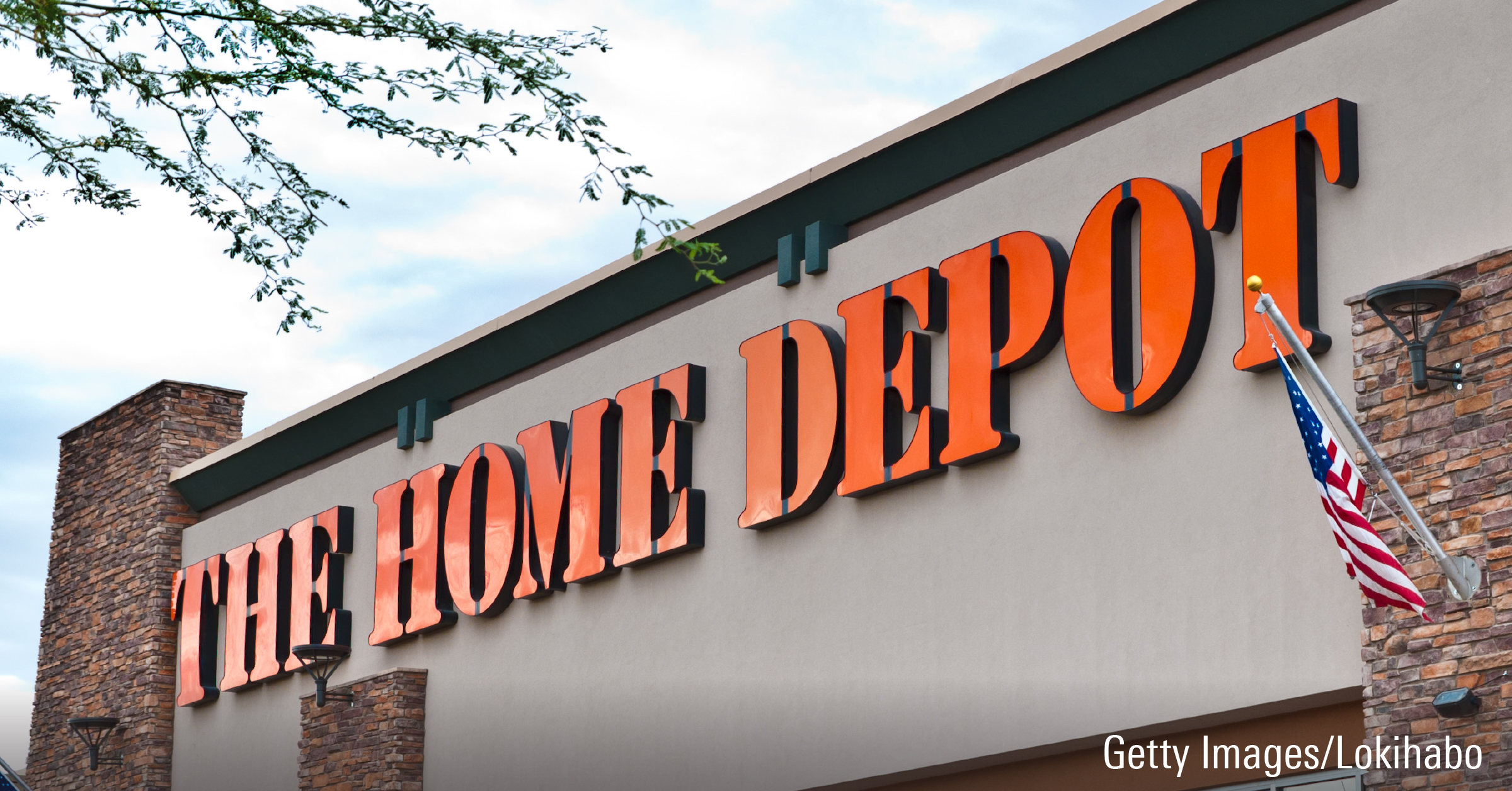
Home Depot HD is set to release its fiscal fourth-quarter earnings report on Feb. 25. Here’s Morningstar’s take on what to look for in Home Depot’s earnings and stock.
Key Morningstar Metrics for Home Depot
- Fair Value Estimate: $292.00
- Morningstar Rating: ★
- Economic Moat: Wide
- Morningstar Uncertainty Rating: Low
Earnings Release Date
- Tuesday, Feb. 25, before the start of trading
What to Watch for in Home Depot’s Q4 Earnings
Our fair value estimate of $292 per share holds firm for now, and we believe the stock is overvalued. We expect 11% sales growth to nearly $39 billion, but the growth stems from an extra week in the reporting period and acquired sales from SRS. If we carve out these idiosyncrasies, we’d expect a sales decline of 0.6% on a comparable sales decline of 2.7%.
We anticipate fourth-quarter results will rely on demand for the professional business, as Do It Yourself customers have paused big-ticket discretionary projects, which are often financed. Notably, demand from pros should have maintained in 2024’s final quarter, since existing home sales volumes have returned to positive growth. With housing turnover likely stabilized at depressed levels, we still think Home Depot should be primed to capitalize on its pro cohort with continued enhancements.
For 2025, higher-than-optimal mortgage rates are set to hold housing turnover at bay. Stalled demand sentiment was echoed at Lowe’s LOW December investor day, where the firm pointed to flat industry sales in 2025 in its base case. As buyers wait for mortgage rate relief, we still see indications of stable sentiment around category demand. Specifically, furniture and home furnishing sales have generated 1% average sales growth, while building, garden, and supplies equipment dealers have seen sales declines averaging 1% over the last three months. This implies customers remain engaged, even if big-ticket projects aren’t a priority.
Notably, tariffs remain a wild card, with concern around categories like raw materials and finished goods. For example, appliances sourced from Asia are a likely target—a category that made up 9.1% of 2023 sales. Thankfully, we believe Home Depot has some ability to absorb incremental tariff costs without material disruption to its profitability, due to its scale.
The Home Depot Stock Price
Fair Value Estimate for Home Depot
With its 1-star rating, we believe Home Depot’s stock is significantly overvalued compared with our long-term fair value estimate of $292 per share. The firm posted better-than-expected third-quarter revenue, which grew 6.6% to $40.2 billion, benefiting from $200 million of hurricane-related sales. Excluding weather-related performance, the pro-business saw continued strong results, with SRS adding $2.9 billion in revenue, in line with expectations.
DIY consumers continue to feel pressure from high interest rates and macroeconomic uncertainty, resulting in a decline of 6.8% in big-ticket sales and comp sales down again. Low housing turnover has also weighed on DIY performance, as potential buyers wait for mortgage rates to come down, though we expect to see improvement in the housing market in the latter part of 2025 and DIY spending to normalize.
Read more about Home Depot’s fair value estimate.
The Home Depot Stock vs. Morningstar Fair Value Estimate
Economic Moat Rating
We assign Home Depot a wide economic moat. As the largest global home improvement retailer, we believe Home Depot possesses a competitive edge owing to its brand intangible asset and cost advantage. Over the past 10 years, Home Depot’s sales growth has outpaced the building materials and garden equipment and supplies dealer industry’s average growth of 5.3% by 170 basis points annually (based on the US Census Bureau data), an indication of the brand’s ongoing relevance.
We surmise Home Depot’s strong brand equity and extensive scale should enable incremental market share gains in a highly fragmented $1 trillion North American home improvement market, on top of the more than 15% market share it has amassed thus far (given roughly $153 billion in sales in 2023).
Read more about Home Depot’s economic moat.
Financial Strength
Home Depot has had no concerns tapping the credit markets to finance the business in recent years. The firm raised $10 billion in debt during the first half of 2024 to finance part of the $18.25 billion SRS Distribution acquisition. This left Home Depot with a total debt above $50 billion at the end of the third quarter. Management has halted share repurchases with higher expected debt service from that acquisition.
However, we model share repurchases to resume their historical pace in 2026 and beyond, with the new $15 billion share repurchase program authorized in August 2023. Including the impact of the SRS acquisition, EBIT is forecast to cover the net interest expense 10 times at the end of 2024.
Read more about Home Depot’s financial strength.
Risk and Uncertainty
We give Home Depot a Low Uncertainty Rating, owing to its strong brand recognition, which has helped stabilize sales through the cycle. Home Depot’s sales are largely driven by greater consumer willingness to spend on category goods in both necessary and discriminatory home purchases. Thanks to the maintenance, repair, and operations (MRO) and pro-business (HD Supply and SRS), revenue could be less cyclical, as the maintenance side of the business can prove more consistent.
In uncertain economic times, consumers remain in their homes, embarking on improvement projects and boosting DIY revenue. Alternatively, when home prices rise, the wealth effect generates a psychological boost to consumers, reinvigorating professional sales thanks to a higher willingness to spend on big home improvement projects. A diverse consumer base helps normalize revenue even in uneven times. Currently, about half of sales are in the DIY arena, while the rest are generated from pro customers.
Read more about Home Depot’s risk and uncertainty.
HD Bulls Say
- Home Depot’s continued investments in supply chain and merchandising should improve productivity and support its market leadership position in the home improvement market.
- The firm has returned $73 billion to shareholders through dividends and share buybacks over the past five years, nearly 20% of its market cap. We forecast Home Depot to return around $75 billion to owners over the next five years.
- The addressable MRO market is about $150 billion. As Interline and HD Supply make up a low-double-digit share and SRS reaches a new end user, there are shares up for grabs.
HD Bears Say
- Weak consumer spending, higher interest rates, or an economic downturn could hinder sales for home improvement projects and affect Home Depot’s growth.
- IT and supply chain improvement gains could prove more challenging to achieve, as simpler efforts have already borne fruit. Further productivity efforts could face some implementation risks, creating inconsistent profitability.
- As home improvement demand continues normalizing, consumers could further shift discretionary spending from home improvement into other categories.
This article was compiled by Gautami Thombare.
The author or authors do not own shares in any securities mentioned in this article. Find out about Morningstar’s editorial policies.

 United States