
Autonomous Trucking Stock Aurora Is Finally Hitting the Fast Lane
After going in reverse for years following its IPO, Morningstar sees Aurora as a prime beneficiary of a coming autonomous long-haul trucking wave.

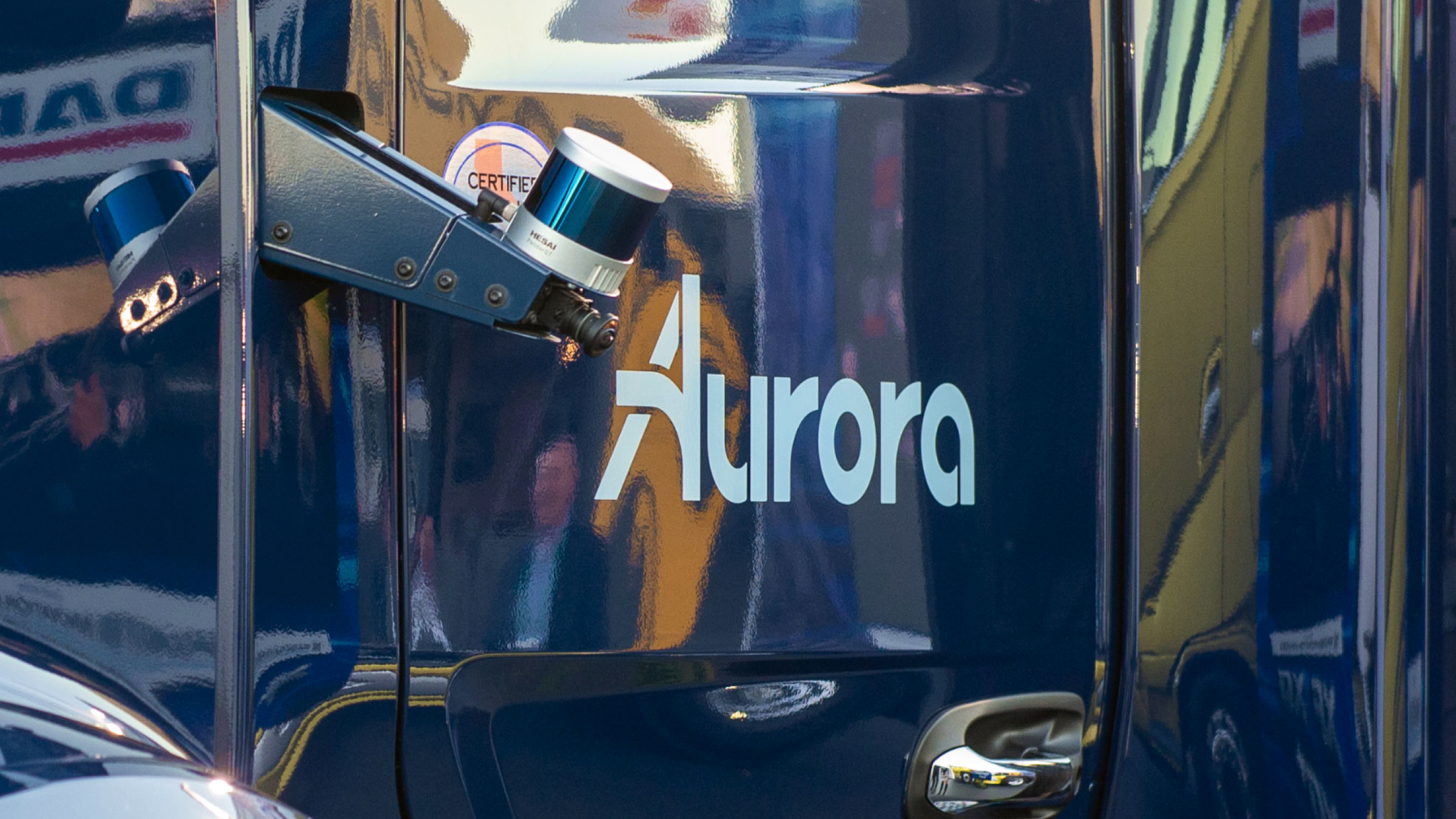
Investors have hit the gas pedal on Aurora Innovation AUR this year, with shares of the autonomous trucking systems provider up more than 60% as the company inked several deals to expand its footprint. Although the stock has fallen from its best levels of the year (at one stage, it was up more than 115%), Morningstar equity analyst Seth Goldstein thinks it can continue riding what he sees as a significant ramp-up in autonomous trucking that will get in gear by the end of 2026.
This bounce has been a long time coming for Aurora. After going public in 2021, the stock collapsed and languished well below its offering price. Even with the recent rally, Aurora is down 34.5% from when it went public.
Aurora offers self-driving trucking services, using a platform that combines its software with sensors, onboard computer hardware, and artificial intelligence integrated directly into autonomy-enabled trucks. Currently operating its trucks with a safety monitor on board, it is the only autonomous long-haul trucker on public US roads, according to Goldstein. It operates primarily on interstate highways in Texas, New Mexico, Arizona, and Oklahoma,
Although autonomous trucks covered fewer than 500,000 miles in 2025, Goldstein predicts they will cover nearly 80 billion miles per year by 2040, or roughly 40% of US trucking miles. Goldstein notes that he is more optimistic than the consensus about the outlook for autonomous trucking. For starters, he expects fully autonomous trucks to be in operation by the end of this year or early 2027, in what is known as a “drop point model,” where humans begin and end trips while the trucks self-drive during the long-haul middle section. He says the consensus doesn’t expect drop-point driving until the end of 2027 and full self-driving until 2030.
What Is Driving Aurora’s Rally?
Aurora went public in Nov. 2021 through a special-purpose acquisition company merger at $10. The stock soon collapsed, and by late 2022, it was trading below $2 per share. Aside from some spikes in late 2024 and the first half of 2025, Aurora has spent most of its time as a public company trading below $7 per share.
Aurora stock started trending upward in April, when the company announced an expansion of its partnership with Hirschbach Motor Lines, which included a plan for the carrier to own 500 Aurora Driver-powered trucks. It then reached a record high for the year on May 13, roughly a week after its latest agreement with McLane to expand its driverless commercial operations in the Dallas-Houston corridor and add new routes across the Southwest.
When Will Autonomous Long-Haul Trucking Be Fully Allowed?
The biggest roadblock for Aurora is regulatory approval. On the one hand, only five states prohibit autonomous vehicles entirely, Goldstein explains. However, a lack of a federal framework for autonomous trucking regulations means Aurora needs regulatory approval in each state it expands to. This “creates a near-term barrier to adoption that’s not insurmountable but slows down the adoption process.”
Goldstein says Aurora is overcoming another roadblock to expansion by moving away from its “transportation as a service” business model. The company currently owns and operates its trucks like a third-party trucking service, getting paid per mile to avoid requiring hefty upfront payments from wary customers. However, he expects Aurora will shift to the “driver as a service” model starting next year, wherein fleet operators run Aurora’s system on their own trucks. “By 2028, this will be their predominant business model,” he says. “It’s much more profitable.”
Aurora’s closest competitors are Kodiak AI KDK and Gatik. Goldstein believes they’re behind the curve, since their technology is largely tested on private roads (from a mine to a refinery, for example) or over limited distances. He says Tesla TSLA and Nvidia NVDA also pose a threat in the broader self-driving technology space, although time will tell if they enter the semi-trucking market.
Aurora technology could lower delivery times for a 1,000-mile trip from two days to one day, Goldstein says, as autonomous trucks won’t face the government-mandated hours of service limitations that human drivers do. “No one’s going to replace their entire fleet overnight, but as customers are buying more semi-trucks, we think a greater proportion over time will be autonomous trucks and a lot of those will be from Aurora,” he says.
Key risks remain, including securing state-level regulatory approvals, potential new market entrants, and unforeseen accidents. Still, Aurora could have “exponential growth” over the next decade. “We think the first mover advantage, being the market leader, and their proprietary hardware and software will lead to strong customer adoption,” Goldstein says.
Is Aurora Stock Still A Buy?
Goldstein initiated coverage of Aurora in May with a fair value estimate of $12 per share. He believes that even with the rally, the stock trades below its potential worth, due to the skepticism priced into the market about the likely autonomous trucking timeline. However, Goldstein expects Aurora to “turn profitable, generate positive free cash flow by the end of the decade, and then grow from there in the 2030s just based on scale, meaning revenue growth grows far faster than expenses based on miles driven.”
Goldstein continues: “In our forecast, we’re assuming Aurora is a market leader, but doesn’t have the majority of the autonomous vehicle market share for semi-trucks. If they were able to do that, it would create tremendous upside, even relative to our $12 fair value estimate. If Aurora is the best, if they’re the safest, they can charge a growing price per mile over time ... [and] have the most market share and then grow faster than our base case.”
The author or authors do not own shares in any securities mentioned in this article. Find out about Morningstar’s editorial policies.

 United States