
Some Fund Companies Missed the News About Falling Fees
Some active and passive fees are out of step with the times.
The article was published in the November 2016 issue of Morningstar FundInvestor. Download a complimentary copy of FundInvestor by visiting the website.
October saw another episode of fee wars. BlackRock cut fees at a number of its exchange-traded funds to dirt-cheap levels.
Yes, there’s a powerful trend that’s giving a better deal to investors across an array of funds. As technology makes investing cheaper, it’s natural for fund companies to share some savings. And of course, the spread of passive investing means you have more low-cost options than ever before.
Yet, remarkably some fund companies and their fund boards haven’t gotten the memo.
One of them is BlackRock. The same company and board that cut fees for some funds has stubbornly kept others surprisingly high.
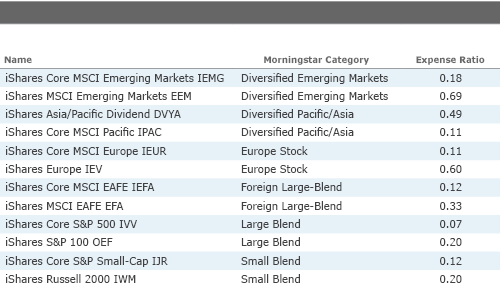
- source: Morningstar Analysts
Oppenheimer and the board overseeing
Those inflows inspired Oppenheimer to decide it should have its cake and eat it, too. The flows forced it to change the fund’s name and benchmark from Small Cap to Small-Mid, and it closed the fund to new investors. But with all that money and no need to attract new investors, why not raise fees? Oppenheimer cranked up the fund’s expense ratio to 1.43% from 1.18%. Back when the fund had just $600 million in assets, it charged 1.14% in fees. But apparently this is the only fund with diseconomies of scale, as it needs to charge more with $6.8 billion in assets. To put that in dollar terms, it is now paid $97 million per year rather than $7 million. For the record, Oppenheimer says that the broader benchmark necessitated the fee hike. It added one new analyst at the time of the fee hike, giving the fund a total analyst staff of two. So, maybe it is paying that analyst $90 million.
For investors, this suggests how important it is to watch their funds’ expenses and keep an eye out for cheaper alternatives as more fund companies compete on cost. For fund companies, it’s time to decide if they want to be relegated to the role of niche players or compete with the best.

 United States