
Investors First: Inside Morningstar’s Semiliquid Fund Ratings
With growing investor interest in private assets and alternative investment strategies, Morningstar’s CEO discusses the firm’s new Medalist Rating for semiliquid funds.
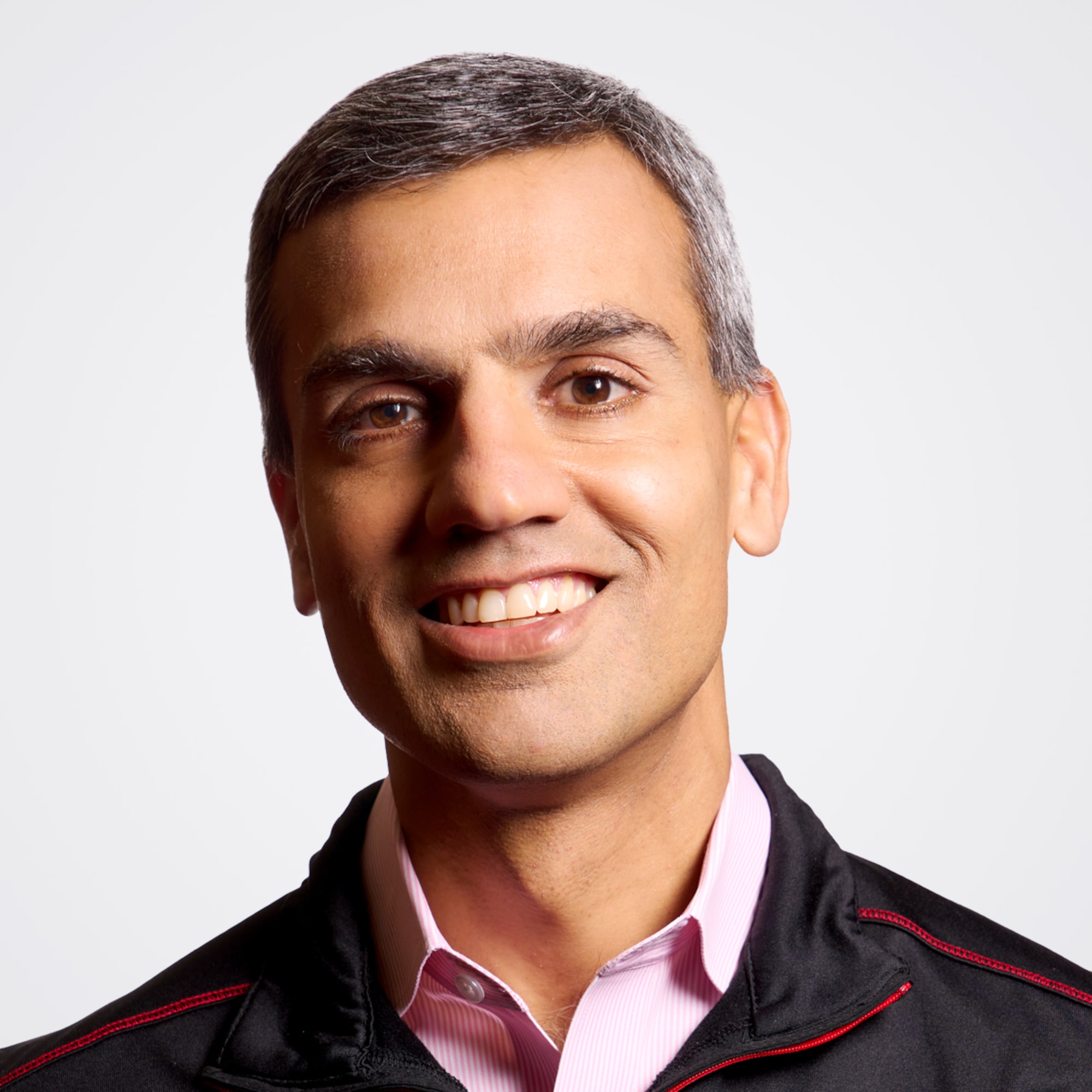

Kunal Kapoor: Welcome to the latest Investors First webinar here on LinkedIn. I’m excited to be with you here again and joined by my colleague Bryan Armour, who leads our research in the ETF and passive strategies area. And we’re going to spend our time today talking about semiliquid funds, which hopefully the name gives you a bit of a tip as to what we’re talking about. But Brian, just to make it easy for everybody, and welcome; “semiliquid” quickly, what does that mean, and what are we going to be talking about?
Bryan Armour: Yeah, so these are funds that have periodic repurchases. So it’s not like your typical mutual fund or ETF where you can sell out every day. Typically, it’d be more like monthly or quarterly repurchases and often with a cap on how much you can take out at one time. So somewhere in between daily liquid mutual fund ETFs and the full-on private drawdown funds that take years to unlock investors. So we call it semiliquid.
Kapoor: Makes total sense. And it’s happening because private markets and investing in private markets, which was often the purview of just large asset owners, institutional investors, is maybe becoming more mainstream. We’ve actually been talking about it on the series previously. And so that’s the context and the backdrop.
Armour: Yeah, yeah. I mean you look at private credit, for example, post global financial crisis, like absolutely grown. It’s filled a need because banks have become more capital-constrained or are not allowed to invest in the same way that they were pre global financial crisis. So we’ve seen that become a huge growing part of financial markets. Companies are staying private longer and not finding the need to source capital through public markets. And so it’s become a larger part of the market and investors that leaves a bit of a hole in their opportunity set to only focus on public markets. And so these offer a really good opportunity to package them in a vehicle that’s meant to handle the, I guess, more illiquid securities, unlike a mutual fund and ETF.
Kapoor: And our role here is to shine a light on these vehicles because they are complicated and different and you’ve just gone through and started to rate them. And so maybe talk a little bit about some of your initial findings and some of the trends that you’re seeing and what investors should be positive about and what we think they should be cautious about.
Armour: Yeah, definitely. So through ratings, I think one of the big surprises for me personally was just how different these strategies can be. So in the ones that we rated, it varies from like a very aggressive opportunistic private credit fund to a multi-asset totally passive—they sort of outsource all the investment decisions to subadvisors and coinvestments. So definitely wide array of approaches. I think all the generalization that we hear in talking about private markets doesn’t really make sense once you get deeper into it.
Kapoor: And with semiliquid funds, when you think about evaluating them, I imagine thinking about how performance and risk are going to play out for them is particularly different and challenging versus a typical ’40 Act fund where you have immediate liquidity. And so what have you found on that front, and how are we thinking about really getting to the core of whether these funds are good?
Armour: Yeah, so the main thing, performance. These are illiquid securities. They don’t trade every day. You can’t just input closing price into NAV and mark to market as we call it. And so there are processes around how they price the securities in their portfolio, and that leads to what we see as smoother performance. And so it’s hard to tell what risk is actually embedded in those securities. It’s something to watch out for.
But I think the biggest risk in terms of semiliquid funds is how do you handle the illiquidity? The sort of edge-case scenario is if you have what’s almost like a bank run on liquidity where multiple people are trying to sell out if it’s oversubscribed, meaning that it’s over the cap on how much you can repurchase each quarter, and then that draws the next investor to say, “Oh my gosh, should I be trying to get out, too?” And so you go through multiple cycles of oversubscribed repurchases and investors can’t get their money out as fast as they’d like to. And so a big part of what’s different from our typical ratings and ratings for semiliquid funds is trying to assess how the strategy, how the managers can handle that risk.
Kapoor: And so you started to allude to this, but it sounds like there’s some blind spots even for us when it comes to thinking about how to capture and convey a rating on some of these funds. And so what are some of the blind spots, and how are we trying to address them?
Armour: Yeah, so definitely investor behavior is one that we just can’t predict. So you can look at different things like how do they manage liquidity risk in the sense of is there a liquidity sleeve in the portfolio? Do they have other lines of credits they can draw on? Or set up deals with other partners to bring in more money to help get out of that cycle of oversubscribed repurchases. So that’s a big one. I think fees are complicated. Certain ones, if they invest in other funds, then there’s acquired fund fees on top of the management fee on top of performance fees in those funds. So you have to draw a line between all those.
Kapoor: So in some ways the age-old problem of performance-chasing could be magnified in the way these funds perform.
Armour: Yeah, absolutely. Absolutely.
Kapoor: So I’m interested, just to understand from your perspective, we’ve rated six funds so far. Tell us a little bit about what you found with those six funds. And I’m guessing viewers are also wondering when are we going to rate more of them? So maybe start with one of those questions and come back to the other.
Armour: Sure, yeah. So the six funds we rated—Pimco was the sole Medalist. Pimco Flexible Credit Income received a Silver for its institutional share class, Bronze for its … So no golds. No golds in this round. And then their Flexible Muni Income fund as well received a Bronze. But what worked out great for them is that they really prioritized, maximizing the structure, using leverage, leaning into opportunities to buy undervalued illiquid securities when they could.
And then Capital Group, for example, they instead partnered with KKR and sort of manage separate sleeves. So 60% public sleeve managed by Capital Group, 40% by KKR for private, and then put it together and added more liquidity than you typically see in interval funds, but also semiliquid funds. And then First Trust, another example of what I was talking about with the multi-asset approach, holding several different funds, doing these coinvestments, and just ending up with a very complicated portfolio that’s hard to see through the risk and their holdings.
Kapoor: Yeah, so it sounds like you have favored less complexity over more complexity.
Armour: Not necessarily. As long as there’s a reason for complexity. I would say Capital Group might have been the least complex, and that received a neutral. Pimco does more complex things, but it’s within their circle of competence. It’s something they’ve been doing for a long time.
Kapoor: So dive into Pimco a little bit in particular, given that that’s the one fund that has received a medal, and so talk about what really differentiates it and why you think it’s good for investors. And maybe—I think some folks would be interested in understanding—why is it better than some of the public market options available from Pimco as well?
Armour: Yeah, so it’s really going to be a more aggressive version of a lot of their public options. So with that comes higher fees and leverage.
Kapoor: When you say “aggressive,” aggressive means leverage.
Armour: Aggressive means leverage. It also means when they might lean into an opportunity you like …
Kapoor: More concentration.
Armour: Yeah, more concentration, depending on where the values are in the market. But they do manage liquidity well, it’s been around for a number of years at the helm are two former Morningstar Managers of the Year. And so we have a track record to show that they can handle the liquidity risk while being more aggressive and utilizing leverage.
Kapoor: And it sounds like on the First Trust one you didn’t find similar things to be excited about, hence the rating there.
Armour: Yeah, and I think the main thing there is the complexity of the pricing. It’s really hard to understand the opaque pricing of the different holdings. And I think where it landed was we don’t have a super negative opinion. We gave average ratings to the People, Parent, and Process Pllars. But the fees are so high through acquired fund fees, through performance fees, that to beat a public alternative, you really need to have a durable edge. And so we didn’t see that. So, average, unfortunately, in this case we see is not … We expect it to underperform a public benchmark.
Kapoor: So you started to—and that’s really important, underperforming a public benchmark and thinking of it that way—but you started talk about fees. And as I look at some of the questions that we’re starting to receive, the first one that I think we should talk about is about the effective fee. And one of our viewers is asking whether you can elaborate on how the effective fee is actually calculated and if it includes a standardized formula.
Armour: Yeah, so I mean, each fee has a standardized formula. These are all ’40 Act funds. So there are some, some hard and fast rules around how to do it. The challenge is picking apart the different pieces because there’s the management fee, there’s some distribution fees, then there’s, on top of that, there can be acquired fund fees, there are performance fees. So it’s really just trying to understand all the different components. I think one thing in particular, performance fees are something that we see as like these are most likely going to be paid out. So consider them almost like another management fee because, especially in something like private credit, the income surpasses the hurdle rate. And so they’ve typically in most scenarios, they’re going to outperform the hurdle and get paid out in their performance fee.
Kapoor: OK, that’s great. And obviously I would imagine a lot of advisors are looking at these funds for the first time as well. And when you think about how they should be approaching it and thinking about introducing it to client, having the conversation with the client, what’s the right kind of profile of client, do you think, for this type of investing and how might it get introduced into a portfolio?
Armour: Yeah, that’s really interesting. I think the key is matching investor goals with the underlying strategy. So if your investor, the client has income needs, private credit could make sense. If they don’t, I don’t think it would make sense. And so you fitting the portfolio, fitting the strategies to those needs. There are so many different strategies though. It’s not like a one size fits all. But I think the key is just educating yourself, understanding some of the pitfalls to look out for and then being able to educate the investor and help them feel good about the decision. Yeah. And why it’s a superior choice to a public market option.
Kapoor: If it is.
Armour: If it is.
Kapoor: So what I’ve heard from you so far, I think goes to the heart of answering some of the questions that tend to be on people’s minds when it comes to evaluating these types of offerings. But I think an interesting question to ask is did you come across any misconceptions, or are there some misconceptions about these semiliquid funds that investors should be aware of?
Armour: Yeah, I think there can be. There are obviously, I think the biggest hurdle is overgeneralization. And I think people think of like, “Oh, well, private markets are either good or bad or …”
Kapoor: Yeah, it’s a silver bullet or it’s terrible.
Armour: And so, as we went through it, there were multiple different things, fees, some of the complexity. It actually mimics more typical public market strategies than you might think. It’s just done in a different way. The sausage is sort of made differently. And so it seems more complicated than it is. At the end of the day, we’re really talking mostly about equity and bond risks. And a lot of the same risk factors still add in, which might dovetail into the typical marketing pitch of diversification and whether that’s real. And you can see their standard deviation of like, oh, we have 10% returns, 2% standard deviation. I don’t think that’s an apples-to-apples comparison to public markets. So maybe diversification benefits are oversold, but there are still some real reasons to invest in these types of funds.
Kapoor: Is the disclosure good enough so that you can do the side by side today with funds that are primarily available as representatives of public markets?
Armour: Yeah, definitely. But you need to be looking in the right places. So a lot of our analysis comes down to not past performance, but how do we see the … knowledge of how the team operates, some of the different layers of fees and whether the strategy is actually finding pockets of alpha or if it’s just a passive like tag along type of strategy that’s just fulfilling a need and trying to generate fees.
Kapoor: There’s a question here from one of our viewers about exactly where within Morningstar the ratings can be found. And I think you should answer that. But also maybe build a little bit upon this notion of whether the disclosure is truly going to allow for an apples to apples comparison or if you think it needs to change to kind of fully get there.
Armour: Sure. So yes, these ratings are going to be on Morningstar.com. They’re in Morningstar Direct Suite, Direct Advisory Suite, and Advisor Workstation, and the like. We’ll have data feeds that also incorporate this data. It’s easy to get them. Yeah. So there’s a lot being done around this, and the data team has done a fantastic job with that. But in terms of disclosures, I think there could be some nonstandardized disclosures that make it hard to even compare across semiliquid funds.
One way that if you’re looking at marketing materials, it’s harder to distinguish, but if you’re looking at regulatory filings, then you can actually pick it out. So I think one of the things that we try to do is surface some of those more comparable disclosures that they make. Like they’ll sometimes talk about their expense ratio in terms of total assets. So if they use leverage, it looks smaller because it’s a bigger pool. But net assets, then it would look higher. So it’s an example of one of the areas where it’s nonstandardized and it would be nice to have more clarity.
Kapoor: Right, right. OK, that makes sense. And if these funds continue to grow in your mind, who are the big winners? Are they investors, are they asset managers, or is it intermediaries? Who wins here? And how do you think about that?
Armour: The goldilocks scenario is everyone wins, right? I don’t know if that’s totally the case. I think it’s going to be on a case-by-case basis, but I would say if I had to pick one—asset managers, especially active managers, have been hit by the combination of outflows from active mutual funds and also declining fund fees. And so the combination I think would probably benefit them most, but that doesn’t mean that there’s not value here for investors.
Kapoor: I mean the skeptics always say, though, it’s kind of late to the party for retail investors in particular. And so how do you respond to that?
Armour: I mean it could be in some cases, right? But in terms of, if you think about private credit, there are legitimate reasons why it’s as big as it is and why it’s going to continue to grow. So I just wouldn’t expect there to be a blanket “everyone’s late to the party” for private markets.
Kapoor: I think it’s also the case that public and private markets have had such strong runs over the past two decades in almost every asset class that anything you could say can kind of be applied to both sides of the coin today from that perspective. You didn’t answer the question about providing more ratings for funds in the future, and we’re getting a couple of questions about that. So how are we going to expand to cover even more funds?
Armour: Yeah, we’re going to do more ratings. We’re going to have another set of about five to seven later this year and then we’ll continue to grow out that coverage next year. I think the next group will be more tailored to some of the private-leaning asset managers that maybe didn’t make it through the first—
Kapoor: Examples like?
Armour: Blackstone. Cliffwater. So the traditional names. Yeah. And so these are firms that we don’t have Parent ratings for some of them. And so we’ll be required to do more due diligence, so it takes longer to get them in there. And then next year we want to expand. We want to expand potentially globally. Get into LTIFs and LTAFs in Europe and move into a broader cross-section of vehicles. So we did interval funds for this one, for semiliquid, and get into tender offers and BDCs.
Kapoor: That’s another thing. Like there’s all these different types of vehicles. So I think the good thing is we already have the data, and we’re continuing to collect the data. So data will become available even as the ratings get added in that capacity. So this is a good question, I think, and I’m just going to read it as written. “My general impression,” says the viewer, “is that the criteria are more subjective than objective.” This may be inevitable due to the nature of the problem. And how do you think about it?
Armour: The criteria for the ratings? There is some level of subjectivity because it’s sort of like a nonnormal, like not everyone has the same access to funds, to deals. There’s also challenges in trying to understand how a manager would react to a certain hypothetical situation.
Kapoor: That subjectivity’s in any vehicle, even the public market. So I think what you’re saying is the analyst judgment is subjective. Otherwise, the data we’re using—
Armour: The data is objective.
Kapoor: Consistent.
Armour: And consistent, and we’re able to compare side by side, and we did that through our ratings committees and then going back at the end and stacking them up and trying to figure out how they all compare.
Kapoor: Yeah, that’s great. This is interesting, too. When might we expect private-market-focused categories?
Armour: I think soon we will have some private-market-focused categories, but a lot of these fit in broader Morningstar Categories. They don’t necessarily need to be in private. So like Capital Group, that’s in a core-plus category, and likewise and the Pimco Flexible Muni Income is in high-yield muni. So we want to compare them with public funds where we can. So I think we will when we need to.
Kapoor: Yeah. Interestingly, today we launched the Morningstar PitchBook Modern Markets 100 Index, which is a blend of public and private firms on the equity side. So certainly I think we’ll keep doing more to shine a light on this. Question I like here is: “Some of these vehicles have complex structures and sponsor incentives. Do the Medalist Ratings account for conflicts of interest between managers and investors?”
Armour: Absolutely. Yeah. In all our ratings, that’s a consideration. And making sure their incentives are aligned.
Kapoor: How do you do that? Is there a live example?
Armour: Yeah. I mean, in theory, something like performance fee would be aligned, but if they get it every time then we wouldn’t see that as alignment. Coming from the ETF world, if they’re paid on how well they track an index, right? So really we’re just making sure that the portfolio managers aren’t using any tricks like charging fees on total assets to bump up fees or if the performance fee is always going to be attainable, then is it enough to knock off the performance? And we’ll speak to the fact that you’re going to be paying this fee—
Kapoor: That’s right.
Armour: —every period.
Kapoor: What I like about what you’re saying, too, from a portfolio perspective, is you’re holding these types of offerings to account even in comparison to public market vehicles.
Armour: Yeah.
Kapoor: And just because they are entirely different doesn’t mean that the way we evaluate them needs to be entirely different because an investor is going to think about it in the context of his or her portfolio. So this has been really fun. And I want to kind of wrap up here with just one final question, which I think is an important one. Is this a case where every investor is going to end up having some type of hybrid or private market exposure or semiliquid exposure in their portfolios, or do you still think that it’s going to be very nichey?
Armour: So I would say somewhere in between. I think it will become more common. I would not expect every investor to have it in their portfolio. We’re seeing the potential for private assets to get into 401(k)s. That would certainly go a long way. But by no means are investors required to look into private markets. They can do just fine in public markets if they want to.
Kapoor: That’s right. This has been fun. And obviously we’ll help investors navigate all of this. There’s so much to be done here. It’s an interesting part of the world. And thanks to everybody who joined the webinar. It’s been super fun. And stay tuned for more ratings and work from Morningstar in this space. Brian, thanks for being here today.
Armour: Yeah, thanks for having me.
The author or authors do not own shares in any securities mentioned in this article. Find out about Morningstar’s editorial policies.

 United States