
15 Big Fund Upgrades and Downgrades
Our recent methodology update has altered the ratings landscape and increased transparency for investors.

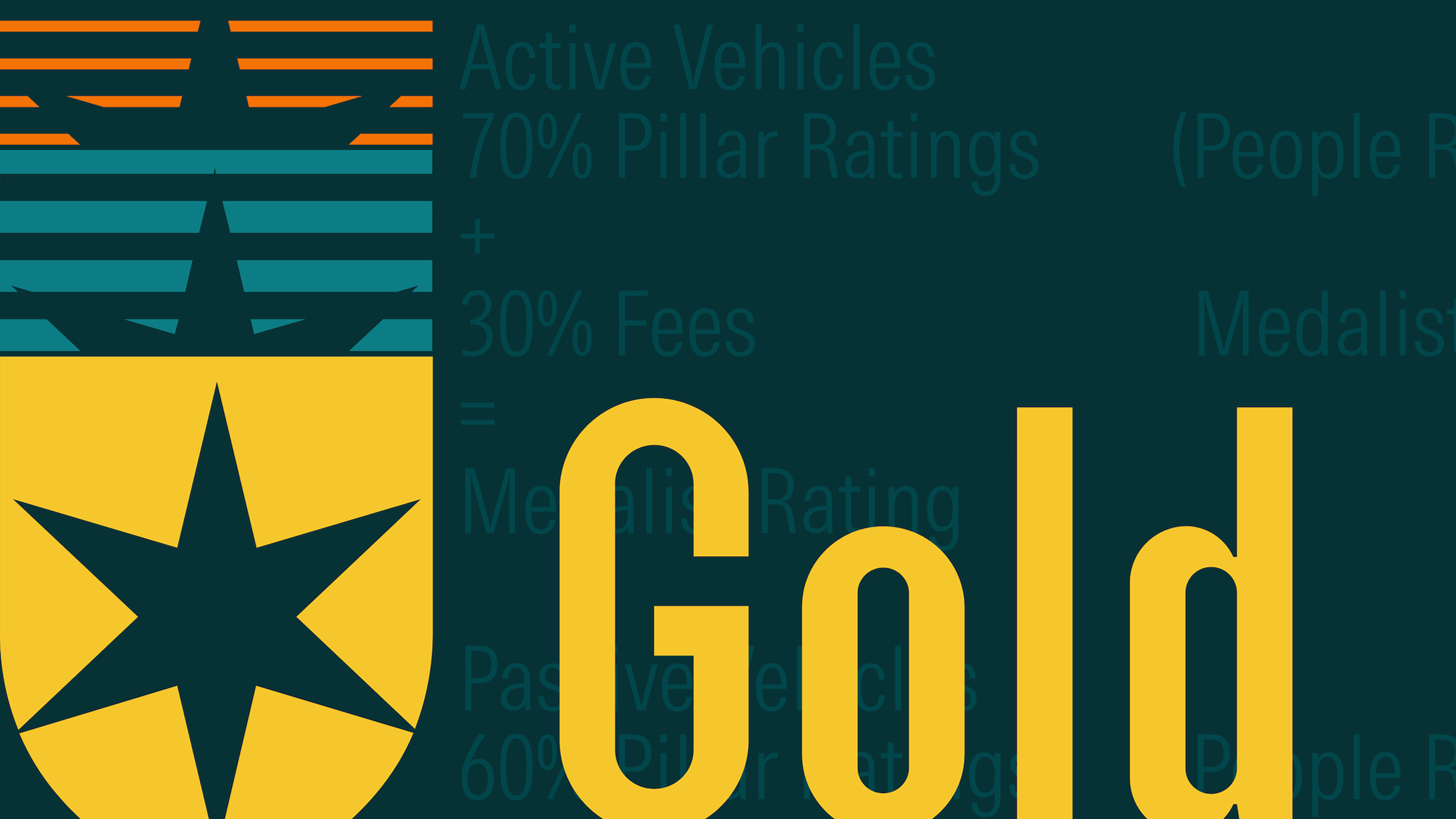
We have modified our Morningstar Medalist ratings to a simplified structure with fewer moving parts. In a previous fund spy, I looked at its impact on the largest funds.
Our prior methodology looked at past returns and their variance to infer alpha potential and then adjusted ratings accordingly. So, a category that had greater alpha potential would be more tolerant of higher fees, and one with a low alpha potential would have lower ratings. There’s good logic there, but it did end up being quite harsh in some areas with good funds where indexing isn’t a practical solution or the market isn’t that efficient.
Under the new methodology, some funds with strong fundamentals are getting upgrades. Fees are still important. The highlighted upgrades are all cheaper than the downgrades.
Thus, the playing field is now a little more even.
15 Big Upgrades and Downgrades Under Our New Medalist Rating Methodology
Target-Date Funds
To me, target-date funds are one of the industry’s great success stories. They offer low-cost exposure to great funds and a glide path that adjusts investors’ asset mix as they approach their target retirement date. Yet it was very rare for these funds to get Gold ratings because returns tended to bunch in a fairly tight band as many of the weaker and wackier players were weeded out.
T. Rowe Price Retirement 2030 TRRCX earned High pillar ratings across the board because it had both strong underlying funds and an excellent glide path team. The fund’s retail share class charges 0.55%. That’s a hair cheaper than average, so under the new methodology it earned a 0.19 price score and an overall 1.46 score, elevating the fund to Gold from Bronze.
American Funds 2030 Target Date Retirement Fund AAETX charges 0.66% and has three High pillar ratings. It goes all the way to Gold from Neutral. Despite a -0.04 fee score, it gets a 1.27 overall score thanks to High People, Process, and Parent ratings.
Fidelity Freedom 2035 FFTHX has gone to Silver from Neutral. It has Above Average Parent and Process ratings and a High People rating. With a 0.64% expense ratio and -0.36 fee score, it clocks in at an overall score of 0.91.
Bank Loans
Bank-loan funds require credit research and liquidity management, so indexing isn’t a great choice here.
Thus, I was pleased to see Fidelity Floating Rate High Income FFRHX and T. Rowe Price Floating Rate PRFRX upgraded to Gold from Bronze. Both earn High People and Process ratings and respective Above Average and High Parent ratings. The funds have similar fees: 0.76% for T. Rowe and 0.73% for Fidelity. That leads to similar overall scores of 1.59 and 1.6, respectively.
Munis
Municipal bond funds are also getting some welcome upgrades. Fidelity Intermediate Municipal Income FLTMX is going to Gold from Bronze thanks to its low 0.37% fee and its High Process and Above Average People ratings. Its 1.32 price score leads to a 1.41 overall score.
Allocation Funds
T. Rowe Price Global Allocation RPGAX and T. Rowe Price Spectrum Conservative Allocation PRSIX received upgrades to Silver and Gold, respectively, from Bronze. Global charges 1.02%; that’s actually above average, but having High ratings for Parent and People, plus an Above Average Process rating, nudges it to a 0.97 score. T. Rowe Price Spectrum Conservative Allocation has a much cheaper fee of 0.67%, giving it a 1.0 price score, a 1.39 overall score, and a Gold rating.
Downgrades
Now let’s look at some higher-fee funds for which our prior model was more forgiving, but are now going down a notch. Many of these are in emerging markets and small and mid-caps. You’ll notice that all these examples have negative price scores. That means their higher-than-category-average expense ratios are cutting their ratings.
Emerging Markets
Invesco Asia Pacific Equity ASIAX is going down to Neutral from Silver though its cheaper shareclasses still earn a medal. Its 1.43% expense ratio gave it one of the worst price scores I’ve highlighted: -1.55. We give it a High for Process and Above Average for People, and Average for Parent; so, besides price, the underlying fundamentals are pretty appealing.
GQG Partners Emerging Markets Equity GQGPX is coming down to Silver from Gold. We rate it High for People and Process, and Above Average for Parent. Fees are a little above average at 1.18%, but it has a -0.67 price score. I own this fund as I’m a fan of manager Rajiv Jain, though I’d love to see fees come down.
Small Caps and Mid-Caps
Baron Small Cap BSCFX and Baron Asset BARAX are coming down to Bronze from Silver. They charge 1.32% and 1.31%, which is kind of pricey for their categories, and both get a significant penalty for it. On the plus side, we rate the Process High and People Above Average.
Harbor Mid Cap Value HIMVX is coming down to Bronze from Silver. The fund’s small $420 million asset base is partly responsible for its 1.2% expense ratio. That fee gets it a -1.32 penalty in our new methodology.
LSV Small Cap Value LVAQX is a good quantitative fund, but its above average 1.08% expense ratio takes its rating to Silver from Gold. As the High People and Above Average Process ratings indicate, there are some strong fundamentals behind the fund.
Finally, Victory Sycamore Small Company Opportunity SSGSX is coming down to Bronze because it suffers a -0.99 price score penalty on account of its 1.23% expense ratio. We rate it High for People and Above Average for process.
Conclusion
Our new methodology should produce more transparent and stable ratings, which I hope makes using them easier for investors.
The author or authors own shares in one or more securities mentioned in this article. Find out about Morningstar’s editorial policies.

 United States