
The Best Robo-Advisors of 2025
Understand the ins and outs of digital advice and see our top picks.


The robo-advisor revolution never really arrived.
Instead of supplanting traditional planners as some people predicted, independent digital advice providers have struggled to meet those early, heady expectations. Meanwhile, some established firms they had sought to upend have co-opted robo-advisors’ methods and seized the market.
Although robo-advisors have grown in the two decades they’ve existed, they still compose a sliver of the asset-management industry. In 2024, robo-advisor assets were between $634 billion and $754 billion, according to Cerulli Associates and other sources. That’s a fraction of the $36.8 trillion US retail market, which Cerulli defines as investors with assets of $100,000 to $5 million.
That’s not to say these would-be disrupters have not had any disruptive influence, however. Digital advice has become another way for established firms to reach digital-savvy investors and an additional tool for human advisors to use in serving clients. Digital advisors’ chief benefits include cheap, diversified portfolios and simple interfaces; a few have added valuable features, such as nonretirement goal planning and tax-loss harvesting. There are several differences among platforms’ fees and offerings, though.
To help investors sort through the options, Morningstar recently assessed 16 major robo-advisors as part of its 2025 Robo-Advisor Report. We took a closer look at what the top robo-advisors can—and can’t—do for investors. A couple stood out for low costs and service breadth. Higher costs and poor transparency held others back.
If robo-advisors sound like a good fit, consider our list of top providers to better understand the options that could work for you.
What Is a Robo-Advisor?
Robo-advisors occupy a middle ground between a wealth manager and a do-it-yourself trading platform. For example, robo-advisors use computer algorithms to provide low-cost asset allocation and build automated investor portfolios. They offer more specificity than the straightforward trade execution of a brokerage platform but not as much as the personalization you would get from a living, breathing wealth manager.
Morningstar defines “robo-advisors” as platforms that offer automated, semitailored strategic asset-allocation investment portfolios directly to retail customers. They commonly provide additional services and financial planning tools, as well as access to human advisors.
Who Are the Best Robo-Advisors?
Our assessment focused on the factors that most directly help investors reach their financial goals: fees, quality of portfolio construction and investment advice, and financial planning tools.
Robo-Advisor Rankings
Vanguard Digital Advisor/Vanguard Personal Advisor Services

Vanguard Digital Advisor again took the top position among robo-advisors.
As of September 2024, the firm has lowered its minimum to $100, a move that put a wide variety of robust services within reach of almost everyone.
The services use Vanguard’s Life-Cycle Investing Model to create customized portfolios of passive exchange-traded funds with glide paths based on investors’ ages, goals, and risk profiles.
Vanguard Digital Advisor charges as little as 0.20% per year, including underlying funds. Clients with $50,000 qualify for Vanguard Personal Advisor Services, which charges 0.30% annually, and get CFP access. Those with more than $500,000 get dedicated CFPs, while those with more than $5 million can invest in private equity and get estate and trust services.
Fidelity Go
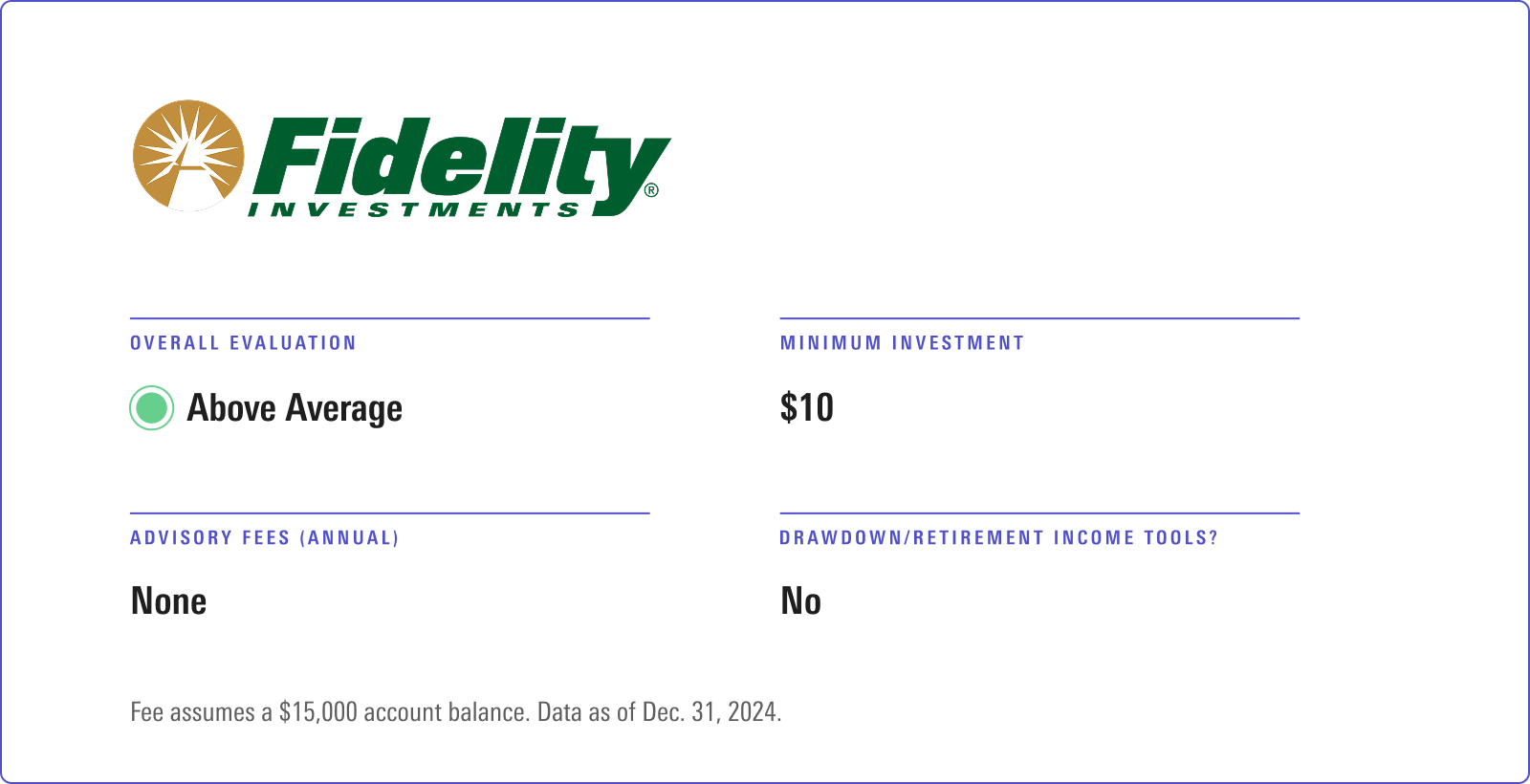
Fidelity Go’s approach is cheap, simple, and based on robust research. It’s free for accounts up to $25,000, then charges 0.35% annually. For accounts of $25,000 or more, it includes access to a Fidelity advisor.
A risk-tolerance questionnaire covering the investor’s investment goals, time horizon, risk tolerance, investment experience, and financial situation helps steer investors into portfolios across eight risk levels that focus on core asset classes and shun esoteric ones.
The plan invests in a list of zero-expense-ratio Fidelity Flex funds to control total costs. Text alerts and other communications inform customers about their progress. However, Fidelity Go does not offer tax-loss harvesting.
Betterment/Betterment Premium
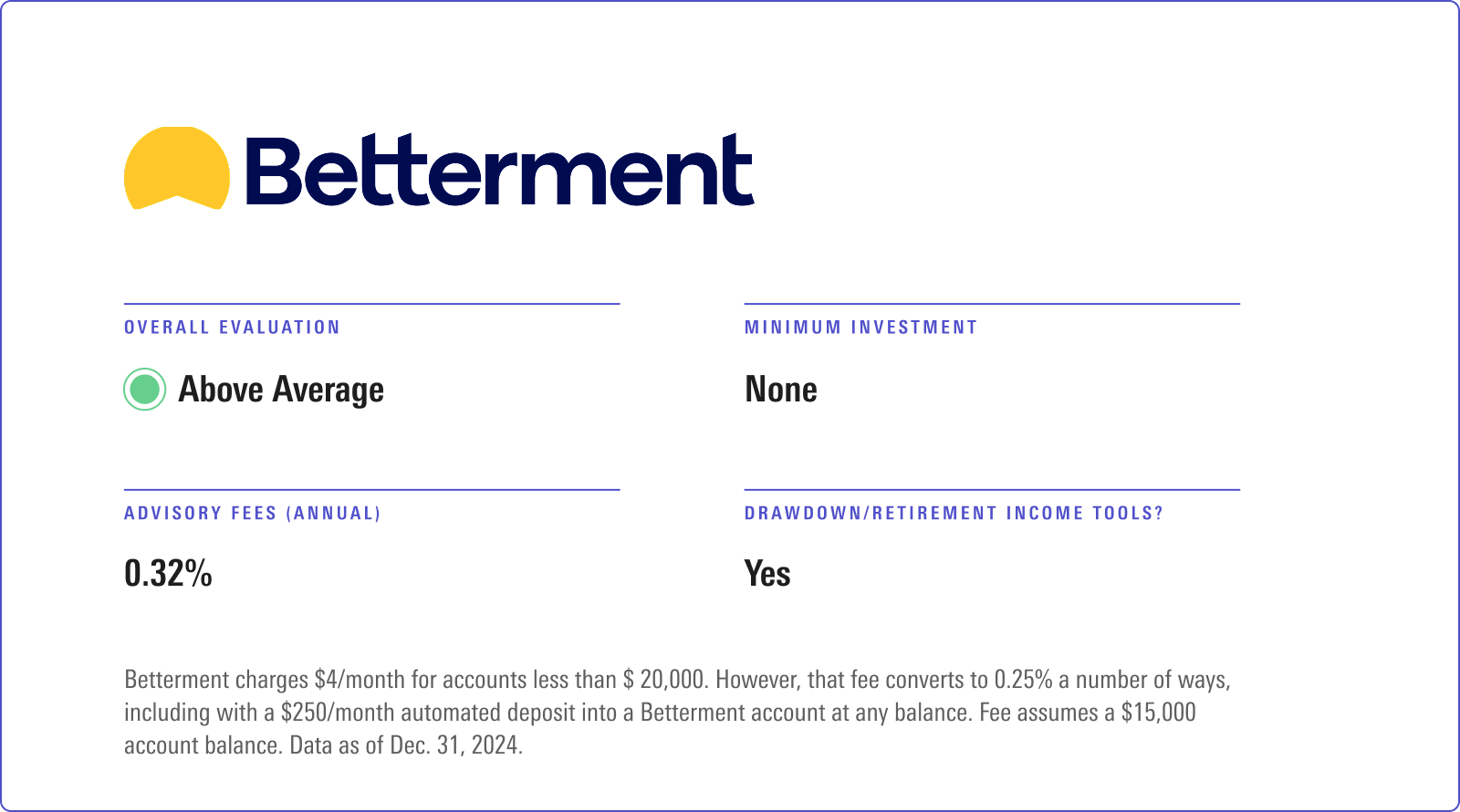
Betterment’s transparency, value, and sleek technology set it apart.
It’s one of the few robo-advisors that offers a glide path, which gradually makes its well-thought-out portfolios more conservative over time.
Betterment’s Core portfolios offer a mix of low-cost ETFs in all major asset classes. It once offered direct crypto investing for 1% but switched to crypto ETFs charging 0.12% each.
It offers a wide range of services for reasonable fees. Betterment charges 0.25% annually, including for investors with balances under $20,000 who make monthly $250 deposits. Betterment Premium for clients with $100,000 charges 0.65% and includes access to certified financial planners.
Schwab Intelligent Portfolios

Low fees, solid investments, and extensive services make Schwab’s robo-advisor compelling.
Schwab Intelligent Portfolios uses an intuitive risk-tolerance questionnaire to match investors with portfolios fitting one of 12 risk profiles. Plus, the firm uses solid underlying investments, rebalances thoughtfully, and offers tax-loss harvesting.
Cash stakes, however, range from 6% to 30%, which curbs volatility but hampers returns. In 2022, Schwab paid $187 million to settle SEC charges that it put Intelligent Portfolio clients’ cash in deposit accounts of affiliated banks, which earned money for Schwab while hindering clients’ results.
The digital-only service levies no fee, while its premium version charges $30 per month and includes CFP access.
Wealthfront

Wealthfront offers a strong combination of cost efficacy, service breadth, and investment quality.
It charges a 0.25% annual advisory fee, and expense ratios for most of its underlying funds are reasonable. The quality of these funds is strong: Most of them hold Morningstar Medalist Ratings of Gold or Silver.
The program’s risk questionnaire also incorporates behavioral economics to evaluate investors’ willingness to take risk and ability to take it given their financial situation.
Wealthfront slots investors into a portfolio matching one of 20 risk levels and spanning taxable, retirement, and socially responsible accounts. It also offers tools for spending, savings, income, inflation, Social Security, taxes, college planning, and home equity, though it doesn’t offer access to human advisors.
SigFig

SigFig checks some, but not all, the right boxes.
Although fees are appealing (free for accounts up to $10,000), we have concerns with the transparency of its holdings.
SigFig uses low-cost ETFs but does not waive or return their fees, nor disclose the ETFs it uses, making it difficult to judge their quality. Allocations are strategic and reasonable, with equity weightings for taxable portfolios ranging from 26% to 90% of assets, depending on risk level, and 13% to 85% for tax-advantaged portfolios. All the tax-deferred portfolios allocate at least 7% of assets to emerging-markets debt, which is aggressive, and 5% to REITs.
E-Trade Core Portfolios

E-Trade Core Portfolios’ 0.3% annual fee is average, and its services meet investors’ basic needs—but rarely exceed them.
The low-cost ETFs it uses are its bright spot; they earn Gold or Silver Morningstar Medalist Ratings. E-Trade’s investment team builds diversified portfolios that are not meant to shift much over time. A short risk questionnaire buckets investors into one of six target risk portfolios ranging from aggressive to conservative. E-Trade’s approach does not account for risk capacity, or how much risk an investor can handle based on their total wealth, goals, or investment horizon, something that many rivals do.
Acorns
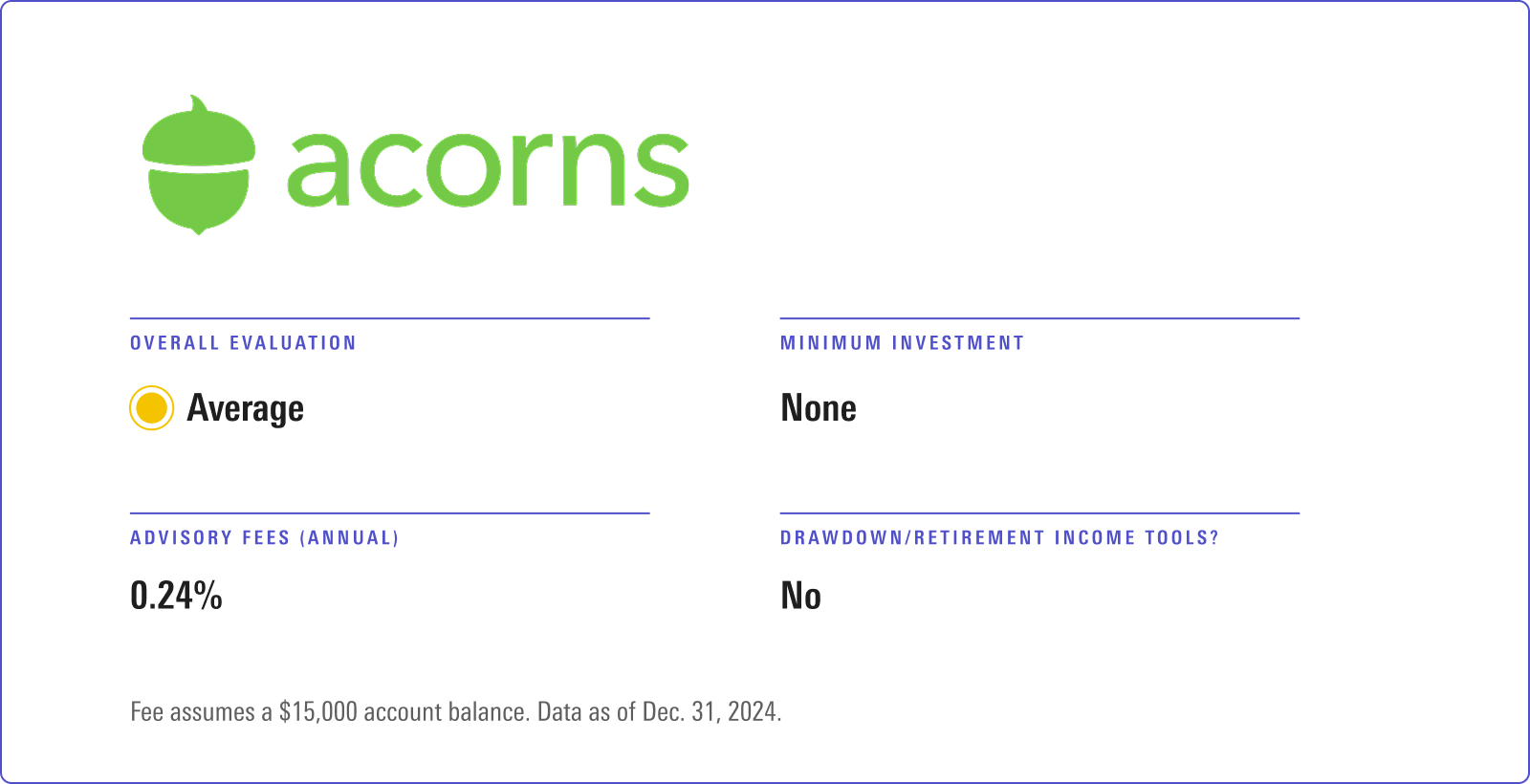
Acorns allows investors to round up everyday spending to build investment portfolios, which can appeal to investors who struggle to meet other programs’ minimum investment requirements.
However, its subscription pricing model is exorbitant for its audience. Its $3 monthly charge amounts to 0.24% for a $15,000 account but a steep 2.53% for Acorn’s estimated average account size of $1,425.
For that price point, Acorns clients get a limited number of risk-based portfolios—albeit with solid underlying investments from iShares, Vanguard, J.P. Morgan, and Goldman Sachs.
However, Acorns does allow some clients to wager some money on bitcoin and individual stocks.
Merrill Guided Investing
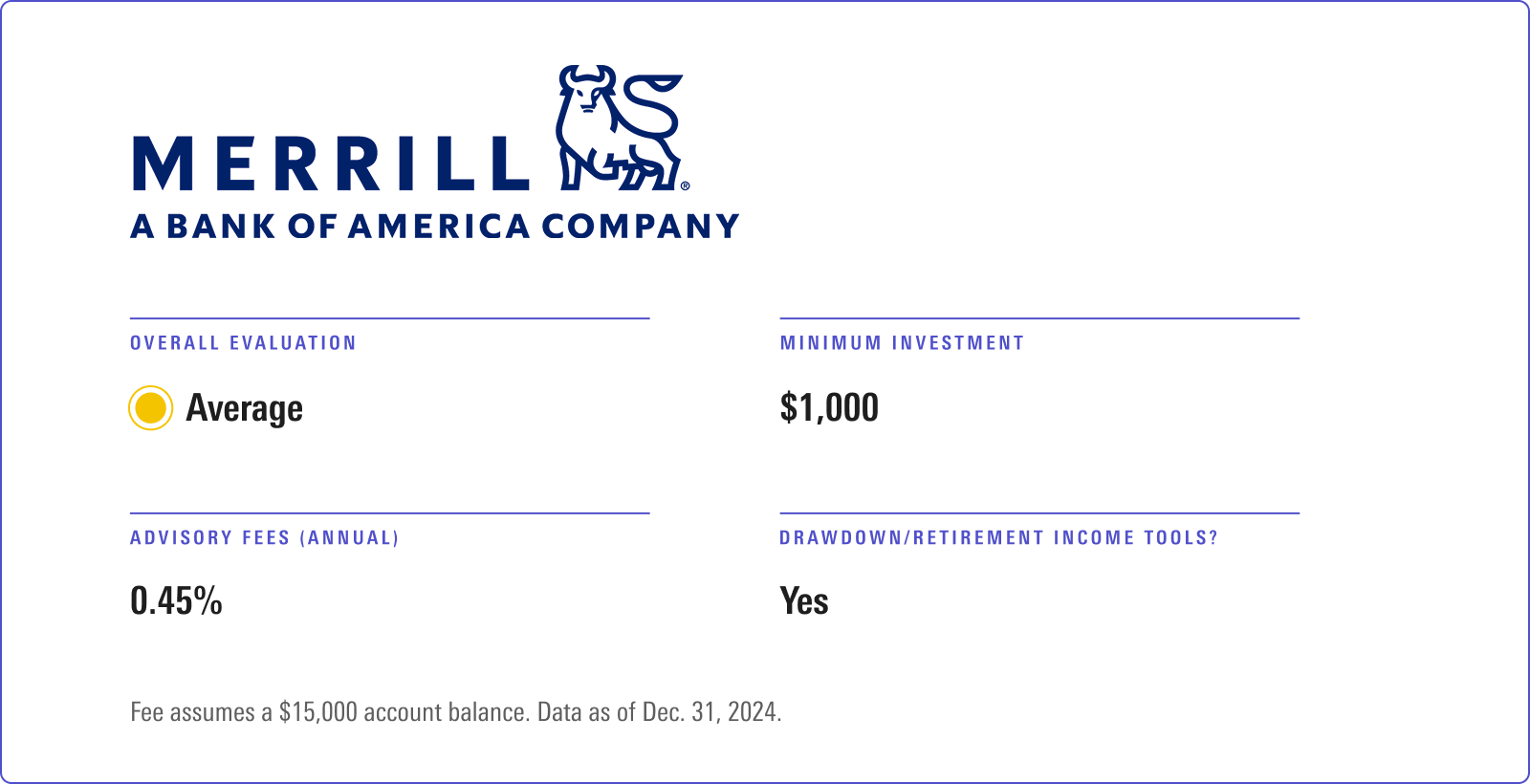
Excessive fees hurt Merrill Guided Investing and Merrill Guided Investing with Advisor.
The services have added in-retirement income portfolios and tax-efficient rebalancing and tax-loss harvesting tools, but MGI’s and MGIA’s respective 0.45% and 0.85% fees are hefty.
They drop to 0.30% and 0.70% if members of the bank’s Preferred Rewards program accrue at least $100,000 in assets, but clients with $20,000 or less pay the full fee.
Merrill uses low-cost ETFs in its core and retirement-income portfolios, but its sustainability-focused and active/passive hybrid portfolios cost more. Investors who want access to CFPs must have Merrill-managed accounts or advisory relationships.
SoFi Wealth
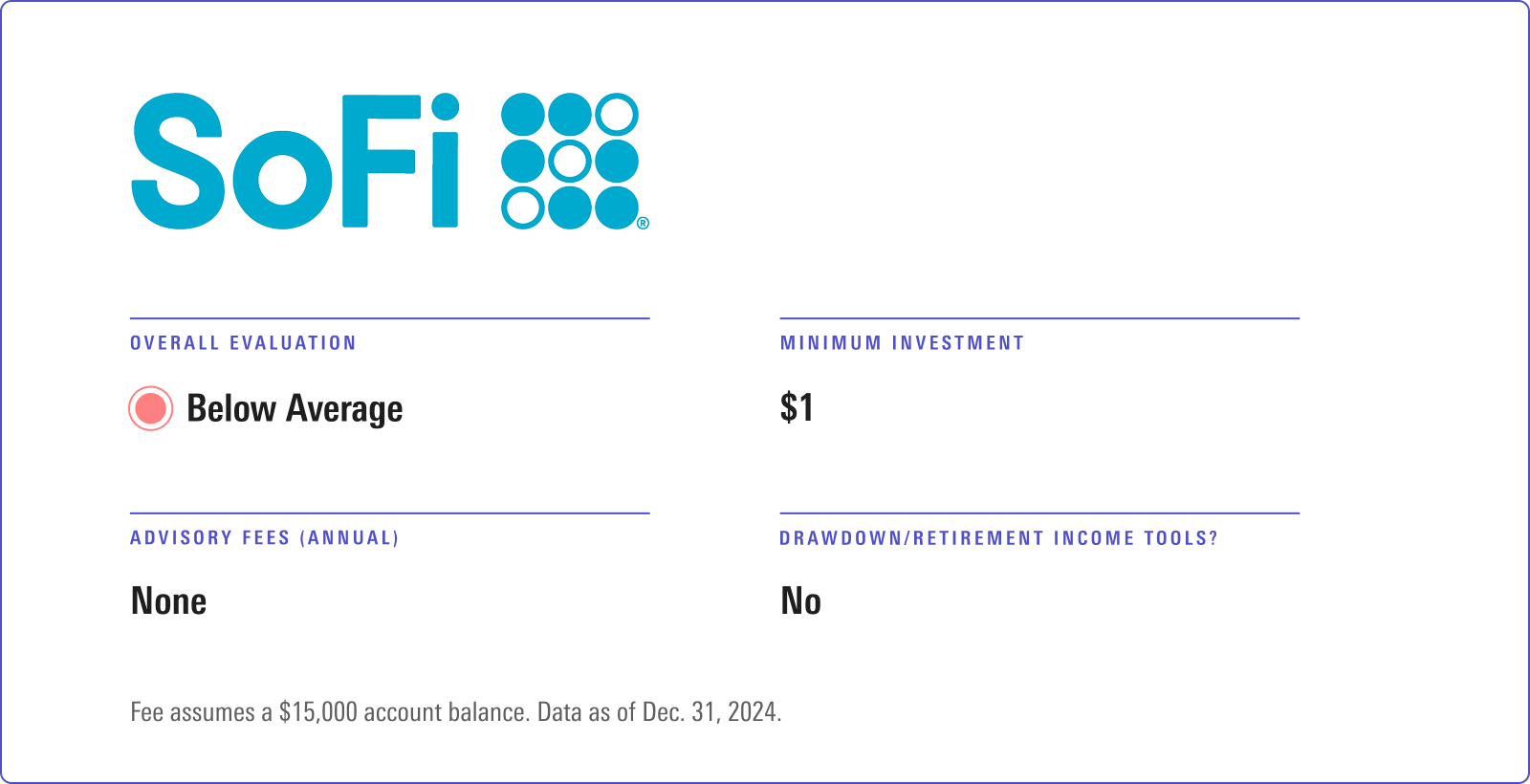
SoFi clients can still get access to a certified financial planner, but its recently revamped portfolios now charge an annual fee and include questionable investments.
SoFi announced its BlackRock partnership in November 2024 as it overhauled its robo-advisor, which led to it offering more asset classes.
While no longer free, SoFi’s new 0.25% annual fee is cheap for services that include CFP access. There are other costs, though.
The robo-advisor’s portfolios have gotten more sophisticated since it partnered with BlackRock, albeit with some questionable choices. This includes some newer, niche ETFs that cost double or triple typical core holdings.
Wells Fargo Intuitive Investor
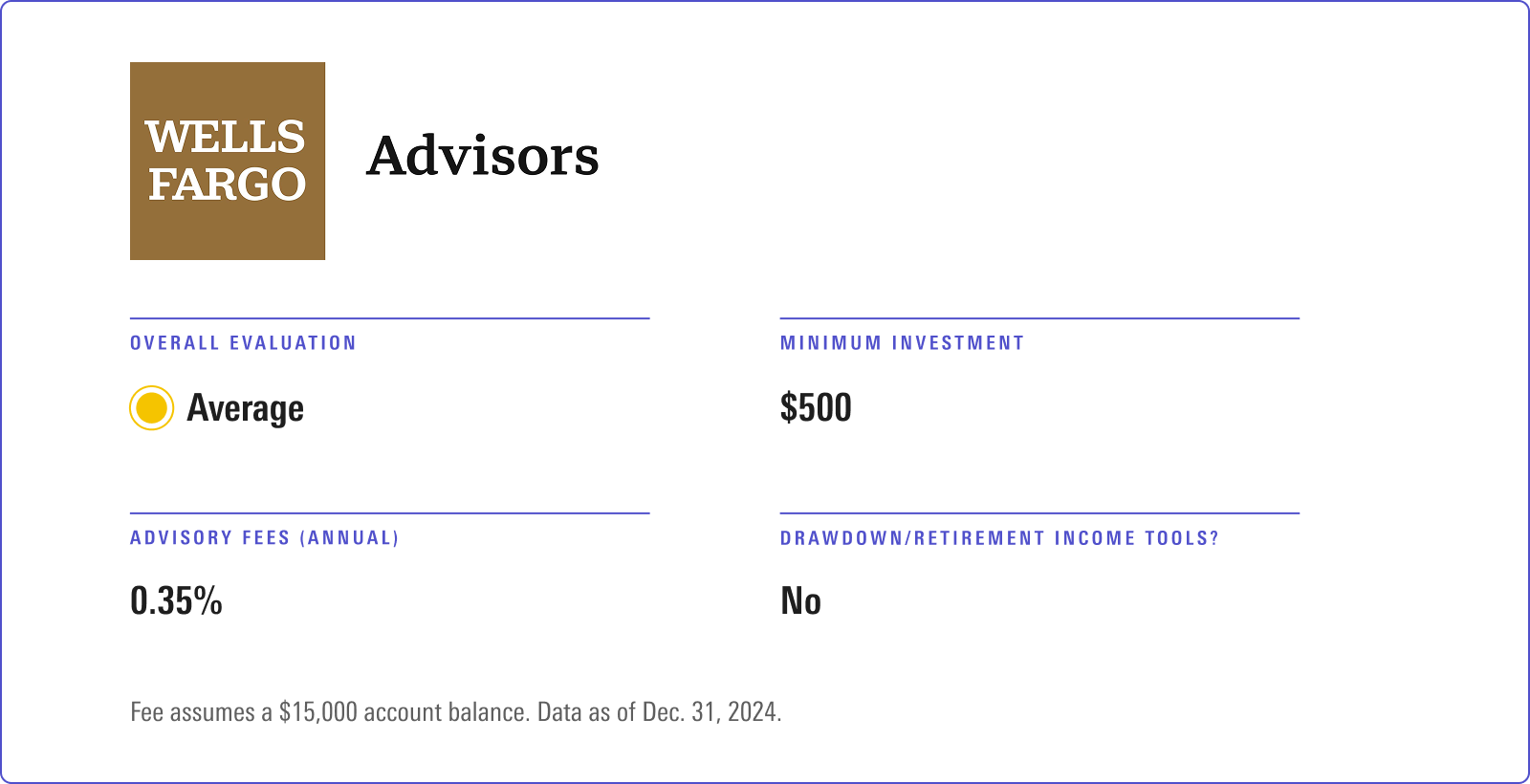
Wells Fargo Intuitive Investor is a fine choice for existing bank clients. Although it’s a bit pricey at 0.35%, clients can qualify for rates as low as 0.25% depending on account types.
Its investment minimum of $500 is low, and underlying fund expense ratios are reasonable. But because it doesn’t disclose specific portfolio building blocks to nonclients, it’s hard to gauge their quality.
Wells Fargo uses SigFig’s algorithm to monitor, rebalance, and harvest tax losses. Its risk questionnaire is standard and suggested asset allocations seem prudent, with adequate exposure to core asset classes. It also offers phone access to financial advisors and tax-loss harvesting.
Ally Invest

Ally Invest is good for Ally Bank customers, but it has fallen behind rivals.
Its 32 portfolios come in two flavors: Market-Focused, which keeps 2% in cash and charges 0.30% annually, and Cash-Enhanced, which has 30% in cash and no fee. The latter version has steep opportunity cost, though, as the cash allocation hinders returns when markets rise.
Ally Invest includes access to a human advisor for a tiered fee. However, those fees are high compared with premium services from Betterment, Fidelity, and Vanguard. Ally also lacks common features like outside account aggregation, multiple goal planning, and tax-loss harvesting.
Empower Personal Wealth
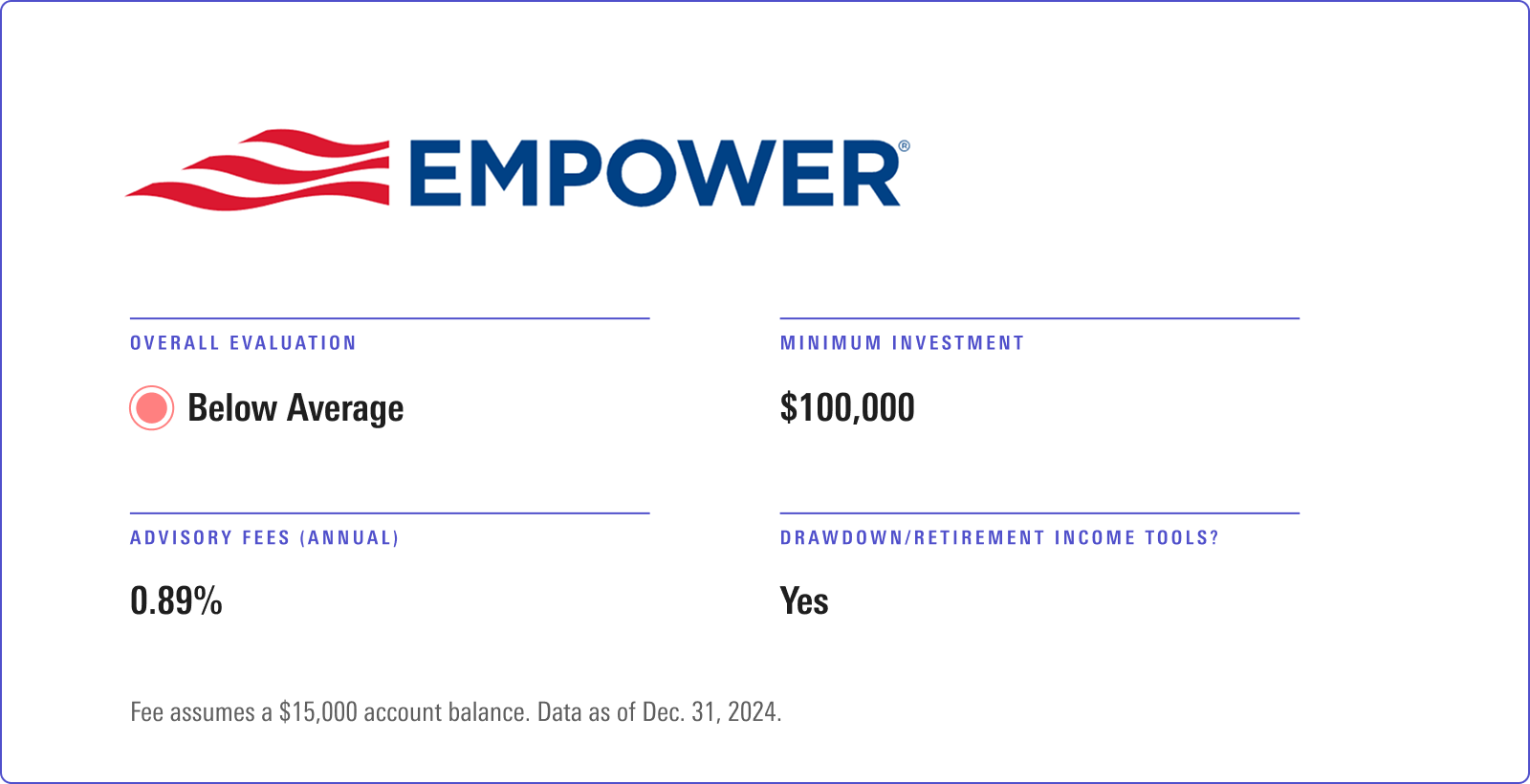
Empower Personal Wealth is comprehensive but expensive.
Fees start at 0.89% on the first $1 million and decline to 0.49% on anything above $11 million.
All clients have access to the impressive Empower Personal Dashboard that tracks spending, savings, checking, and investment accounts.
Accounts from $100,000 to $200,000 get basic ETF portfolios based on clients’ goals and risk tolerance. Those with $200,000 to $1 million get CFP access and customized portfolios that include individual securities. At higher levels, the firm also offers private banking and estate planning. Accounts with more than $5 million can invest in private equity.
Citi Wealth Builder

Citi Wealth Builder is a viable, but limited, offering for Citi clients.
The program’s flat 0.25% advisory fee is competitive. That’s a large reduction from the 0.55% in 2022, but this is offset by the elimination of fund fee waivers, making the true reduction hard to determine, as Citi does not disclose the third-party funds it uses in its portfolios.
The firm also recently rolled out a more expensive, 0.60% premium offering, Citi Wealth Builder Plus. This tier requires an account minimum of $25,000 but comes with more planning resources and tax-efficient portfolio options. Its approach to portfolio construction, however, remains fairly basic.
UBS Advice Advantage

Hefty costs and poor transparency diminish the appeal of UBS Advice Advantage’s otherwise relatively robust offering.
With an annual fee of 0.75%, the program is among the priciest robo-advisors. And those fees are on top of underlying fund expense ratios, which are difficult to determine because UBS does not disclose the funds it uses.
The firm doesn’t disclose basic asset-allocation information about its five digital advice portfolios, which it recommends based on a standard risk questionnaire. The platform, powered by SigFig’s algorithm, has basic capabilities such as investment advice, trading/execution, and performance reporting. It also offers access to financial advisors.
Titan
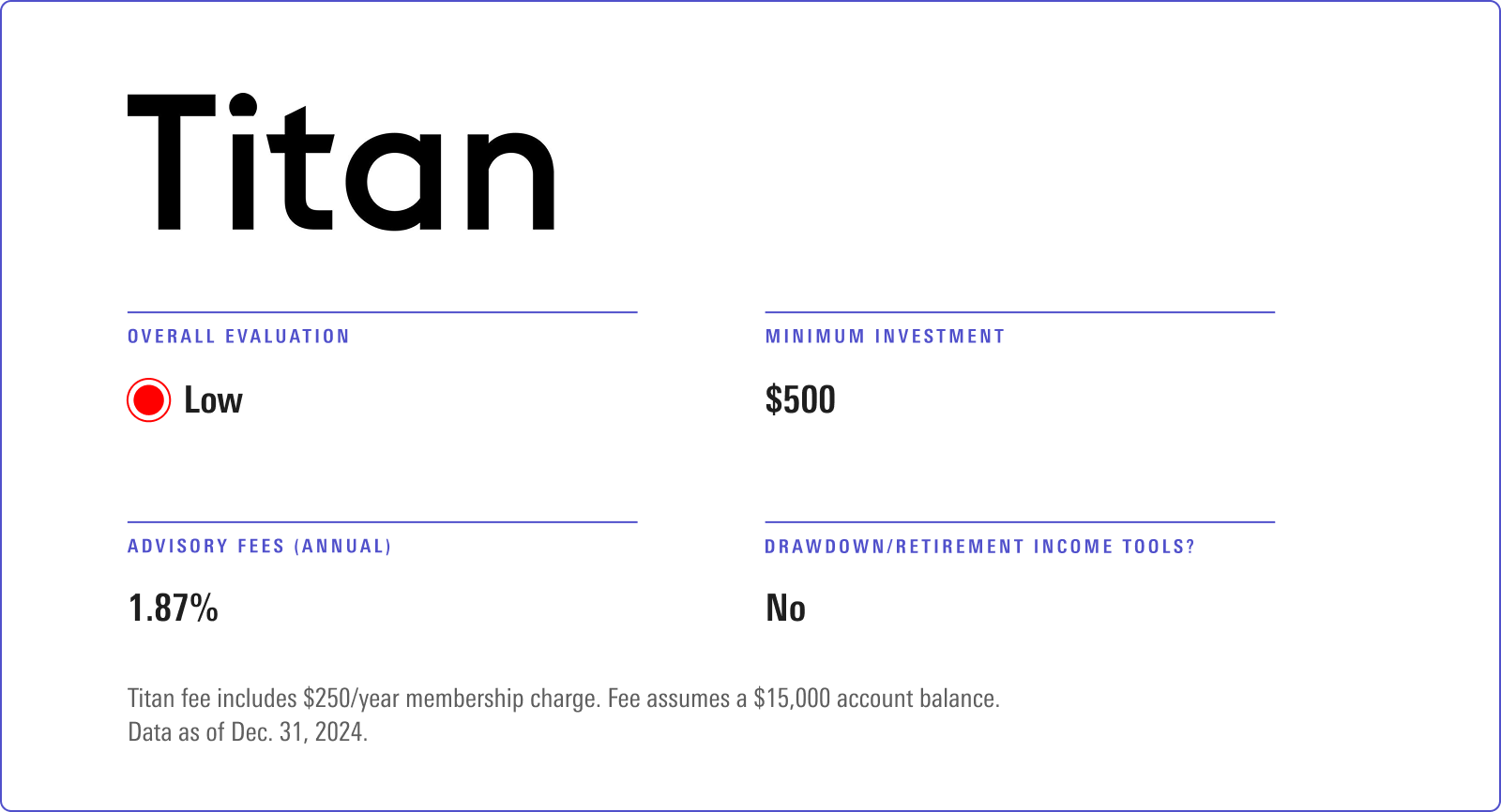
Titan has made sweeping changes to its pricing model and benefits but remains the least attractive robo-advisor we evaluated.
The firm has changed its fee structure before, flipping from a flat fee to an asset-based one. On Jan. 1, 2025, it began charging a $25 monthly fee or $250 annual “membership” fee. This is on top of a 0.20% annual advisory fee and the costs of the third-party funds it uses.
At 1.87% for a $15,000 account, this program is still the most expensive robo-advisor we’ve assessed. Portfolios remain a mixed bag of proprietary strategies, cryptocurrency accounts, and closed-end funds.
How We Analyzed Robo-Advisors
The Robo-Advisor Landscape report was designed to provide useful information to consumers before they sign up for a robo-advisor.
In the assessments, Morningstar’s analysts prioritized low, transparent fees; a robust risk-tolerance questionnaire; logical mapping to portfolios; sound portfolio diversification that steers clear of questionable asset classes and investment tactics; and a broad range of planning-related features.
Morningstar scored robo-advisors on a five-point scale (High, Above Average, Average, Below Average, and Low) along with four dimensions: total price (30% weighting); the process used to select investments, construct portfolios, and match portfolios with investors (30%); the organization behind the digital platform (20%); and the breadth of services (20%). Morningstar weighted each category score and then summed it to arrive at an overall score, which was then used to rank the robo-advisors.
In our evaluation of each provider, we assumed a $15,000 account balance for ease of comparison and have noted providers whose fees decrease for higher investment amounts.
The following Morningstar analysts also contributed to this report: Lan Anh Tran; Drew Carter; David Kathman, CFA, Ph.D.; Vedran Beogradlija; Michael Dobson; Max Curtin; and Connor Gallagher.
The author or authors do not own shares in any securities mentioned in this article. Find out about Morningstar’s editorial policies.

 United States