
New Research Finds Daily Peanut Consumption Benefits Brain's Response to Insulin in Memory Related Regions

New Research Finds Daily Peanut Consumption Benefits Brain's Response to Insulin in Memory Related Regions
PR Newswire
ALBANY, Ga., Oct. 27, 2026
ALBANY, Ga., Oct. 27, 2026 /PRNewswire/ -- A study from the Institute of Nutrition and Translational Research in Metabolism (NUTRIM) at Maastricht University Medical Center, Maastricht, Netherlands, has found that longer-term consumption of unsalted, skin-roasted peanuts can beneficially affect insulin responsiveness in the brains of older adults. The findings were recently published online in the international, peer-reviewed journal Food & Function and shared by The Peanut Institute.
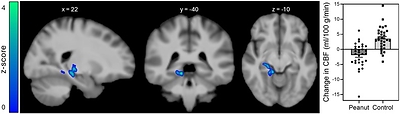
Insulin acts as a vital signaling molecule in the brain that supports the growth and survival of nerve cells and communication between them, all of which are important for memory and may help protect against Alzheimer's disease. The study documented that, after a 16-week course of peanut consumption, brain insulin responsiveness was beneficially affected in a cluster in the right hemisphere, encompassing parts of the lingual gyrus, hippocampus and parahippocampal and posterior cingulate gyri, which are brain regions involved in memory.
"The hormone insulin plays an important role in the brain, where it supports memory and other cognitive processes. As people age, the brain may become less responsive to insulin, which has been linked to age-related cognitive decline," says Dr. Peter Joris, the study's senior author and an associate professor in the Department of Nutrition and Movement Sciences, NUTRIM, Maastricht University Medical Center. "Our study found that daily peanut consumption beneficially affected insulin responsiveness in memory-related brain regions in older adults. These findings suggest that enhanced regional brain insulin responsiveness may contribute to the cognitive benefits of unsalted, skin-roasted peanut intake."
The NUTRIM study involved 31 healthy older adults who ranged in age from 60-75 and consumed 60 grams (approximately two servings) of peanuts daily for 16 weeks. It was a randomized, controlled crossover trial – a strong clinical research design.
In 2025, Joris found that the 16-week peanut intervention increased global cerebral blood flow (CBF) by 3.6% and verbal memory by 5.8%. CBF is an important physiological marker of brain vascular function and refers to the amount of blood that flows through the brain, delivering oxygen and nutrients that are essential for maintaining brain health. These findings were published in the peer-reviewed journal Clinical Nutrition.
The NUTRIM study is unique because it combined a well-controlled, longer-term dietary intervention with advanced brain imaging techniques, specifically arterial spin labeling magnetic resonance imaging (ASL-MRI), to investigate the effects of daily peanut consumption on brain health. Brain insulin responsiveness was assessed from changes in regional CBF after intranasal insulin administration. Intrahepatic lipid (IHL) content was quantified using abdominal MRI. Cognitive performance was evaluated using the Cambridge Neuropsychological Test Automated Battery (CANTAB).
"Multiple nutrients present in peanuts, including unsaturated fats, dietary fiber, vitamins and minerals and bioactive phytochemicals, could potentially contribute to the observed brain benefits," says Joris. "Peanuts are also a good source of plant-based protein and are especially rich in L-arginine. L-arginine is a key precursor of nitric oxide (NO), which has been reported to facilitate learning and memory performance."
NUTRIM Study Details
Participants were given premeasured packets of skin-roasted peanuts during the peanut intervention period and directed to consume the peanuts in the morning or afternoon. They were allowed to eat the daily amount all at once, spread it out over the day or add the peanuts to their meals. During the control period, participants did not consume peanuts. After 16 weeks, participants switched to the other study period to further assess the effects of peanut consumption versus no peanuts on brain health.
The principal investigator of the study was Associate Professor Dr. Peter J. Joris. The study was conducted by Ph.D. candidate Lucia Kerkhof, Department of Nutrition and Movement Sciences, Maastricht University Medical Center.
The NUTRIM study was supported by funding from The Peanut Institute Foundation. The funder did not have a role in the study design, implementation, analysis or interpretation of the data or the writing of the manuscript.

SOURCE The Peanut Institute

The articles, information, and content displayed on this webpage may include materials prepared and provided by third parties. Such third-party content is offered for informational purposes only and is not endorsed, reviewed, or verified by Morningstar.
Morningstar makes no representations or warranties regarding the accuracy, completeness, timeliness, or reliability of any third-party content displayed on this site. The views and opinions expressed in third-party content are those of the respective authors and do not necessarily reflect the views of Morningstar, its affiliates, or employees.
Morningstar is not responsible for any errors, omissions, or delays in this content, nor for any actions taken in reliance thereon. Users are advised to exercise their own judgment and seek independent financial advice before making any decisions based on such content. The third-party providers of this content are not affiliated with Morningstar, and their inclusion on this site does not imply any form of partnership, agency, or endorsement.
Popular

5 Stocks to Buy Trading at Big Discounts

2 Undervalued Stocks to Buy With Long-Term Growth Ahead

The Market May Be Too Pessimistic About This 4-Star Dividend Stock

4 Stocks to Buy for the Long-Term While They’re Still Undervalued


 United States