
Silicon Valley Investors Urge Taiwan Startups to Find Niches as AI Competition Intensifies

Silicon Valley Investors Urge Taiwan Startups to Find Niches as AI Competition Intensifies
PR Newswire
OAKLAND, Calif., Oct. 19, 2026
OAKLAND, Calif., Oct. 19, 2026 /PRNewswire/ -- Taiwanese startups seeking to compete in artificial intelligence must develop specialized expertise, strengthen distribution networks and identify markets overlooked by larger technology companies, investors said at a Silicon Valley gathering on Monday.
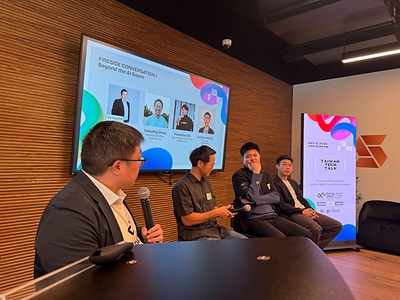
The discussion took place during Taiwan × Silicon Valley: Founders, Capital & the Next Wave of Innovation, organized by Startup Island TAIWAN Silicon Valley Hub and Taiwan Global Angels in partnership with Google Cloud as part of SF Tech Week.
Opening the event, Uly Su, director and head of Startup Island TAIWAN Silicon Valley Hub, emphasized the hub's role in connecting Taiwanese startups with U.S. investors, corporations and business opportunities, strengthening ties between Taiwan's technology ecosystem and Silicon Valley.
The Shrinking AI Advantage
Timothy Chen, managing partner at Essence VC, said the rapid evolution of AI models has made technological advantages increasingly short-lived, forcing investors to reassess how they identify promising startups.
Rather than focusing exclusively on technologies that could dominate over the next five years, Chen said investors are examining founders' specialized knowledge, distribution capabilities and ability to execute. Even a three- to six-month advantage could prove valuable in a rapidly changing market.
The panelists also discussed how startups could compete against larger technology companies. They emphasized identifying underserved markets, developing specialized capabilities and moving quickly before established players enter emerging sectors.
Beyond Software: Space, Robotics and Physical AI
Poseidon Ho, founding partner and CEO of Outliers Fund, highlighted opportunities beyond conventional AI applications, particularly in space and defense, where government contracts and expanding infrastructure investment are creating markets for emerging companies.
Ho said the sector offers a different investment model from software, with longer development cycles and substantial technical requirements. He encouraged Taiwanese entrepreneurs to explore opportunities within the space industry's supply chains, including government contracting.
Austin Hwang, principal at ADVentures, identified physical AI, robotics and medical technology as areas of interest, particularly where startups combine specialized hardware with software and proprietary technical capabilities.
Hwang said Taiwan's experience in semiconductors, electronics and manufacturing could provide an advantage as AI increasingly moves beyond software into physical applications.
From Technology to Commercial Success
A second panel featuring experienced entrepreneurs shifted the discussion toward commercialization, acquisitions and the challenges of building companies across Taiwan and the United States.
Paul Hung, CEO of Taudia, emphasized that startups must begin with a clearly defined customer problem rather than technology development alone.
Hung said founders need to understand why customers would pay for their products and build teams and investor networks capable of supporting commercialization.
Terry Hsiao, managing partner at BonHope Capital, drew on his experience building and selling companies to discuss the decisions founders face when considering acquisitions.
He noted that venture capital firms can spread their risks across multiple investments, while first-time founders often have most of their financial interests tied to a single company. Securing an initial successful exit could therefore be an important consideration.
Medical technology entrepreneur Steve Wu discussed the challenges of developing regulated healthcare products, including lengthy development cycles, regulatory requirements and the importance of understanding the commercial potential of new technologies.
The speakers also highlighted cultural differences between Taiwan and Silicon Valley, where entrepreneurship and risk-taking are more widely encouraged and founders have greater exposure to experienced investors and business leaders.
For Taiwanese startups, the discussions underscored the importance of combining the island's engineering and manufacturing capabilities with stronger commercialization strategies, international market access and the ability to compete in rapidly changing industries.

SOURCE Startup Island TAIWAN Silicon Valley Hub
The articles, information, and content displayed on this webpage may include materials prepared and provided by third parties. Such third-party content is offered for informational purposes only and is not endorsed, reviewed, or verified by Morningstar.
Morningstar makes no representations or warranties regarding the accuracy, completeness, timeliness, or reliability of any third-party content displayed on this site. The views and opinions expressed in third-party content are those of the respective authors and do not necessarily reflect the views of Morningstar, its affiliates, or employees.
Morningstar is not responsible for any errors, omissions, or delays in this content, nor for any actions taken in reliance thereon. Users are advised to exercise their own judgment and seek independent financial advice before making any decisions based on such content. The third-party providers of this content are not affiliated with Morningstar, and their inclusion on this site does not imply any form of partnership, agency, or endorsement.
Popular

What’s Ahead for Stocks This Quarter—and Where to Invest

Are TIPS ETFs the Best Way to Fight Inflation?

10 Best Blue-Chip Stocks to Buy for the Long Term

This 1-Star Stock Trades at a 94% Premium. Is It Time to Sell?


 United States