
After a 33% gain in the first half, this fund manager grew tired of the AI trade. Here's where he's looking now.

By Philip van Doorn
One is a contrarian play on U.S. housing, while the other is a New York manufacturer swinging for the fences
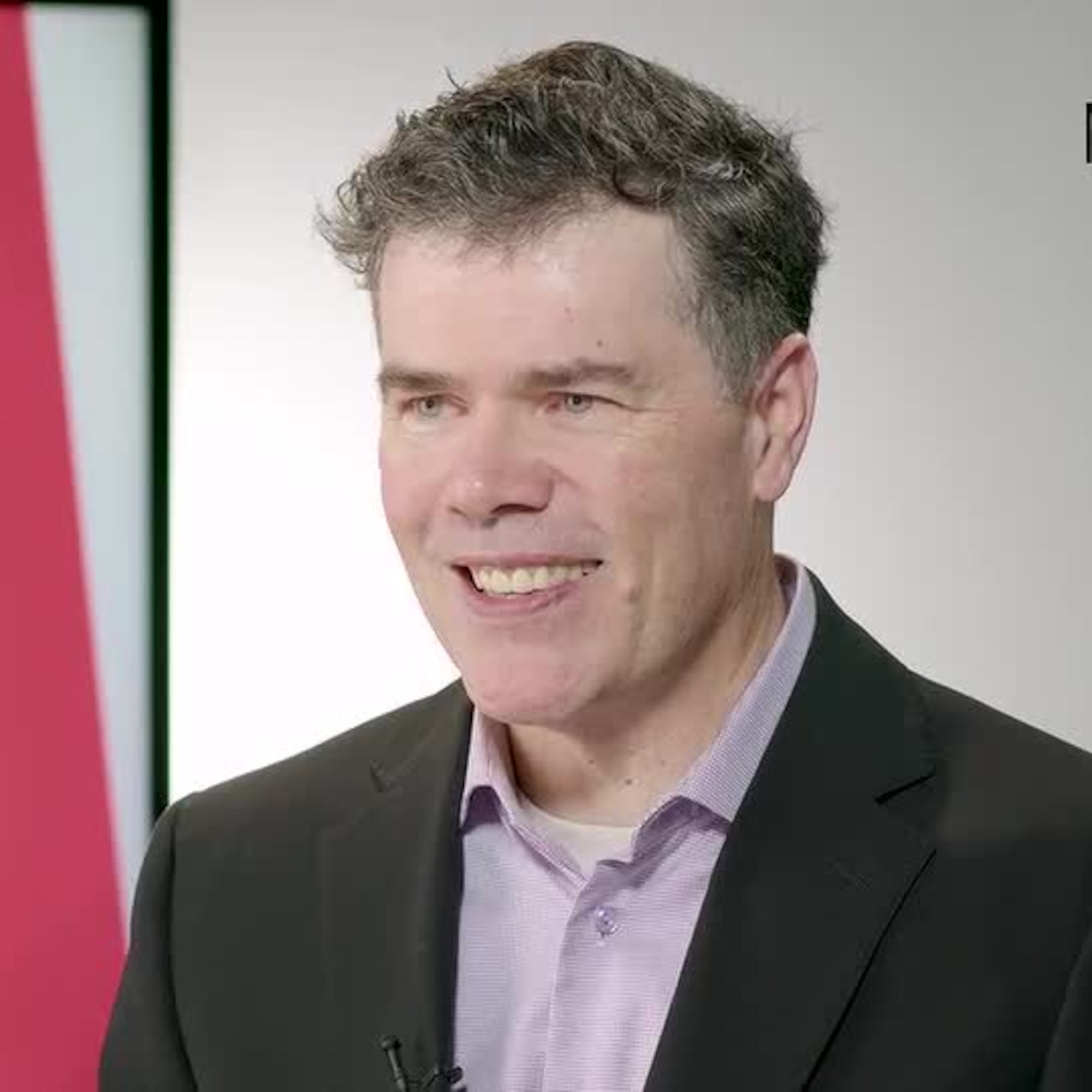
First Eagle fund manager Bill Hench is sidestepping artificial intelligence with a bet on the eventual recovery of U.S. housing construction.
Managers of small-cap funds tend to hold a lot of stocks, which, according to Bill Hench of First Eagle Investments, greatly increases the odds of winning if the stocks are bought at good prices and sold at the right time.
New York-based Hench heads the small-cap team at First Eagle and co-manages the First Eagle Small Cap Opportunity Fund FESAX, which holds about 240 stocks, and the First Eagle Small Cap Equity exchange-traded fund FESC, which was established on July 1 and is run in a similar manner.
"FESAX," the open-ended mutual fund, has returned 54.1% over the past five years, with dividends reinvested, well ahead of a 36.9% return for the Russell 2000 Index RUT and a 36.7% return for the S&P Small Cap 600 Index SML.
So far this year, FESAX is up 23.7%, while the Russell 2000 has returned 15.1% and the S&P Small Cap 600 is up 16.5%.
But the fund has pulled back a bit since June 30, when it was up 33% for the first half of the year. Hench said that at that moment "eight of our top 10 names were, in some shape or form, data-center related. So we reduced them quite a lot."
Hench shared two very different stock picks with MarketWatch. The first is Boise Cascade (BCC), which is a contrarian play on an eventual recovery in U.S. housing construction. This company provides wood products to home builders and runs 39 distribution centers. The stock has returned 2.5% over the past year, with dividends reinvested, but it is down 45.5% from two years ago. The company has remained profitable, despite the housing downturn, although margins have come under pressure.
Boise Cascade's second-quarter sales came in at $1.83 billion, up 5% from a year earlier, while its earnings per share were down a penny to $1.63. But this is a cheap stock. With a market cap of $2.63 billion, Boise trades at a forward price-to-sales ratio of 0.4, based on the consensus 12-month revenue estimate among analysts polled by FactSet. That compares with a weighted forward price-to-sales estimate of 1.1 for the S&P Small Cap 600. The stock's forward price-to-earnings ratio is 15.5, which is above the forward P/E valuation of 14 for the index. Then again, the company's earnings might be at their low ebb.
"They have an adult management team and are good stewards of capital," Hench said, adding that the stock "will do well immediately, once there is a sniff of the [housing] market getting better."
The other stock pick Hench shared was Graham (GHM), a manufacturer in Batavia, N.Y., that produces a variety of heat transfer, liquid transfer, vacuum and related equipment used in the defense, energy and space industries.
Graham's stock has returned 59% over the past year and has nearly tripled over the past two years. The stock trades at a forward P/E of 46.8 and a forward price-to-sales ratio of 3.4. So this can be considered a rather expensive stock of a rapid grower. Sales for Graham's most recent fiscal quarter were up 29% on a year-over-year basis, although its net income declined to 33 cents a share from 42 cents, in part reflecting higher expenses connected with an acquisition made in January.
Hench called Graham "one of the few industrial names without the words 'AI' or 'data center' associated with it that is doing really well."
Hench pointed to two newer business lines as having excellent prospects for long-term growth - cryogenic tanks used in spacecraft and equipment used in the nuclear-power generation. "We don't know how big those businesses will be, but this is an exciting company that is producing really good earnings," he said.
Based on estimates adjusted to match calendar years, analysts expect Graham's earnings per share to increase from $1.43 this year to $2.04 in 2027 and $2.59 in 2028. That would make for a compound annual growth rate of 34.4% for EPS, compared with a projected two-year EPS growth rate of 4.6% for the S&P Small Cap 600.
The markets
U.S. stock-index futures (ES00) (YM00) (NQ00) are dropping, as Brent oil (BRN00) jumps over 4% and the 10-year Treasury yield BX: TMUBMUSD10Y is on the rise, at 5.345%.
Key asset performance                                                 Last       5d      1m       YTD     1y
S&P 500                                                               7,801.77   1.96%   2.17%    13.97%  15.52%
Nasdaq Composite                                                      27,538.69  2.52%   4.90%    18.49%  19.51%
10-year Treasury                                                      5.344      10.20   37.50    117.20  120.00
Gold                                                                  4,147.2    -1.44%  -4.85%   -4.27%  3.91%
Oil                                                                   91.67      -1.33%  -11.80%  59.68%  49.01%
Data: MarketWatch. Treasury yields change expressed in basis points.
The buzz
Oil is climbing after a tanker off of Qatar was also attacked and a published report said President Donald Trump may strike Iran before the midterms.
Weekly jobless claims are coming at 8:30 a.m. Eastern time, with the results of a $22 billion auction of 30-year bonds due at 1 p.m.
Speaking in Turkey, Federal Reserve governor Christopher Waller said more interest-rate hikes will be needed if economic data come in as expected, but he sees some flexibility on timing. The St. Louis Fed's president, Alberto Musalem, will speak at a Bloomberg event at 1:40 p.m.
Applied Digital (APLD) is up nearly 5% after the data-center developer delivered surging revenue amid the artificial-intelligence build-out.
Shares of Micron Technology (MU) and Sandisk (SNDK) are down after chip maker Samsung Electronics (KR: 005930) saw a disappointing reaction to strong revenue.
PepsiCo (PEP) cut its profit outlook.
TikTok quietly gutted its advertising rules. Scams have exploded ever since.
The chart
Retail-investor appetite for technology-sector ETFs has bounced back, the chart from JPMorgan strategists shows. A team led by Arun Jain said inflows into those ETFs last week climbed to their 73rd percentile, well up from the fourth percentile four weeks ago. Inflows into "Magnificent Seven" stocks also remained resilient, with flows into tech excluding Mag 7 names firmer, led by the buying of Sandisk (SNDK) and Micron (MU). "Overall, retail investors were net buyers across tech - not only semis and hardware, but this time also favoring software," said Jain and the team. Investors were trimming positions in SpaceX (SPCX) after a 15% gain in those shares last week, they said.
Top tickers
These were the most searched ticker symbols on MarketWatch as of 6 a.m.:
Ticker symbol  Security name
NVDA           Nvidia
TSLA           Tesla
MU             Micron
SPCX           SpaceX
GME            GameStop
AMD            Advanced Micro Devices
TSM            Taiwan Semiconductor Manufacturing Co.
AMZN           Amazon
AAPL           Apple
PLTR           Palantir
-Philip van Doorn
This content was created by MarketWatch, which is operated by Dow Jones & Co. MarketWatch is published independently from Dow Jones Newswires and The Wall Street Journal.
(END) Dow Jones Newswires
10-08-26 0731ET
Copyright (c) 2026 Dow Jones & Company, Inc.The articles, information, and content displayed on this webpage may include materials prepared and provided by third parties. Such third-party content is offered for informational purposes only and is not endorsed, reviewed, or verified by Morningstar.
Morningstar makes no representations or warranties regarding the accuracy, completeness, timeliness, or reliability of any third-party content displayed on this site. The views and opinions expressed in third-party content are those of the respective authors and do not necessarily reflect the views of Morningstar, its affiliates, or employees.
Morningstar is not responsible for any errors, omissions, or delays in this content, nor for any actions taken in reliance thereon. Users are advised to exercise their own judgment and seek independent financial advice before making any decisions based on such content. The third-party providers of this content are not affiliated with Morningstar, and their inclusion on this site does not imply any form of partnership, agency, or endorsement.
Popular

3 Stocks to Sell and 3 Stocks to Buy for October

The 10 Best Companies to Invest in Now
14 Elite Funds and ETFs, and 5 Popular Funds That Just Missed the Mark

3 Stocks to Invest In With More Room to Run

 United States