
How one trend-following fund outperformed rivals by bringing humans back into the decision-making process

By Jules Rimmer
Graham Capital's Tactical Trend Fund gained 27% through August
Graham Capital's flagship Tactical Trend fund had generated a return of 27% to the end of August, before another "solid month" in September, Feng says.
Systematic funds follow trends in the market, picking up on signals sent by price action - either up or down - that their models and trading algorithms sniff out. In theory, systematic funds remove the emotionality and biases of human judgment by rigorously adhering to the rules set by their models.
One systematic fund has outperformed its rivals by readmitting the human element.
Graham Capital's Tactical Trend Fund has gained 27% through the end of August, according to a tabulation from Societe Generale. That compares to peers in commodity-fund rankings that are up 10% over the same time frame, and those in the systematic diversified category have gained just over 3%, according to data from HFR, which tracks hedge-fund performance.
Explaining the success of his fund's strategies this year, Tom Feng, the chief investment officer of the quant strategies product, acknowledged some of that success was a direct result of some fund-manager intervention. In an interview with MarketWatch, Feng explained that Graham Capital introduced a profit-taking and stop-loss concept into their decision-making process, rather than slavishly applying what the market suggested.
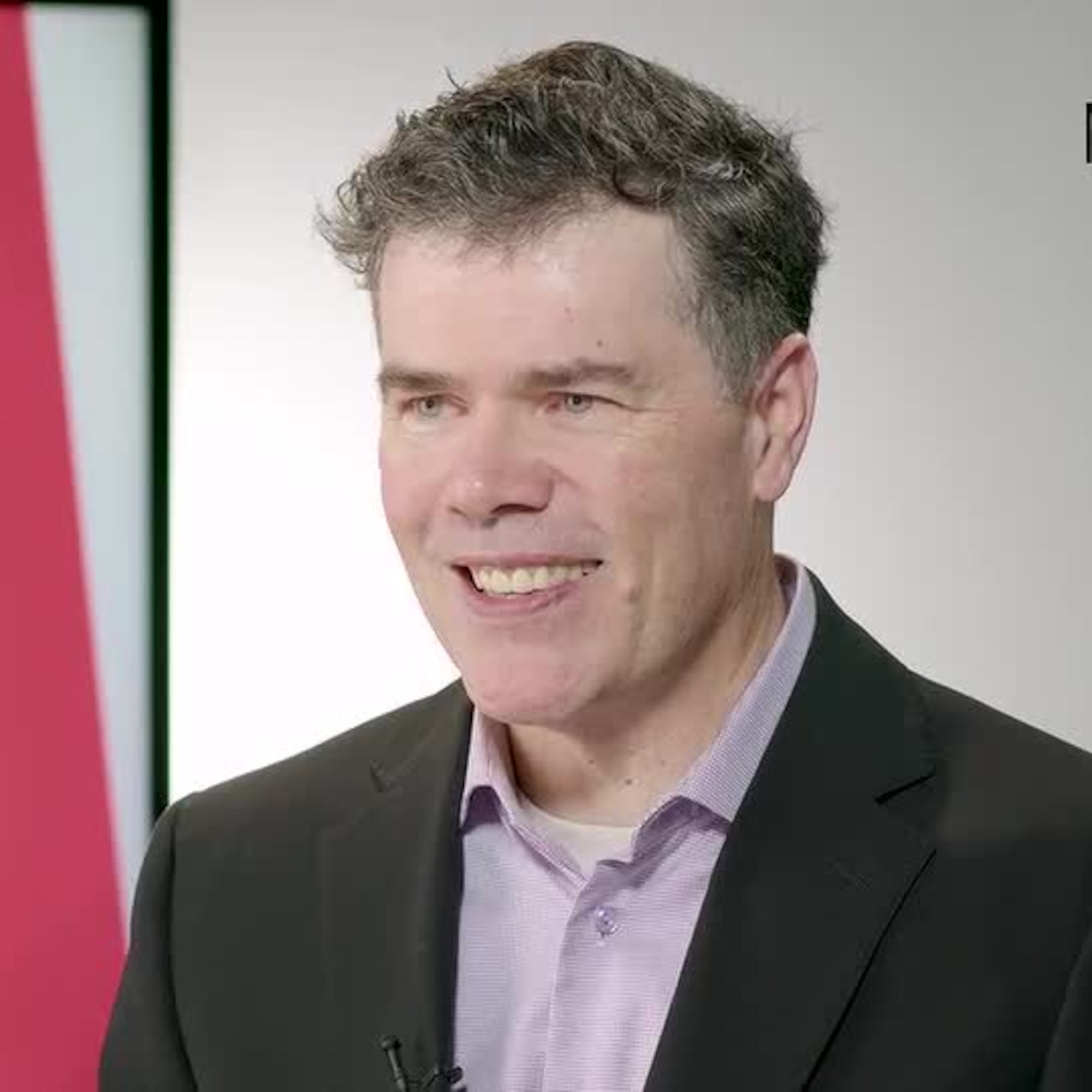
Tom Feng is the chief investment officer for Graham Capita's quant strategies
This slight adjustment, suggested by Ken Tropin, chairman of the firm which he founded in 1994, had a positive contribution in a few asset classes. Feng told how, "metals had a strong upward movement around the end of January while energy markets shot up in March. We had long positions in both cases and the models actively reduced exposures to lock in more profits through subsequent choppy market environments."
Trend-following funds thrived in 2022, when both stocks and bonds struggled as the Federal Reserve hiked interest rates to quash rapid inflation.
"They can be particularly valuable when investors discover during periods of stress that assets which appeared diversified in normal markets become much more correlated when conditions deteriorate," said Bruno Schneller, managing partner of wealth manager Erlen Capital Management.
"Systematic macro and trend-following strategies can behave quite differently because their positioning adapts to market environment changes. In sustained periods of dislocation, that ability to participate in both rising and falling markets can provide a source of diversification precisely when a traditional portfolio may need it most."
In addition, Graham added a couple of new component signals into their model. Two picked up tactical trends, while another fundamental indicator went into their more diversified quant macro strategy. A carry signal, one that follows interest-rate differentials between different currencies, has also had a positive impact, Feng notes.
Graham Capital manages around $23 billion in total assets, split roughly evenly between systematic and discretionary strategies. The outperforming Tactical Trend fund that was launched in 2006, accounts for $4 billion of the total. What funds like his appreciate, Feng says, is momentum persistence, whereas market environments where prices are choppy or oscillate in a narrow range are not helpful.
So, this year, for instance, the concerted moves higher in oil and commodity prices, and the pronounced downtrend in say, government bonds across the world, have been highly suited to trend investing.
April 2025 was an example of when systematic strategies were whipsawed by an abrupt change of direction for risk assets. Also periods when volatility is extremely low and markets are highly correlated, like the conditions that prevailed during the long zero-interest rates era of the 2010s, can pose problems for this kind of investing. These conditions tended to suit passive investment strategies better.
A performance shock like that represented by Liberation Day did have a silver lining for Graham Capital, however. Feng pointed out that as the AI boom accelerated, his firm was able to actively hire new AI talent during performance dips for the industry, leading to "prolific model development" currently contributing to outperformance.
Feng confirmed that even after the 27% return by the end of August, September had been another "solid month."
-Jules Rimmer
This content was created by MarketWatch, which is operated by Dow Jones & Co. MarketWatch is published independently from Dow Jones Newswires and The Wall Street Journal.
(END) Dow Jones Newswires
10-07-26 0308ET
Copyright (c) 2026 Dow Jones & Company, Inc.The articles, information, and content displayed on this webpage may include materials prepared and provided by third parties. Such third-party content is offered for informational purposes only and is not endorsed, reviewed, or verified by Morningstar.
Morningstar makes no representations or warranties regarding the accuracy, completeness, timeliness, or reliability of any third-party content displayed on this site. The views and opinions expressed in third-party content are those of the respective authors and do not necessarily reflect the views of Morningstar, its affiliates, or employees.
Morningstar is not responsible for any errors, omissions, or delays in this content, nor for any actions taken in reliance thereon. Users are advised to exercise their own judgment and seek independent financial advice before making any decisions based on such content. The third-party providers of this content are not affiliated with Morningstar, and their inclusion on this site does not imply any form of partnership, agency, or endorsement.
Popular

3 Stocks to Sell and 3 Stocks to Buy for October
14 Elite Funds and ETFs, and 5 Popular Funds That Just Missed the Mark

The 10 Best Companies to Invest in Now

10 Top-Performing US Dividend Stocks


 United States