
I got a $499 body scan to see if I have cancer. Here's what I learned.

By Sara Holoubek
I visited Neko Health, a new preventive-health clinic co-founded by Spotify's Daniel Ek. Even though I get regular physicals, I wanted a baseline understanding of my whole health.
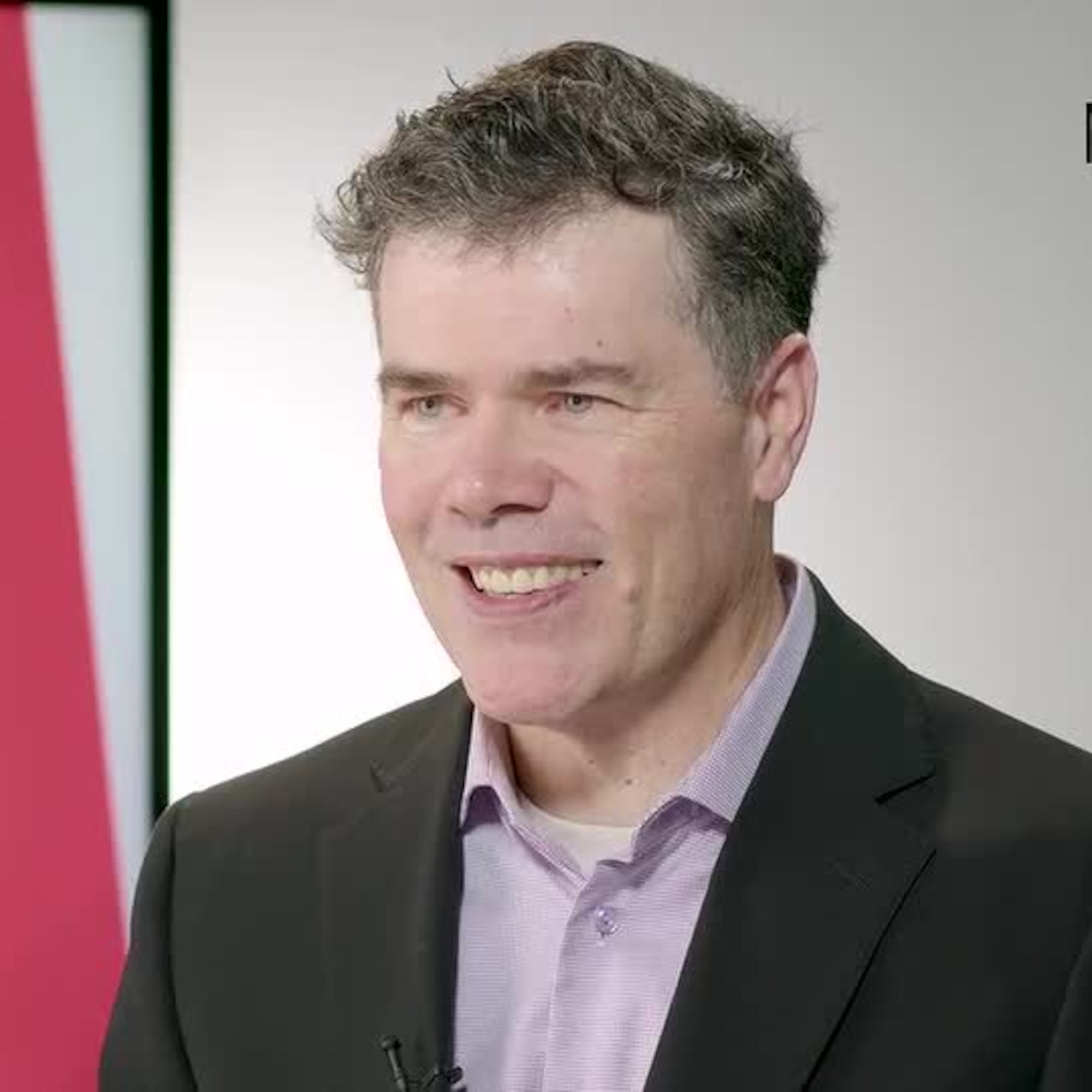
Neko Health, which was co-founded by Spotify founder Daniel Ek, just opened its first preventive-health clinic in the U.S. It offers elective health screenings for asymptomatic people.
I've tried all the newest health technologies: a first-generation Fitbit, a Jawbone UP band that's no longer sold, 23andMe, an Apple Watch, genetic biomarker panels, semi-annual DEXA scans and MRIs.
Whether I'm opting for a test myself or my physician orders it, I always get a little thrill when technology offers a new view of what is happening inside my body. What can I measure? What is the technology behind it? And how will the data be used? And yet there was one test I had put off for years: a skin-cancer screening. When Neko Health offered to move me up the waiting list for a pre-launch scan, I took the $499 plunge.
Neko, which was co-founded by Spotify founder Daniel Ek and engineer Hjalmar Nilsonne, last month opened its first preventive-health clinic in the U.S. It's the latest elective, cash-pay scan for asymptomatic people that raises either hopes or eyebrows, depending on how you view our healthcare system.
For the most part, childhood checkups establish a baseline of progress that concludes at 18 years of age. Adult checkups consist of measuring vitals and doing routine tests, usually specific to your age. The most meaningful marker isn't until 65, at which point Medicare kicks in. That's an age that was selected back when life expectancy was significantly shorter than it is today.
For everyone in between those ages, it's not until a symptom appears that more advanced testing is usually made available. This is the problem that attracted Sunita Mishra, Neko's chief medical officer, to the company. "Even in primary care, even though we're supposed to be preventive-focused, it ends up being very disease-focused," she told me.
Today, Americans are living and working longer, and yet prevention hasn't caught up. Breast cancer is rising among women younger than 50, but while AI-assisted mammography has strong evidence behind it, it is still not the standard of care. One in two women older than 50 will break a bone due to osteoporosis in their lifetime, but the U.S. doesn't recommend routine DEXA scans until age 65 for women, or at all for men. Skin-cancer risk climbs with age, but screening is not widely recommended. Brain changes precede Alzheimer's disease by years, but without a baseline, there is nothing to compare those changes against.
Meanwhile, the annual checkup, long the cornerstone of preventive care, is faltering. Fewer than half of Americans get one. Many physicians question whether it's outdated or strains an already stretched healthcare system. Critics of full-body scans, meanwhile, view them as unnecessary, citing low clinical yield and a cascade of follow-up scans.
But herein lies the problem. When our system is designed solely to diagnose the presence or absence of disease, one organ at a time, people have no baseline against which to make broader lifestyle decisions.
As Tiffany Lester, women's health medical director at the lab-testing company Function Health, recently said, "We have almost been conditioned, in a way, to only accept the standard panel."
'Delightful, calming and efficient'
Having had my annual physical three weeks earlier, I was ready to compare those results to Neko's, which used its proprietary radiation-free technology to create a baseline of my skin, heart, blood and metabolic health. A visit includes a scan, labs and other diagnostics.
Neko is what a healthcare experience should be. It was delightful, calming, efficient, respectful and actionable. The New York City office has a spaceship vibe with spa-like comfort. Once the 6,000 images of my skin were captured in seconds, two vials of blood were sent up a pneumatic tube to an on-site lab, and I was kept informed by a countdown screen as the checkup progressed. In roughly an hour, I was dressed and met with a clinician who walked me through my findings. The conversation was easy, was focused on my baseline and any context I provided, and concluded with a plan.
The results largely tracked with what I'd learned at my physical, including from the resulting labs, but it was Neko's genetic-marker test that added helpful context, and the skin analysis was the most valuable to me. Neko didn't find anything to be concerned about, but the analysis noted which moles to watch, and I was encouraged to schedule my next annual scan, since tracking moles becomes more meaningful over time.
My body-composition result, however, was well off my DEXA baseline, a known discrepancy between the two technologies. "They are just two different ways of looking at it, because we're using two different methodologies." said Mishra. "You'd compare DEXA to a DEXA" over time. My grip strength, which is viewed as a marker of overall health, also didn't correlate, and the clinician started a thoughtful conversation: Was I fatigued? When was my last strenuous training session? Was I holding the device wrong? Or is this something to keep an eye on?
All that said, the price tag is steep. However, you can use the money in a flexible spending account or a health savings account to pay for the checkup. Neko doesn't prescribe medications, and it refers serious findings to a network of health systems and physician practices. Some have critiqued the low rate of serious findings from full-body scans, and Neko's own research found that only about 1% of asymptomatic users in Sweden found anything life-threatening. Perhaps that's the point.
Companies like Neko, Prenuvo and Function Health aren't designed to look for a serious condition. They aim to give people a comprehensive picture of their bodies and a roadmap for the decades of adulthood still ahead. According to Neko, the average age of someone who gets these scans is 46, a time of life in which making changes can be the most meaningful for your health. In a three-year observational study of repeat customers, Neko found that health largely improved. Among its findings was that 26% of smokers quit between scans.
My follow-up conversation with Mishra brought up another change afoot in America beyond our aging demographics: the prevalence of GLP-1 usage.
Whether someone is prescribed a GLP-1 or is microdosing at their own discretion, there is little support to ensure that other aspects of health get measured. The benefits of GLP-1s extend far beyond weight loss, although we are still in uncharted territory when it comes to the lifestyle changes that should accommodate rapid weight loss, including building strength and bone density. "I think there's a scenario where people would actually benefit from having this a couple times a year, if not more," said Mishra, noting the value of regular checks of body composition and cardiometabolic biomarkers.
Would I do it again? For the skin exam, absolutely. I will most likely continue to rely on a DEXA for body composition and bone density. When I sat down with Neko's clinician, I was reminded that my regular physician is good at connecting the dots. Rather than replace my physical, I would much rather that my doctor and any other primary physicians had access to Neko's speed and interface, pulling in multiple labs and measures into a view of health that fits into a busy day.
For adults who don't have a primary-care physician, or who have one who doesn't look at whole health, Neko offers a helpful baseline for those important years between high school graduation and Medicare. As the longevity physician Hillary Lin described it at a women's health event, longevity medicine is "good medicine, practiced early."
Sara Holoubek is the founding partner of Luminary Labs, a strategy and innovation consultancy, an independent board director and angel investor.
-Sara Holoubek
This content was created by MarketWatch, which is operated by Dow Jones & Co. MarketWatch is published independently from Dow Jones Newswires and The Wall Street Journal.
(END) Dow Jones Newswires
10-05-26 1036ET
Copyright (c) 2026 Dow Jones & Company, Inc.The articles, information, and content displayed on this webpage may include materials prepared and provided by third parties. Such third-party content is offered for informational purposes only and is not endorsed, reviewed, or verified by Morningstar.
Morningstar makes no representations or warranties regarding the accuracy, completeness, timeliness, or reliability of any third-party content displayed on this site. The views and opinions expressed in third-party content are those of the respective authors and do not necessarily reflect the views of Morningstar, its affiliates, or employees.
Morningstar is not responsible for any errors, omissions, or delays in this content, nor for any actions taken in reliance thereon. Users are advised to exercise their own judgment and seek independent financial advice before making any decisions based on such content. The third-party providers of this content are not affiliated with Morningstar, and their inclusion on this site does not imply any form of partnership, agency, or endorsement.
Popular

The 10 Best Companies to Invest in Now
14 Elite Funds and ETFs, and 5 Popular Funds That Just Missed the Mark

The Top Funds for a Simpler Retirement Portfolio

The 10 Best Dividend Stocks


 United States