
If you can answer this one question, you'll never worry about money again

By Beth Pinsker
YNAB founder Jesse Mecham's new book has a simple system to end the paycheck-to-paycheck struggle
If you're tired of struggling with money, then maybe you're ready to start working on a budget.
Jesse Mecham wants to motivate you about money the way fitness gurus get you up off the couch to train for a 5K.
"Willpower is fleeting," Mecham told MarketWatch in a recent interview. "If we're depending on that, it's not going to happen. We need something stronger than that."
One thing that could get people going is to adopt the money philosophies Mecham developed as founder of YNAB - pronounced "Why-Nab," but born as "You Need a Budget," for those not already familiar with the popular money-management system. Mecham started in 2004 by sharing a budgeting spreadsheet as a broke grad student. Now he's married with seven kids and presides over something of an online personal-finance empire that includes an app, books, workshops and social-media communities.
His original zero-based budgeting message had pillars like "give every dollar a job," and was outlined in 2017's "You Need a Budget," a Wall Street Journal bestseller. Just released is his new book, "Never Worry About Money Again." This breaks down everything you need to think about money to one question: "What is the money for?"
There are only five possible answers in Mecham's system: For now, for later, for ease, for you and for change.
"Being able to know what your money is for, regardless of the economic environment, will always work," Mecham said.
People will talk about inflation when the latest CPI numbers come out, or interest rates after Federal Reserve actions, but you can always come back to that core question and the categorical answers. And that won't change - no matter how much money you have. This is different from giving every dollar a job because it is more about you and your values than it is about using money as a tool.
Mecham is also not one of those people who want you to view your money as just a tool, and therefore discount it as not central to your being. "Part of the book tries to elevate money's importance, and maybe have people view it as a representation of all of their effort and energy. Maybe then money would feel a little more precious in their eyes, and maybe that would address some of that motivation needed," he said.
You need data entry
You can't get started on any path to being good with money without having some real numbers in front of you, however. This is where YNAB has always had issues, even as it has succeeded more than most budgeting systems.
"It takes people three months to get in the groove with it," Mecham said.
Many have told the YNAB team they have stopped and started multiple times, so the team developed a feature called "fresh start." This allows them to retain their core information but wipe the slate clean with tracking their spending. The software also sends reminder emails and phone alerts to prompt people to keep up with categorizing transactions that are automatically pulled in or inputting new ones manually.
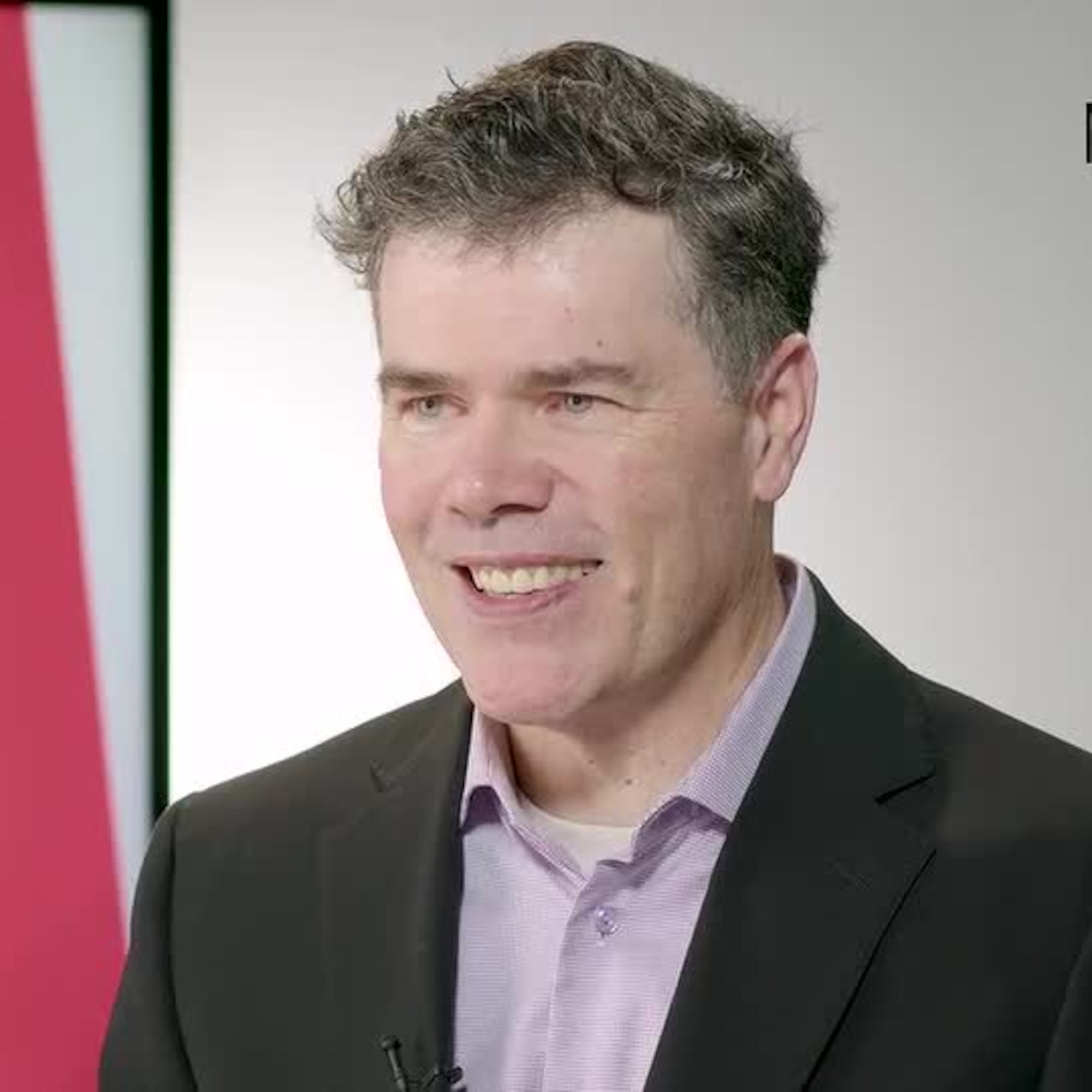
Jesse Mecham
"It's a popular feature," Mecham said. "It's important to recognize that people work in fits and starts. It's like starting an exercise program. You start running, and six weeks in, something starts hurting and you have to stop for a while."
But you can't really get anywhere without looking at real numbers, and that means sitting down with a budgeting system, whether it's your own spreadsheet or some software. You need to know how much money comes into your household and how much you spend in different categories.
Get a month ahead
Once you have your baseline data, the key to "Never Worry About Money Again" is to get one month ahead of your spending. For those who have been living paycheck to paycheck forever and building up credit card debt when they get behind, the difference can be revolutionary.
Mecham hopes to catch those who are tired of scraping by and want some security. That's when they're ready to do the work.
"We've been doing this for over 20 years and we have mountains of data at this point. There's an event that triggers people every time that makes them say, 'I should be better at money than I am,'" he said.
Sometimes it's getting a W-2 statement at tax time, and wondering where all that money went. Other times it's getting married or having a kid or trying to foresee retiring one day.
Getting a month ahead takes time and patience. You have to save enough out of your current budget until you have a full month's spending set aside-not as an emergency fund, but as a permanent part of your plan.
It takes the average YNAB user 41/2 months to get there. "We thought it would take people a year," Mecham said. "But it showed us two things: Our users are making good money and they aren't satisfied."
Change your answers
A person's answers to "What is the money for" change over time. At first, all the money is for now, because there are bills to pay and no room for anything else. It's too hard to think of all the categories at once.
But once followers get a handle on things and get one month ahead, the answers sort of become slots on a change-sorting machine. You roll the money in and it falls into the category where it fits best. For now, always comes first, but then users have choices.
"When we expose people to these trade-offs, they make really good decisions. They don't say, I'm going to blow it all," Mecham said.
There could be extra that rolls into "for later" so you can save ahead for a vacation or holiday presents. Then you move to "for ease" luxuries that will run the gamut from ordering delivery on busy nights to hiring a cleaning service and beyond. "For you" might equate to learning a new skill or getting a gym membership, and "for good" is as expansive as your generosity allows.
"It's whatever lights the person up," said Mecham. "I want to see more people spend their money in ways that light them up."
Got a question about retirement? Fill out our new questionnaire or write to me directly at beth.pinsker@marketwatch.com (please put "Fix My Portfolio" in the subject line).
You can also join the Retirement conversation in our Facebook community: Retire Better with MarketWatch.
By submitting your story to Dow Jones & Co., the publisher of MarketWatch, you understand and agree that we may use your story, or versions of it, in all media and platforms, including via third parties.
More Fix My Portfolio
-- If I buy a house for $1 million in cash at 70, will I run out of money by 90?
-- My adult kids are big earners. Should I do a Roth conversion now so they aren't taxed as much on their inheritance?
-- I'm 75 and afraid to let my retirement fund dip below $1 million. Am I being too conservative?
-Beth Pinsker
This content was created by MarketWatch, which is operated by Dow Jones & Co. MarketWatch is published independently from Dow Jones Newswires and The Wall Street Journal.
(END) Dow Jones Newswires
08-13-26 0804ET
Copyright (c) 2026 Dow Jones & Company, Inc.The articles, information, and content displayed on this webpage may include materials prepared and provided by third parties. Such third-party content is offered for informational purposes only and is not endorsed, reviewed, or verified by Morningstar.
Morningstar makes no representations or warranties regarding the accuracy, completeness, timeliness, or reliability of any third-party content displayed on this site. The views and opinions expressed in third-party content are those of the respective authors and do not necessarily reflect the views of Morningstar, its affiliates, or employees.
Morningstar is not responsible for any errors, omissions, or delays in this content, nor for any actions taken in reliance thereon. Users are advised to exercise their own judgment and seek independent financial advice before making any decisions based on such content. The third-party providers of this content are not affiliated with Morningstar, and their inclusion on this site does not imply any form of partnership, agency, or endorsement.
Popular

3 Stocks to Sell and 3 Stocks to Buy for October

The 10 Best Companies to Invest in Now
14 Elite Funds and ETFs, and 5 Popular Funds That Just Missed the Mark

3 Stocks to Invest In With More Room to Run

 United States