
The 'Buffett of Boston' sees investors in a 'vulnerable place' as American corporations need too much money

By Barbara Kollmeyer
Seth Klarman says SpaceX represents the 'kind of bell that might right at the top'
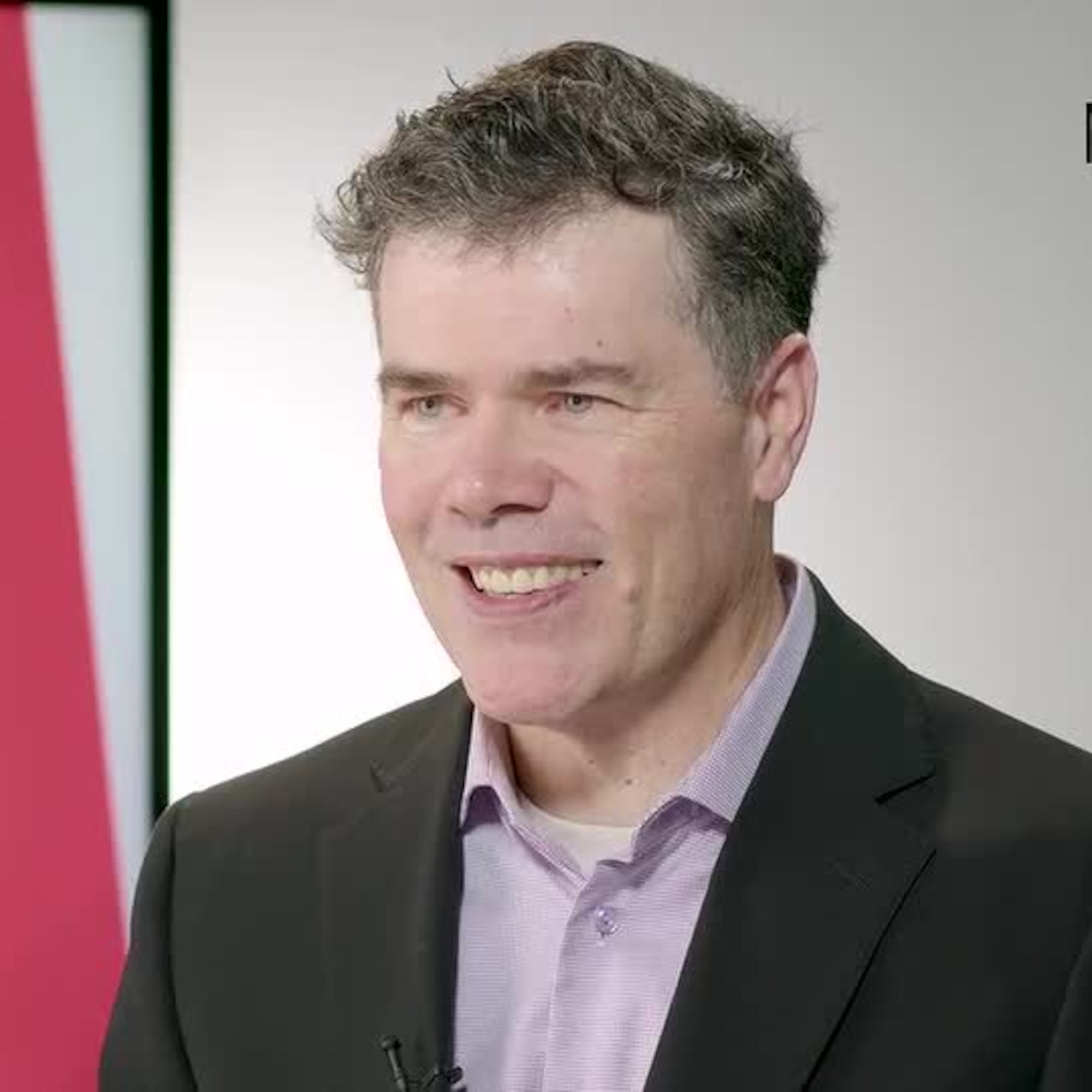
Images of SpaceX rockets are displayed on screens in Times Square after the launch of SpaceX's initial public offering (IPO) in New York on June 12, 2026. Seth Klarman is worried that there's "too much demand for money" from corporations right now.
An increasing demand for money and investment by companies could be putting investors in a "vulnerable place," according to the so-called "Buffett of Boston."
"I think investors might be missing just how much money is being sucked out of the system between large IPOs - this [SpaceX] won't be the last one, OpenAI and Anthropic are coming, and there's a ton of other IPOs that are stuck in institutional investors' portfolios that they'd love to get off at any point," Seth Klarman, Baupost Group CEO and portfolio manager, told Barry Ritholtz, the founder and CIO of Ritholtz Wealth Management, in an interview recorded two days ahead of SpaceX's IPO.
Klarman, who steers the approximately $22 billion value-oriented investment management fund, said markets will eventually have to cope with "a lot of stock for sale," for example, from early SpaceX investors and employees wanting to turn their paper wealth into bank deposits.
"And we have to sell that stock while apparently Google and Facebook [Meta] need more money, and OpenAI and Anthropic need more money, and utilities need more money for power, and chip companies need to build new factories in America. There's so much demand for money. I think we're in a vulnerable place, where ultimately supply and demand for money determines the cost of capital," he said.
"That's true in the bond market, and it's in effect in the stock market. So we might be looking at some supply-demand excess where prices soften just because there's so much supply of securities and the need to monetize is so great by these private companies," Klarman said.
The manager views SpaceX (SPCX) as an "unprofitable company in aggregate," with an "enormous valuation," saying his fund has no ownership "privately or in any other form."
But he worries that SpaceX and the buildup seen around that blockbuster IPO could be "the kind of bell that might ring at the top." Shares of Elon Musk's company haven't had a completely smooth ride since that blockbuster IPO, partly due to worries about its plans to raise more cash.
Like others, Klarman expressed worries that SpaceX will need soaring growth in parts of its business "for a long period of time" to justify current prices," which could be difficult.
As for AI exposure, he said they aren't seeing much opportunity for "long" exposure, and trying not to get "behind the curve." They want to avoid "AI losers," and look for assets the market has mislabeled as such, and hold those with "ancillary exposure to AI where we can turn into AI winners, but not pay much for the privilege."
"We have found ways to have a little bit of long exposure in things, for example, like data centers, where we own a few private investments at what we think is a very considerable discount to where data centers tend to trade," he said.
Away from AI, he said they're seeing opportunity in real estate, which has been in "tough shape since COVID," especially as commercial office space hasn't fully recovered from the work-from-home trend. He said they're focused particularly on assisted living, which is a play on population and aging.
"Rents haven't moved up in years, and I think there's probably pent-up growth in rents to come. And COVID was obviously a giant problem because any facility tended to empty out as people pulled their relatives out, to save their lives during COVID," he said.
A lot of newly built facilities in 2021 and 2022 were never filled and some have run into bankruptcy or financial problems. "So it's been an opportunity to build a position, an area with strong fundamentals," he said. Looking ahead, he expects "real ramps," for rents and occupancy in that area.
Similarly, Klarman said they like certain areas of the real-estate-office market, notably outside major cities. As for stocks, he said the market seems to be saying that it wants to dump anything that looks like an AI loser, along with some "babies with the bathwater," and it doesn't care.
"We think there's opportunity even in some larger-cap, high-quality equities that are being thrown out as people want to make the high returns from speculating in AI right now," he said.
-Barbara Kollmeyer
This content was created by MarketWatch, which is operated by Dow Jones & Co. MarketWatch is published independently from Dow Jones Newswires and The Wall Street Journal.
(END) Dow Jones Newswires
06-24-26 0855ET
Copyright (c) 2026 Dow Jones & Company, Inc.The articles, information, and content displayed on this webpage may include materials prepared and provided by third parties. Such third-party content is offered for informational purposes only and is not endorsed, reviewed, or verified by Morningstar.
Morningstar makes no representations or warranties regarding the accuracy, completeness, timeliness, or reliability of any third-party content displayed on this site. The views and opinions expressed in third-party content are those of the respective authors and do not necessarily reflect the views of Morningstar, its affiliates, or employees.
Morningstar is not responsible for any errors, omissions, or delays in this content, nor for any actions taken in reliance thereon. Users are advised to exercise their own judgment and seek independent financial advice before making any decisions based on such content. The third-party providers of this content are not affiliated with Morningstar, and their inclusion on this site does not imply any form of partnership, agency, or endorsement.
Popular

The 10 Best Companies to Invest in Now
14 Elite Funds and ETFs, and 5 Popular Funds That Just Missed the Mark

4 Stocks to Buy Before They Rise Further

The Top Funds for a Simpler Retirement Portfolio


 United States