
As Fed nears highly anticipated rate cut, the market 'really hinges' on 10-year Treasury yield

By Christine Idzelis
'The Fed finally has their window' to cut rates, even if easing policy with inflation above its target is 'a little risky,' says J.P. Morgan's Phil Camporeale
Treasury yields rose Friday.
As anticipation builds around the Federal Reserve's likely interest-rate cut next week, J.P. Morgan Asset Management's Phil Camporeale is keeping his eye on the behavior of a particular Treasury bond amid inflation risks.
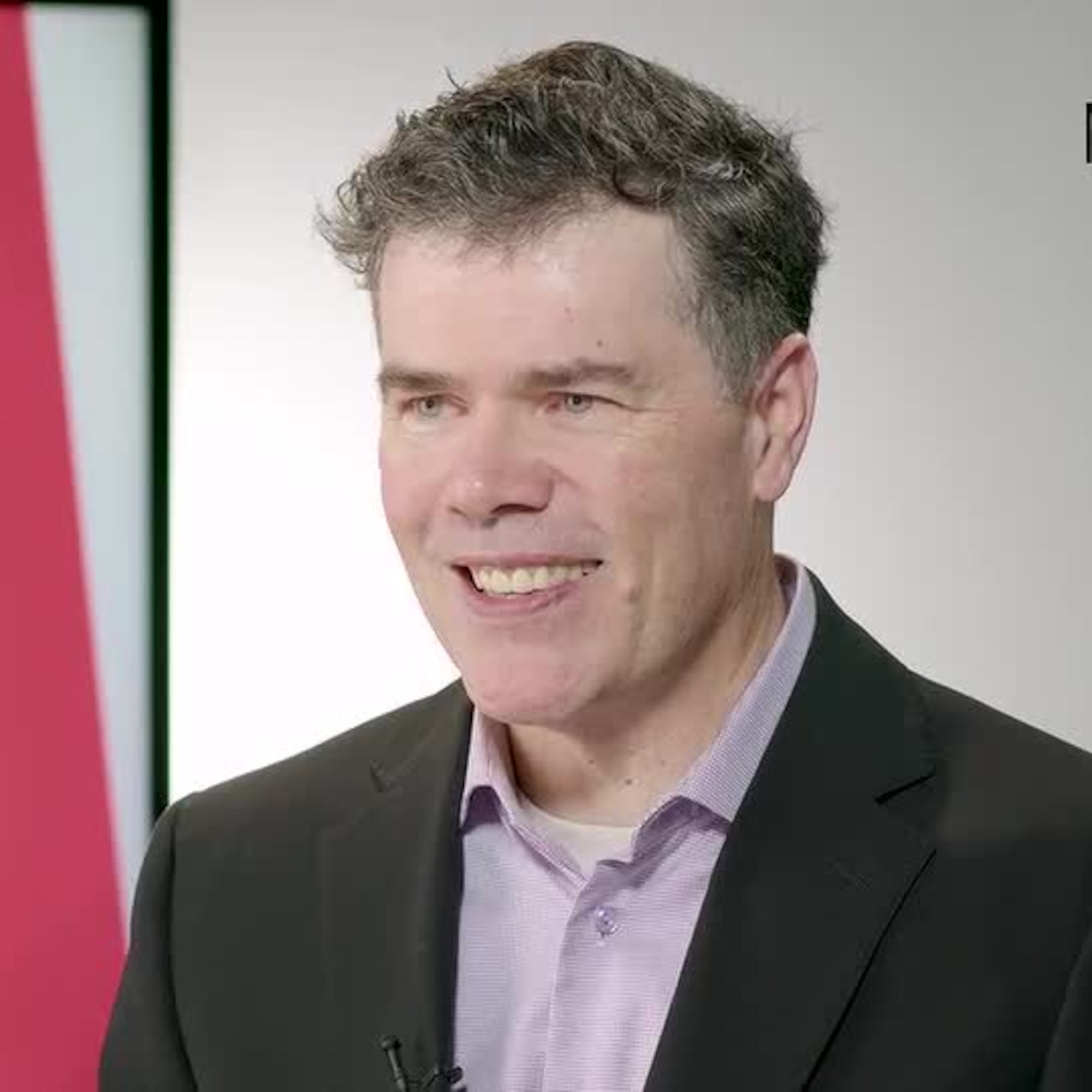
"The Fed finally has their window" to cut its benchmark rate, as the labor market has slowed to "meaningfully" to the point where it's "just kind of running in place," with no hirings or firings, said Camporeale, a portfolio manager for J.P. Morgan Asset Management's global allocation strategy, in a phone interview.
A lower federal-funds rate should create a bit more "breathing room" for the labor market, he added - but for the extension of the Fed's rate-cutting cycle to be "accommodative" to the U.S. economy, the 10-year Treasury yield would need to stay around its current trading level.
The 10-year Treasury note BX:TMUBMUSD10Y, whose roughly 4% yield suggests investors believe inflation expectations will remain "anchored," is important to watch, as it drives mortgage rates and other borrowing costs for consumers and companies in the U.S., according to Camporeale.
A rise in the 10-year yield would increase the cost of borrowing, while the central bank cutting its short-term fed-funds rate would mean "people are making less on their cash" in money-market funds - a dynamic "that is not accommodative," he said. "That's why everything really hinges" on the 10-year Treasury yield remaining anchored around its current level.
The 10-year Treasury rate edged up to 4.058% on Friday, as investors assessed the latest consumer-sentiment survey from the University of Michigan. The preliminary findings of the September survey found that sentiment fell, while long-run inflation expectations went up for the second straight month to 3.9%.
But those inflation expectations remain down from the 4.4% seen in April, according to the University of Michigan. That's the month President Donald Trump's rollout of "liberation day" tariffs roiled markets and raised concern that the levies would fuel inflationary pressures.
While his April 2 announcement of sweeping tariffs delivered a "real shock" to markets initially, the levies did not result in an immediate spike in inflation and have taken longer to flow through to the economy than many investors had feared, according to Camporeale. While there are signs of tariff-related inflation in goods prices, it's so far happened at a "gradual pace," he said, and the levies may wind up being a one-time price adjustment.
The Fed, which considers its dual mandate of price stability and maximum employment when setting monetary policy, will hold a closely watched meeting next week. The central bank will conclude its policy meeting on Sept. 17 with a decision on where to hold the fed-funds rate and will also release its latest Summary of Economic Projections, which will include forecasts for inflation.
While inflation remains above the Fed's 2% target, "it's prudent for the Fed to consider rate cuts" considering the recent weakening in the labor market, said Mohit Mittal, chief investment officer for core strategies at bond-fund manager Pimco, in a phone interview.
The central bank will mostly likely lower its policy rate by 25 basis points next week, "but I do think that Fed officials will at least be discussing 50 basis points," he said.
Recession?
In Mittal's view, the current level of the fed-funds rate - which the central bank has been holding this year at a target range of 4.25% to 4.5% - looks "pretty elevated" against the backdrop of recent weakness in U.S. job creation.
Mittal is not expecting a recession, though - saying that the amount of rate cuts being priced in through the first half of next year reflects expectations for the Fed to ease policy from what may be perceived as currently "restrictive."
"We don't anticipate a meaningful increase in inflation," he noted. Rather, Mittal expects inflation could end up around 3% at year-end, but that it then may ease to 2.5% by the end of 2026.
U.S. inflation, as measured by the consumer-price index, rose 0.4% in August at an annual rate of 2.9%. Core inflation, which excludes food and energy prices, was up 3.1% in the 12 months through August, based on the CPI data released Thursday by the Bureau of Labor Statistics.
Meanwhile, certain market gauges indicate that investors believe the Fed is currently "credible" in managing its inflation target, according to Mittal, who pointed to the five-year breakeven inflation rate as an example. Data on the St. Louis Fed's website showed the five-year breakeven inflation rate was at 2.41% as recently as Thursday.
"The Fed has room to reduce rates," said Mittal. But "you don't want to be too aggressive in cutting rates," he added, with inflation still above target and the recent One Big Beautiful Bill Act having a potentially positive effect on the economy.
J.P. Morgan Asset Management's Camporeale said he expects that real gross domestic product in the U.S. may increase 1% this year and then expand around 2% in 2026. That means the Fed may be "easing policy into an environment where we're expecting the economy to do pretty well next year," he said.
Camporeale, who invests in stocks and bonds, views the amount of rate cuts being priced into the fed-funds futures market as reflecting investor expectations for a Fed that will be "a little more dovish" next year, meaning it may be "willing to get rates back to a neutral rate quicker."
The fed-funds futures market on Friday showed that traders anticipate the Fed may lower its benchmark rate three times this year, cutting 25 basis points at each of its three remaining meetings in 2025, according to the CME FedWatch Tool, at last check. They saw the fed-funds rate potentially falling even lower next year, potentially to 3% to 3.25% by the end of June.
Read: Here's how these elite investors are playing the bond market ahead of Fed rate cuts
Camporeale's current positioning in the equity and fixed-income markets is based on his view that there will be no recession. To his thinking, the big risk is being potentially wrong on the "anchoring of inflation expectations," he said. "It is a little risky that the Federal Reserve could ease policy with inflation this far away from their 2% target."
The U.S. stock market closed mixed Friday, with the technology-heavy Nasdaq Composite COMP rising to a fresh record peak while the S&P 500 SPX and Dow Jones Industrial Average DJIA both declined. All three benchmarks booked weekly gains, with the S&P 500 finishing Friday less than 0.1% below its record peak notched on Thursday, according to Dow Jones Market Data.
-Christine Idzelis
This content was created by MarketWatch, which is operated by Dow Jones & Co. MarketWatch is published independently from Dow Jones Newswires and The Wall Street Journal.
(END) Dow Jones Newswires
09-12-25 1800ET
Copyright (c) 2025 Dow Jones & Company, Inc.The articles, information, and content displayed on this webpage may include materials prepared and provided by third parties. Such third-party content is offered for informational purposes only and is not endorsed, reviewed, or verified by Morningstar.
Morningstar makes no representations or warranties regarding the accuracy, completeness, timeliness, or reliability of any third-party content displayed on this site. The views and opinions expressed in third-party content are those of the respective authors and do not necessarily reflect the views of Morningstar, its affiliates, or employees.
Morningstar is not responsible for any errors, omissions, or delays in this content, nor for any actions taken in reliance thereon. Users are advised to exercise their own judgment and seek independent financial advice before making any decisions based on such content. The third-party providers of this content are not affiliated with Morningstar, and their inclusion on this site does not imply any form of partnership, agency, or endorsement.
Popular

The 10 Best Companies to Invest in Now
14 Elite Funds and ETFs, and 5 Popular Funds That Just Missed the Mark

The Top Funds for a Simpler Retirement Portfolio

3 Stocks to Sell and 3 Stocks to Buy for October


 United States