
Paradromics and Siemens Healthineers Launch Strategic Initiative to Build Advanced Imaging Foundation for the Future of Brain-Computer Interfaces

Paradromics and Siemens Healthineers Launch Strategic Initiative to Build Advanced Imaging Foundation for the Future of Brain-Computer Interfaces
Goal is to develop an end-to-end multimodal imaging workflow designed to support patient assessment, surgical planning, BCI implantation and long-term outcomes
Paradromics Inc., a neurotechnology company developing high-data-rate brain-computer interfaces to restore and enhance human capabilities, today announced a collaboration with Siemens Healthineers to develop an advanced multimodal imaging platform designed to support the growing clinical use of implantable brain-computer interfaces (BCIs).
This press release features multimedia. View the full release here: https://www.businesswire.com/news/home/20261019131262/en/
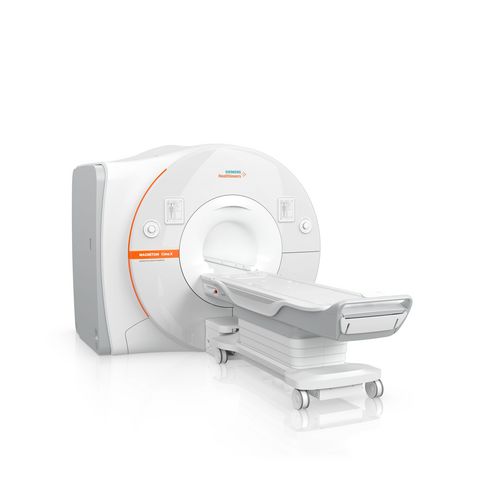
Advanced 3T MRI systems from Siemens Healthineers, such as MAGNETOM Cima.X, have the potential to support the growing clinical use of implantable brain-computer interfaces (BCIs). Image courtesy: Siemens Healthineers
The collaboration brings together the decades-long expertise of Siemens Healthineers in advanced medical imaging with Paradromics’ clinical and technical expertise in BCIs. The companies will develop an integrated imaging approach spanning the continuum of BCI care, from patient candidacy assessment and neural target identification through surgical planning, intraoperative navigation, post-implant localization, neural validation of functional imaging findings, and outcomes assessment.
The brain is organized into highly specialized but interconnected regions that support functions such as speech, language, movement, vision, hearing and cognition. Because the location and organization of these functional areas can vary from person to person, accurately mapping them before implantation is critical to identifying the best target for each patient.
Brain-computer interfaces are advancing from academic proof-of-concept research toward clinical systems capable of restoring functions such as communication and computer control. As these systems become more sophisticated, accurately identifying the areas of the brain responsible for speech, movement and other functions becomes increasingly important to device performance and patient outcomes.
“Building the best hardware is only part of the story. BCI performance begins before an implant ever reaches the brain,” said Matt Angle, Ph.D., founder and CEO of Paradromics. “The ability to understand each patient’s individual anatomy and functional organization can help us identify the right neural target and place our technology with greater accuracy. Working with Siemens Healthineers will help us streamline this process prior to surgery, so that patients get the best possible outcome.”
Building on standard imaging protocols already used by Paradromics on Siemens Healthineers scanners, the companies intend to develop an optimized end-to-end imaging package encompassing image acquisition, co-registration and processing, surgical-navigation-ready outputs, and increasingly automated analysis. The goal is to create an approach that can ultimately be deployed efficiently across medical centers using Siemens Healthineers imaging systems.
The planned workflow will integrate multiple imaging modalities, including structural MRI, functional MRI, vascular imaging and CT. Together, these technologies can help clinical teams assess brain anatomy, identify functionally relevant regions, plan surgical trajectories, avoid critical vascular structures, and determine the final location of implanted BCI components.
End-to-end imaging workflows will also be developed in cooperation with Paradromics clinical research investigators, including Daniel B. Rubin, MD, PhD, of the Mass General Brigham Neuroscience Institute’s Center for Neurotechnology and Neurorecovery. The participation of leading clinical research centers will help ensure the workflow is informed by real-world BCI research and clinical practice as it is refined for broader adoption.
“At Siemens Healthineers, we are focused on pioneering breakthroughs in healthcare by transforming imaging into increasingly precise, actionable information for clinicians,” said Dr. Donald Hardie, head of Magnetic Resonance at Siemens Healthineers. “Brain-computer interfaces represent an important new frontier for neuroscience. Working with Paradromics gives us the opportunity to explore how advanced multimodal imaging, automation and clinical decision support can help make these procedures more precise, repeatable and ultimately more accessible across leading medical centers.”
A distinctive element of the collaboration will be the ability to compare functional imaging predictions with neural activity recorded directly from implanted Paradromics devices. Intracortical recordings can provide high-resolution information about the activity of individual neurons and their usefulness for decoding intended speech or movement. Comparing those signals with preoperative imaging could help researchers determine how accurately imaging identifies functionally important brain regions and continually refine imaging and targeting methods for future patients.
“Our approach has always been to build the Connexus BCI platform into the existing healthcare ecosystem, working with leaders across the care pathway and using established technologies and clinical workflows wherever they make sense,” said William J. Marks, Jr., MD, MS-HCM, Chief Clinical Officer of Paradromics. “We want to make things easy for hospitals, not require them to buy and train on bespoke capital equipment. Siemens Healthineers is the leader in advanced medical imaging, and most hospitals in the US use their systems. This is an obvious opportunity for collaboration.”
The collaboration is expected to initially focus on speech-motor function, building on Paradromics’ clinical work in communication restoration. The companies envision extending the approach to additional BCI applications, including hand motor control and language restoration following stroke. Imaging and targeting techniques developed for speech, motor and language applications may also have relevance to visual, auditory and cognitive mapping, as well as broader neurosurgical planning.
“There are so many ways to lose your ability to communicate, but with BCI I see that there are just as many different ways to restore it,” said Angle. “Working with Siemens Healthineers can help us better understand each individual brain and place Connexus where it can have the greatest impact, bringing us closer to a future defined by greater independence and possibility.”
About Paradromics
Paradromics builds brain-computer interface (BCI) technologies for seamless human-technology integration, designed to restore and enhance human capabilities. The company’s first-generation device, the Connexus® BCI, is designed to capture neural activity at the resolution of individual neurons and translate neural intent into speech, computer control, movement, and other essential human functions. Paradromics’ first clinical application focuses on restoring communication for people who have lost the ability to speak due to paralysis and other severe motor impairments. Over time, the platform is designed to support direct AI interaction, advanced prosthetics, sensory feedback, and next-generation treatments for mental health and other neurological conditions. With each new application, Paradromics aims to create a new path to functional recovery and the extension of human agency and intention. For more information, visit www.paradromics.com.
Caution: Connexus® BCI is an investigational device limited by United States law to investigational use. Connexus® and Paradromics™ are trademarks or registered trademarks of Paradromics Inc. All other trademarks are the property of their respective owners.
View source version on businesswire.com: https://www.businesswire.com/news/home/20261019131262/en/
The articles, information, and content displayed on this webpage may include materials prepared and provided by third parties. Such third-party content is offered for informational purposes only and is not endorsed, reviewed, or verified by Morningstar.
Morningstar makes no representations or warranties regarding the accuracy, completeness, timeliness, or reliability of any third-party content displayed on this site. The views and opinions expressed in third-party content are those of the respective authors and do not necessarily reflect the views of Morningstar, its affiliates, or employees.
Morningstar is not responsible for any errors, omissions, or delays in this content, nor for any actions taken in reliance thereon. Users are advised to exercise their own judgment and seek independent financial advice before making any decisions based on such content. The third-party providers of this content are not affiliated with Morningstar, and their inclusion on this site does not imply any form of partnership, agency, or endorsement.
Popular

What’s Ahead for Stocks This Quarter—and Where to Invest

Are TIPS ETFs the Best Way to Fight Inflation?

This 1-Star Stock Trades at a 94% Premium. Is It Time to Sell?

10 Best Blue-Chip Stocks to Buy for the Long Term


 United States