
Batten down the hatches and allocate defensively because global liquidity has peaked, argues veteran strategist

By Jules Rimmer
Strong global GDP is sucking liquidity from the financial system to the real economy
Interest rates -everywhere except China - are rising to match strong global GDP growth
Higher interest rates are coming, global liquidity has peaked and is now weakening. For one strategist at least, this will lead to an era of greater volatility that means investors should get more defensive with their portfolios.
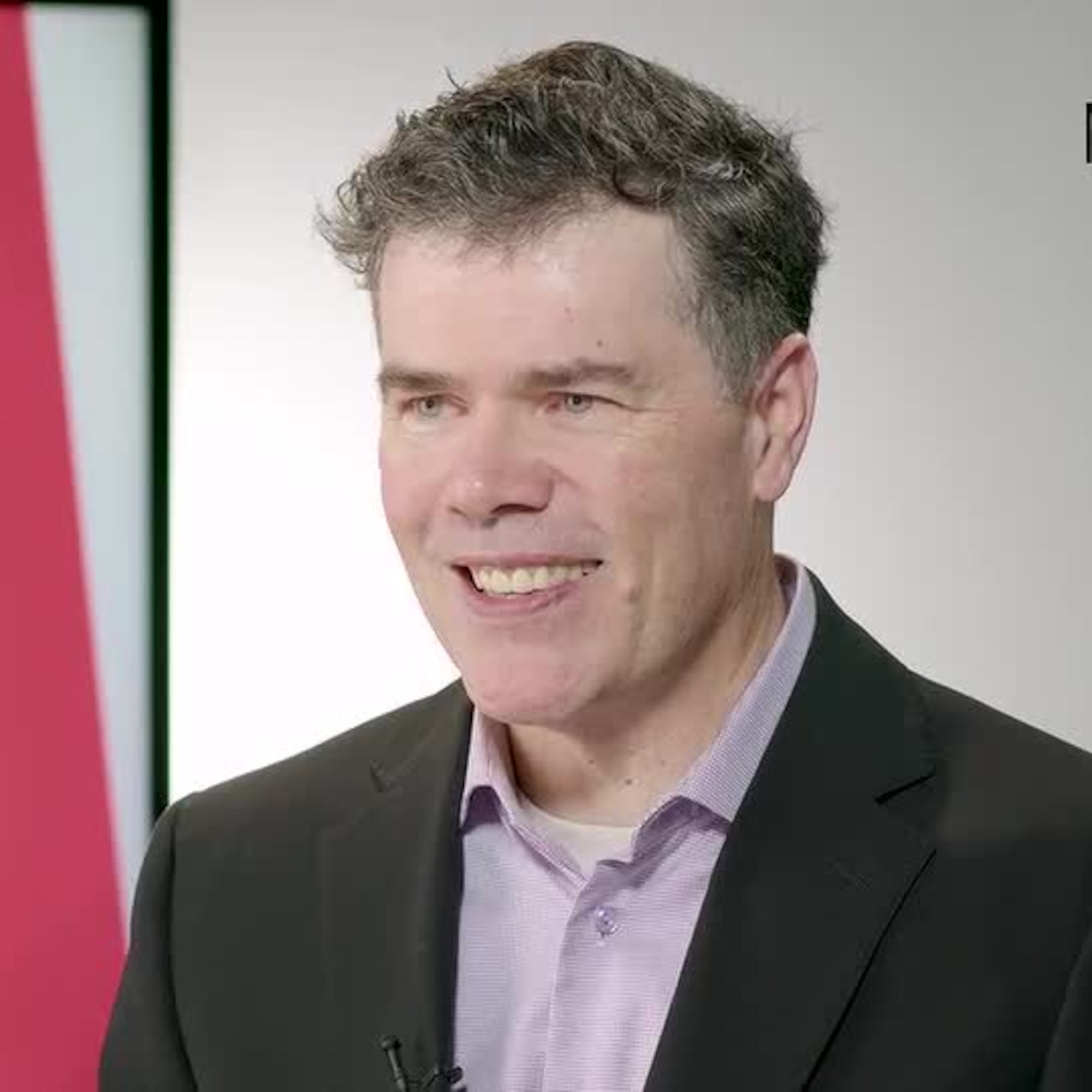
This bearish view on markets comes from the founder and managing director of CrossBorder Capital, Mike Howell, who was interviewed on the Macro Voices podcast Thursday. With a long career of strategising, much of Howell's research is predicated on what he calls the "global liquidity cycle" - periods of roughly five years in which "the quantity and quality of money fluctuate" that often predict broader financial and economic cycles.
CrossBorder Capital's global liquidity index stands at 35, on a range from 0-100
Global liquidity measures the total ease of financing, availability of credit, and volume of cross-border financial flows across world markets. Howell's chart shows how global liquidity is on a weakening trend and he forecasts that interest rates will rise, it's simply a question of when.
Howell believes, despite the apparent reluctance of new Fed Chair Kevin Warsh to tighten monetary policy, he will be left with no other options, regardless of what his relationship with President Trump indicates.
"Central banks don't control interest rates. They may think they do, but the market controls interest rates, and it's the long end which drives the short end, not vice versa as the textbooks tell us," he said.
The veteran strategist firmly that believes no matter what tricks Warsh deploys, bond yields must rise to match the strong nominal GDP growth globally. What happens here, mechanically speaking, is that liquidity is sucked out of the financial system and diverted to the real economy, in Howell's words.
He expects that when Warsh makes his address at the Jackson Hole economic policy symposium on August 28, he must confirm tightening lies ahead. What troubles Howell is that central banks have been relying on issuance of bonds at the short end of the curve, buybacks and money market liquidity to maintain long-term yields. It's doing the job right now, he opines, but ultimately it risks higher inflation.
This concern is what drives Howell's recommendation to asset-allocate defensively: reduce credit exposure; err cautiously on long-duration bonds BX:TMUBMUSD30Y; maintain a commodity exposure; and seek out monetary inflation hedges such as gold (GC00).
While European liquidity broadly follows American trends, there is one sphere in which the liquidity cycle differs markedly: China, which is also travelling in the opposite direction, according to Howell. In recent years, the People's Bank of China has maintained a very tight liquidity and as a result China has very weak growth, he argues. No wonder its 10-year bond yield BX:AMBMKRM-10Y is languishing at 1.70%.
Now, though, China needs to foster some growth and he thinks the PBOC is "embarking on a significant liquidity expansion." Given the size and importance of the Chinese economy, this will "fuel further world economic activity and it will boost commodity prices globally."
Howell is of the opinion "there is a compelling case for higher oil (BRN00) prices to pick up sharply," but it's not just geopolitics driving that call. He observes the gold-oil ratio that has averaged around twenty times since 1970. Gold is currently forty-five times higher than oil. Even reverting to a more conservative thirty times, this suggests a crude price around $135 per barrel.
Gold/ Oil ratio (log terms)
Although inflation hedging is important, Howell regards China as the key determinant of the gold price. He observes the Shanghai Gold Exchange is "now the marginal pricer of gold worldwide," and the PBOC liquidity injections are likely to stimulate further domestic demand. It's worth noting, of course, that bitcoin (BTCUSD) and crypto are banned in China, so there is no competition as an inflation-hedge from that source.
-Jules Rimmer
This content was created by MarketWatch, which is operated by Dow Jones & Co. MarketWatch is published independently from Dow Jones Newswires and The Wall Street Journal.
(END) Dow Jones Newswires
08-14-26 0626ET
Copyright (c) 2026 Dow Jones & Company, Inc.The articles, information, and content displayed on this webpage may include materials prepared and provided by third parties. Such third-party content is offered for informational purposes only and is not endorsed, reviewed, or verified by Morningstar.
Morningstar makes no representations or warranties regarding the accuracy, completeness, timeliness, or reliability of any third-party content displayed on this site. The views and opinions expressed in third-party content are those of the respective authors and do not necessarily reflect the views of Morningstar, its affiliates, or employees.
Morningstar is not responsible for any errors, omissions, or delays in this content, nor for any actions taken in reliance thereon. Users are advised to exercise their own judgment and seek independent financial advice before making any decisions based on such content. The third-party providers of this content are not affiliated with Morningstar, and their inclusion on this site does not imply any form of partnership, agency, or endorsement.
Popular

4 Stocks to Buy Before They Rise Further

The 10 Best Companies to Invest in Now
14 Elite Funds and ETFs, and 5 Popular Funds That Just Missed the Mark

2 Undervalued Stocks to Buy Before They Rebound


 United States