
The rising cost of capital for companies today is starting to spook the stock market: 'The worry is the spending might not pay off'

By Isabel Wang and Joy Wiltermuth
Alphabet says it plans to throw even more money at the AI buildout. The Iran war, oil back at $100 a barrel and rising bond yields make it all the more difficult for the market to stomach.
Wall Street got a fresh jolt Thursday from signs that the Iran conflict isn't cooling off, and the fallout is starting to hit the trade that is propping up the entire stock market: artificial intelligence.
Global oil prices (BRN00) surged above $100 a barrel and Treasury yields spiked as investors braced for further escalation, with the U.S.-Iran conflict nearing its sixth month. That threatens to torch recent progress on the inflation front, right as the Federal Reserve under its new chair, Kevin Warsh, has renewed its commitment to getting inflation back down to its 2% target.
Yet the pain doesn't stop at the gas pump. It risks striking directly at the heart of the freewheeling money engine that's been funding Silicon Valley's trillion-dollar AI buildout.
U.S. stocks finished sharply lower on Thursday after Google parent Alphabet Inc. (GOOGL) (GOOG) raised its capital-spending forecast to as much as $205 billion this year. Shares of Alphabet were down 7.1% on Thursday.
Alphabet didn't immediately respond to a MarketWatch request for comment.
"It's still not obvious to investors what is the actual payoff in revenue being created in AI for the amount of capex spending," said Anthony Saglimbene, chief market strategist at Ameriprise Financial. "The worry is the spending might not pay off to the degree companies are hoping for."
Hyperscalers have been financing their data-center race increasingly with borrowed money and some stock issuance, rather than simply with cash on hand. Global AI-related debt issuance across corporate bonds and leverage loans was already nearing $500 billion this year, according to a recent Goldman Sachs estimate. The main assumption to start 2026 was that the Fed would be cutting interest rates, potentially making borrowing more affordable for government, businesses and households. Then came the Iran war.
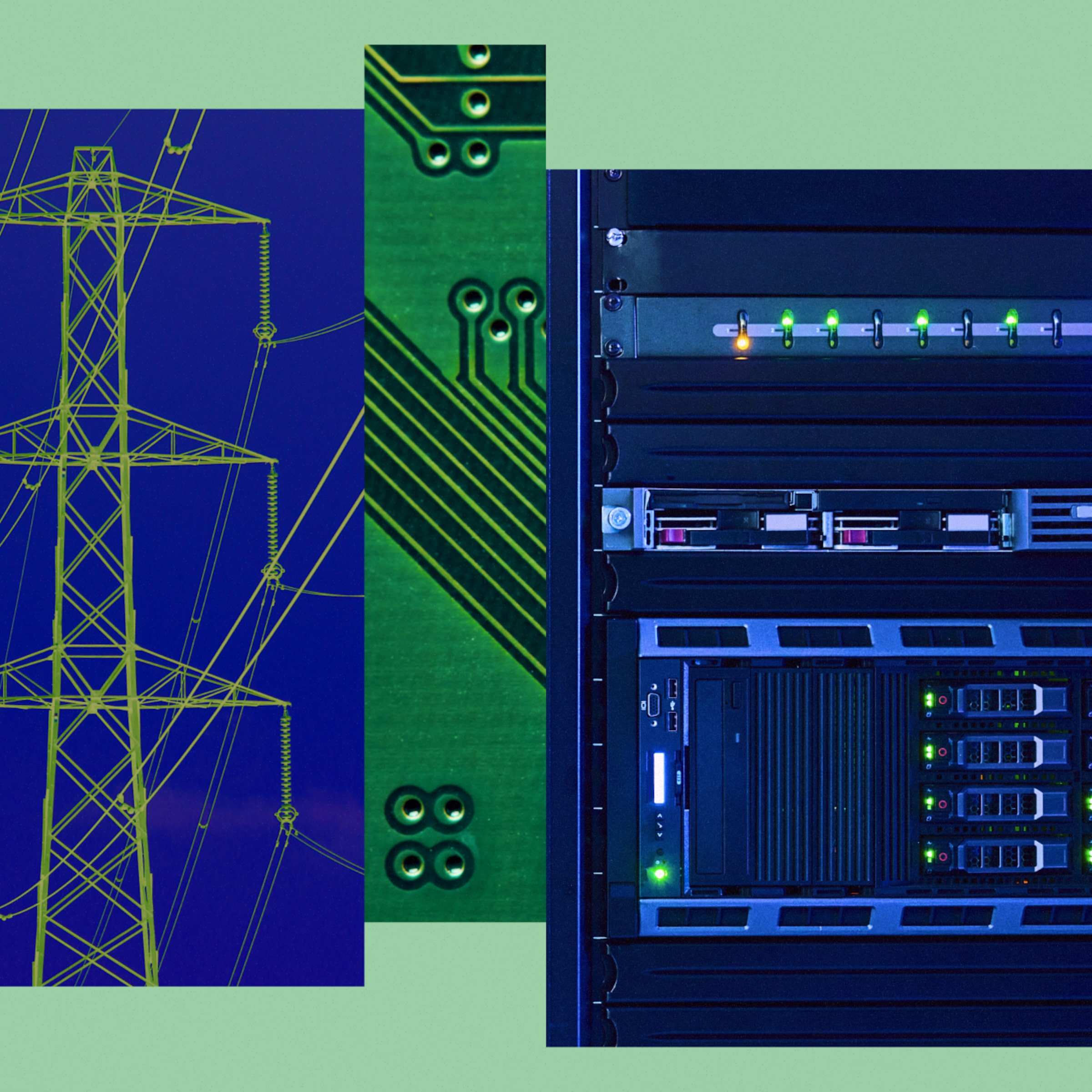
Treasury yields have been sensitive to oil prices, but also to the issuance needs of the U.S. and the AI race. Higher rates can raise the cost of every dollar borrowed to build data centers, develop specialized chips or upgrade power grids. This comes right as investors are demanding to see whether that capital investment will pay off.
"Fundamentally speaking, they are still pretty creditworthy from a balance-sheet perspective," Jack Janasiewicz, lead portfolio strategist at Natixis Investment Managers Solutions, said of the hyperscalers. Bond buyers still seem OK with the yields recently being offered, he said, but there are fresh concerns about cheap Chinese AI models versus the "frontier" models, which are footing the bill for the buildout.
You don't want to drop $1 trillion in capital expenditures "and it's the second mouse that gests the cheese," Janasiewicz said.
The 2-year Treasury yield BX:TMUBMUSD02Y rose to 4.358% on Thursday - its highest level since February 2025. The 10-year Treasury yield BX:TMUBMUSD10Y also settled at a new 2026 high of 4.703%, according to FactSet data.
Bob Lang, founder of the options-trading service Explosive Options, said an important nuance is that not every hyperscaler funds its capital expenditures with external financing. Alphabet, despite the sharp selloff on Thursday, is still primarily funding its investments with cash generated by its existing businesses, including Google Search and advertising.
"So [higher] interest rates really don't matter much to those hyperscalers, because they're self-financing," Lang told MarketWatch via phone on Thursday.
But concerns flashing in the commodity and bond markets now look harder for stock investors to ignore. "The oil market has been telling us it is getting worse. The bond market has been telling us it is getting more concerned," said Steve Sosnik, chief strategist at Interactive Brokers.
Still, investors have bought almost every dip in the AI trade this year, with semiconductor and memory-chip stocks earlier this week bouncing back from a sharp selloff in June. The so-called Magnificent Seven group of Big Tech names also rebounded from the first half of 2026.
This comes as the S&P 500 SPX tumbled 1.2% Thursday to book a back-to-back close below 7,500, a level it first finished above in late May.
"There's an old saying that nothing changes sentiment like prices," Sosnik said. "We will see how eager the dip buyers are to step into the breach."
The Nasdaq composite COMP finished 2.2% lower, while the Dow Jones Industrial Average DJIA was down nearly 1%, according to FactSet data.
-Isabel Wang -Joy Wiltermuth
This content was created by MarketWatch, which is operated by Dow Jones & Co. MarketWatch is published independently from Dow Jones Newswires and The Wall Street Journal.
(END) Dow Jones Newswires
07-23-26 1620ET
Copyright (c) 2026 Dow Jones & Company, Inc.The articles, information, and content displayed on this webpage may include materials prepared and provided by third parties. Such third-party content is offered for informational purposes only and is not endorsed, reviewed, or verified by Morningstar.
Morningstar makes no representations or warranties regarding the accuracy, completeness, timeliness, or reliability of any third-party content displayed on this site. The views and opinions expressed in third-party content are those of the respective authors and do not necessarily reflect the views of Morningstar, its affiliates, or employees.
Morningstar is not responsible for any errors, omissions, or delays in this content, nor for any actions taken in reliance thereon. Users are advised to exercise their own judgment and seek independent financial advice before making any decisions based on such content. The third-party providers of this content are not affiliated with Morningstar, and their inclusion on this site does not imply any form of partnership, agency, or endorsement.
Popular

5 Stocks to Buy Trading at Big Discounts

This Once-Hot AI Stock Now Looks Deeply Undervalued

What 7 Key Market Indicators Are Telling Investors Right Now

Don’t Overlook the Income Side of Fixed Income

 United States