
WSJ Tech Council Summit: CVS Uses Surveys of AI Bots for Message Testing, Market Research

By Elias Schisgall
When CVS Health looks to roll out a new product, they have a new source of data at their proposal: a set of 150,000 artificial-intelligence simulations, or copies, of its real customers, ready to be surveyed at the click of a button.
The company has partnered with Simile, a startup building AI models based on real human behavior. It has used Simile's tech to build digital "twins" of clinicians and providers to run message-testing surveys far faster than traditional surveys of humans.
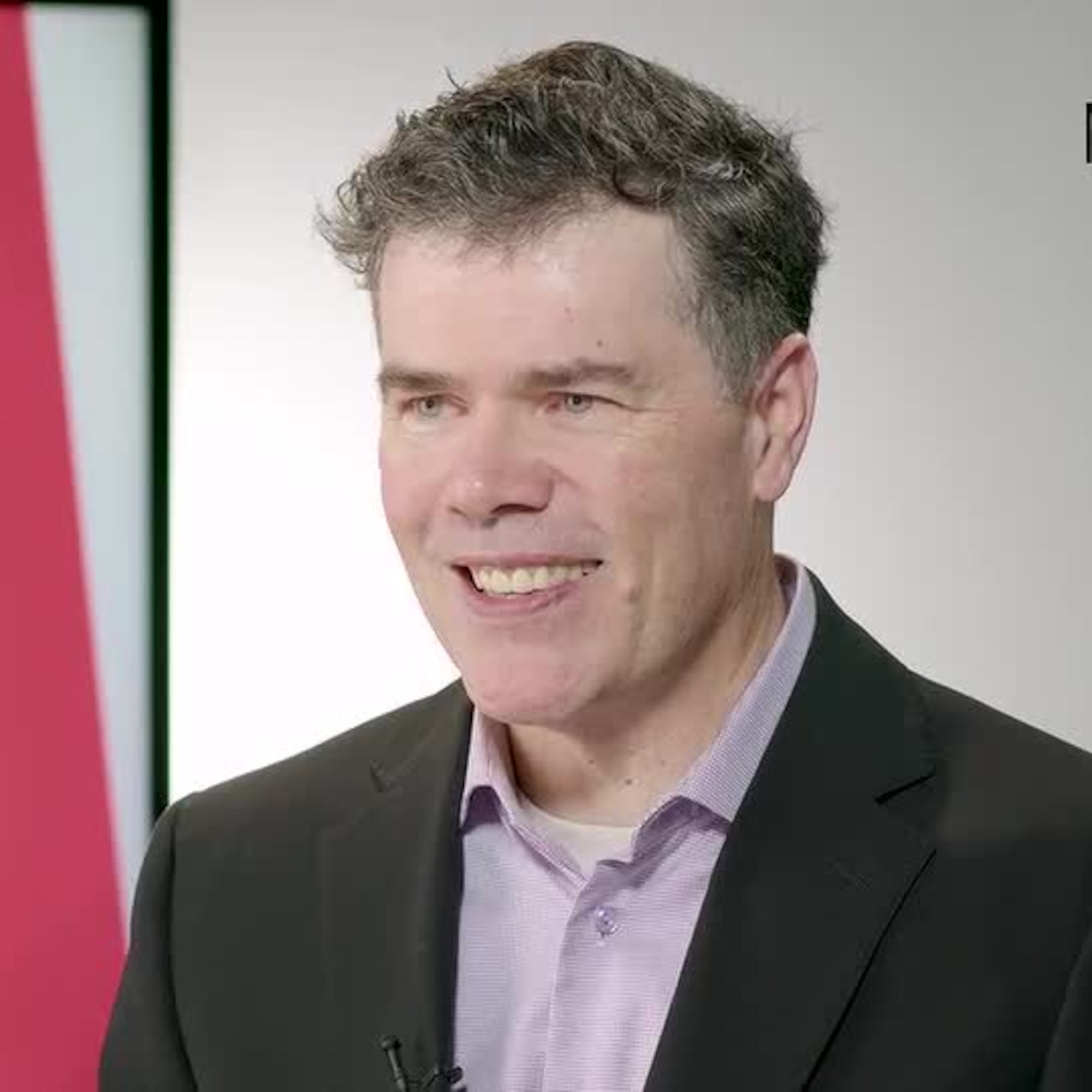
"We've introduced biosimilars which we think are clinically as effective and actually represent cost savings for our consumers, but we have to get those in the market and convince consumers to adopt them," Sri Narasimhan, CVS Health's vice president of enterprise customer experience & insights, said Monday at The Wall Street Journal's Technology Council Summit.
"We went and asked a bunch of clinicians and twins of clinicians, 'What's the information you would need to recommend a biosimilar to your patient?'" Narasimhan said, noting that the survey led to recommendations around clinical evidence and lead time. "We actually adopted it and we saw the outcome. We saw an increase in the prescription and it was a great outcome for our patients, great outcome for the providers as the clinical outcomes were better as well."
Joon Sung Park, Simile's co-founder and chief executive, said the company's models are based on data from tens of millions of real people, and can help businesses make predictions about human behavior and generate better outcomes.
"Simulation is a tool for creating a multiverse of possibility to basically chart out what is the golden path that is the most likely for you to actually get to the particular outcome that you want," Park said.
Using AI simulations has allowed CVS Health to run survey-based research around ten times faster than traditional human surveys, with lower levels of noise and human bias, CVS Health Chief Experience and Technology Officer Tilak Mandadi said.
Narasimhan added that the company tested simulation-based and traditional surveys against each other and found that the twins have a roughly 90% to 95% accuracy rate.
"If you're looking at, 'Hey, we're introducing something, we're piloting something, we want to see what people will make and how their perception will change,' that's where I think simulation has a really big role in disrupting traditional research methods, insights, market research, and things like that," Narasimhan said.
Write to Elias Schisgall at elias.schisgall@wsj.com
(END) Dow Jones Newswires
September 14, 2026 17:54 ET (21:54 GMT)
Copyright (c) 2026 Dow Jones & Company, Inc.The articles, information, and content displayed on this webpage may include materials prepared and provided by third parties. Such third-party content is offered for informational purposes only and is not endorsed, reviewed, or verified by Morningstar.
Morningstar makes no representations or warranties regarding the accuracy, completeness, timeliness, or reliability of any third-party content displayed on this site. The views and opinions expressed in third-party content are those of the respective authors and do not necessarily reflect the views of Morningstar, its affiliates, or employees.
Morningstar is not responsible for any errors, omissions, or delays in this content, nor for any actions taken in reliance thereon. Users are advised to exercise their own judgment and seek independent financial advice before making any decisions based on such content. The third-party providers of this content are not affiliated with Morningstar, and their inclusion on this site does not imply any form of partnership, agency, or endorsement.
Popular

The 10 Best Companies to Invest in Now

3 Stocks to Sell and 3 Stocks to Buy for October
14 Elite Funds and ETFs, and 5 Popular Funds That Just Missed the Mark
The Top Funds for a Simpler Retirement Portfolio

 United States