
Feinstein Institutes Secures $3.4M NIH Grant to Harness AI for Early Delirium Detection and Prevention in Hospitals

Feinstein Institutes Secures $3.4M NIH Grant to Harness AI for Early Delirium Detection and Prevention in Hospitals
New machine learning models aim to improve hospital care for older adults and tackle a major risk factor for Alzheimer’s disease
Imagine a future where a serious, often-missed condition affecting older hospital patients could be predicted and prevented before it even starts. To help make that future a reality, researchers at Northwell Health’s Feinstein Institutes for Medical Research have been awarded a $3.4-million grant from the National Institutes of Health (NIH) to develop cutting-edge artificial intelligence (AI) tools to detect and prevent delirium – a significant risk factor for Alzheimer’s disease – in hospitals.
This press release features multimedia. View the full release here: https://www.businesswire.com/news/home/20261106118328/en/
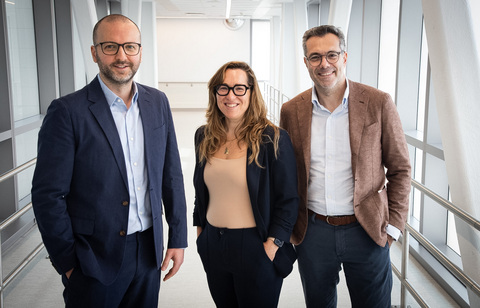
Drs. Alex Makhnevich, Liron Sinvani and Theodoros Zanos were awarded $3.4M in NIH funding to study AI in early delirium detection and prevention. (Credit: Feinstein Institutes)
Delirium is a serious medical condition characterized by an acute disturbance of mental abilities, rather than a mere feeling of slight confusion, often impacting people over the age of 65 when they’re in the hospital. It can lead to falls, longer hospital stays, lasting memory problems and potentially increase the risk of developing Alzheimer’s disease and related dementias (AD/ADRD). Despite its dangers, delirium can be difficult to diagnose, often being missed by clinicians in more than 75 percent of cases, even with screening programs.
Led by Liron Sinvani, MD, professor in the Institute of Health System Science at the Feinstein Institutes, Alex Makhnevich, MD, associate professor in the Department of Medicine at the Donald and Barbara Zucker School of Medicine, and Theodoros P. Zanos, PhD, professor of the Division of Health AI in the Institute of Health System Science & professor in the Institute of Bioelectronic Medicine at the Feinstein Institutes, the grant will support the development of machine learning AI models to identify delirium in the emergency department (ED) and predict it during hospitalization using electronic health record data as well as continuous monitoring from wearable devices. This machine learning clinical tool will be built and validated using diverse patient groups dataset.
“Delirium is a medical emergency that we too often miss, with lasting consequences for patients,” said Dr. Sinvani, director of the Geriatric Hospitalist Service at Northwell. “This NIH grant allows us to leverage the power of machine learning to change that, catching delirium early and even predicting it before it strikes. Our goal is to make a real difference in how we care for older adults and protect their brain health.”
The work also aligns with Dr. Sinvani’s broader focus on healthy aging and preventing cognitive decline in older adults. She co-directs Northwell’s SinMak Lab for Aging Research with Dr. Makhnevich which studies the complex challenges older patients face and works to identify risks earlier and improve care.
The research will consist of three components:
- Identifying delirium in the ED: The research team will develop an AI model to quickly and accurately identify patients who arrive at the ED already experiencing delirium. The ED is often the first stop for patients, and early detection there means quicker treatment and better outcomes.
- Predicting delirium before it happens: Once patients are admitted to the hospital, up to 40 percent might develop delirium. This study aims to create an AI model that can predict which patients are at high risk.
- Real-world application: The team isn’t just building an AI model; they are working with doctors, nurses and hospital administrators to integrate the tools into hospital workflows.
“By giving health care providers the tools to identify and prevent delirium more effectively, the team hopes to improve patient safety, reduce long-term cognitive decline, lessen the burden on medical staff and optimize hospital resources,” said Dr. Zanos. “Also important, it brings us closer to a future where we can proactively protect the brain health of older adults.”
This project leverages preliminary data from the largest in-hospital wearable dataset in the U.S., assembled by Northwell’s Division of Health AI with the generous support of Scott and Debbie Rechler. It represents a significant advancement in patient care, addressing a critical and often-overlooked challenge in hospital settings.
“Northwell is a leader in sparking innovation to enhance patient care,” said Kevin J. Tracey, MD, president and CEO of the Feinstein Institutes and Karches Family Distinguished Chair in Medical Research. “This $3.4 million NIH grant will support Drs. Zanos, Makhnevich and Sinvani in their development of an AI solution that will improve outcomes for older adults.”
Last year, Dr. Zanos led a study, published in Nature Communications, demonstrating that an AI-powered wearable device system could accurately predict patient deterioration in hospital settings up to 17 hours in advance, leading to earlier clinical interventions and improved patient outcomes.
About the Feinstein Institutes
The Feinstein Institutes for Medical Research is the home of the research institutes of Northwell Health, the largest health care provider and private employer in New York State. Encompassing 50+ research labs, 3,000 clinical research studies and 5,000 researchers and staff, the Feinstein Institutes raises the standard of medical innovation through its six institutes of behavioral science, bioelectronic medicine, cancer, health system science, molecular medicine, and translational research. We are the global scientific leader in bioelectronic medicine – an innovative field of science that has the potential to revolutionize medicine. The Feinstein Institutes publishes two open-access, international peer-reviewed journals Molecular Medicine and Bioelectronic Medicine. Through the Elmezzi Graduate School of Molecular Medicine, we offer an accelerated PhD program. For more information about how we produce knowledge to cure disease, visit http://feinstein.northwell.edu and follow us on LinkedIn.
Julianne Mosher Allen
516-880-4824
jmosherallen@northwell.edu
View source version on businesswire.com: https://www.businesswire.com/news/home/20261106118328/en/
The articles, information, and content displayed on this webpage may include materials prepared and provided by third parties. Such third-party content is offered for informational purposes only and is not endorsed, reviewed, or verified by Morningstar.
Morningstar makes no representations or warranties regarding the accuracy, completeness, timeliness, or reliability of any third-party content displayed on this site. The views and opinions expressed in third-party content are those of the respective authors and do not necessarily reflect the views of Morningstar, its affiliates, or employees.
Morningstar is not responsible for any errors, omissions, or delays in this content, nor for any actions taken in reliance thereon. Users are advised to exercise their own judgment and seek independent financial advice before making any decisions based on such content. The third-party providers of this content are not affiliated with Morningstar, and their inclusion on this site does not imply any form of partnership, agency, or endorsement.
Popular

3 Stocks to Sell and 3 Stocks to Buy for November

3 of the Best Dividend Stocks to Own

The 10 Best Companies to Invest in Now

These Overvalued Stocks Have Plenty of Room to Fall


 United States