
5 min read
Target-Date Strategies: 3 Key Trends for Better Performance in 2026
The investment vehicle has reached new highs and can significantly benefit asset managers.

Key Takeaways
- The target-date market reached $4.8 trillion in 2025, increasing 20.3% over the previous year, largely on the heels of the stock market.
- Target-date collective investment trusts surpassed mutual funds as the dominant vehicle in 2024 and have continued to grow since then.
- Morningstar Personal Target-Date Fund Service can help asset managers deliver more tailored target-date strategies.
Investors continue to invest their retirement savings in target-date funds. As the preferred investment vehicle for many American workers, these funds have shown remarkable growth—reaching 4.8 trillion in assets last year alone.
A deeper understanding of target-date strategies empowers asset managers to conduct better competitive analysis and deliver more differentiated offerings. Our analysts evaluate flows, fees, asset composition, top picks based on the Morningstar Medalist Rating, and more.
To read the full research report, download a copy.
How Is the Target-Date Market Performing?
The target-date market maintained its growth trajectory through 2025, increasing 20.3% in assets over the previous year. The industry expanded steadily over the decade, increasing 11.9% on an annualized basis.
Plus, target-date collective investment trusts became the dominant investment vehicle in 2024 and continued growing their share in 2025. They represented 54% of industry assets at the end of 2025, an increase of 1.9 percentage points over 2024.
Here are three key trends to consider this year.
Conversions to CITs from mutual funds hit a record high
Over the past decade, target-date CITs have been steadily gaining market share over their mutual fund counterparts. In 2025, asst managers reported a record $54.3 billion in target-date mutual fund-to-CIT conversions, up from $39.8 billion in 2024.
This trend may not be shocking: Plan sponsors, for example, often choose to stay with a given target-date investment strategy but move retirement plan assets from a mutual fund vehicle to a CIT investment vehicle. While CITs don’t enjoy the same level of transparency and data availability as mutual funds, they usually come with lower fees.
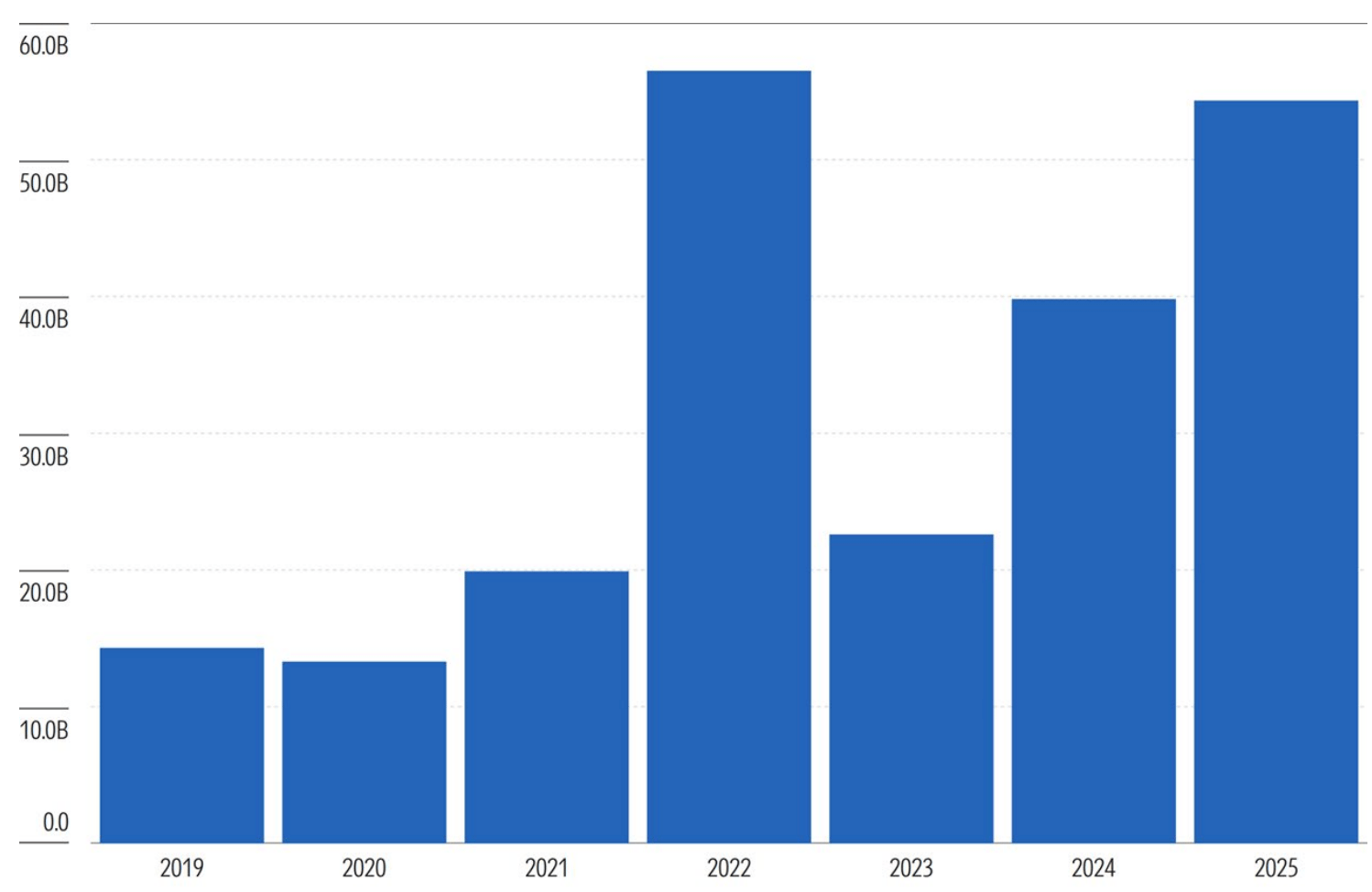
The year 2025 marked one of the strongest years on record for target-date conversions.
Investors prefer lower-cost options
Target-date funds are often classified by the underlying strategies they use, whether that’s active, passive, or a blend of the two. No matter the construction, investors generally prefer lower-cost options, as evidenced by the gap between asset-weighted and straight average expense ratios.
Blended portfolios accounted for about 6% of assets in 2025, modestly up from 5% in 2024. Passive portfolios' shares also increased, to 55% from 53%. Their collective increase chipped away at active target-date funds’ market share, which decreased to 40% in 2025 from 42% in 2024.
Asset allocation glide paths have become more similar
Glide paths have become more alike over the past decade, especially in the early saving years. The median gap in equity exposure between the most aggressive and most conservative target-date series tightened to 34 percentage points in 2025, down from 49 in 2015.
The narrowing has largely been driven by meaningful increases in equity allocations among the most conservative series, which have shifted upward due to structural and market trends. With equity allocations rising, some more conservative offerings may have become less appealing to investors and plan sponsors.
Build Personalized Target-Date Strategies With Morningstar
When asset managers are informed about the industry landscape and popular retirement vehicles like target-date strategies, it can be easier to stay competitive and provide comprehensive options. Some asset managers are also considering target dates combined with annuities as a way to deliver individualized retirement options that can be highly effective.
Deliver more value with Morningstar Personal Target-Date Fund Service. The platform helps asset managers create tailored strategies that consider a participant’s age, income, account balance, and contribution rate.