
4 min read
Concentrated Equity Funds: When Bold Portfolios Are Worth the Risk
A new metric reveals the relationship between concentration and risk across European equity funds.

The winners-take-all effect of concentrated markets has reshaped the profile of global equity markets. At the end of 2025, the Magnificent Seven’s weight in the Morningstar Global Target Market Exposure Index (22%) was higher than the seven largest non-US country exposures combined (21%).
But simple metrics can conceal risky forms of portfolio concentration. Some portfolios with many investment holdings may be overexposed to one sector. Other portfolios with hefty top-10 weights may still offer diversified streams of returns.
Our new composite concentration score offers a more accurate risk picture by blending stock-level, sector-level, and correlation-based inputs derived from Morningstar’s investment database.
Here’s what the score reveals about concentrated strategies. For the full case study based on over 5,800 European domiciled funds and ETFs, download the market concentration report.
How Does Morningstar Measure Market Concentration?
To calculate the composite concentration score, we leveraged Morningstar’s extensive investment database and adopted an extended framework to capture additional dimensions. It builds on the commonly used Herfindahl-Hirschman Index, or HHI. The index is calculated by squaring the market share of each firm competing in the market and then summing the resulting numbers.
The score incorporates six variables:
- Logarithm of the number of investment holdings
- Top 10 holdings weight
- Stock-level HHI
- Industry-level HHI
- Sector-level HHI
- Diversification ratio
The score integrates these six inputs and groups them into three equally weighted buckets: stock-level, sector-level, and return-based concentration. See the report for the methodology behind the concentration score.
What is a highly concentrated fund?
Highly concentrated funds may hold fewer investments, weight the top 20 holdings higher, or have a high HHI at the stock, industry, or sector level. We report each measure as a standard score (z-score) to represent the distance from the average peer.
- A concentration score of 0 signals that the data point is exactly equal to the average.
- A score of 1 means a portfolio is one standard deviation more concentrated than the average peer.
- A negative score points to greater-than-average diversification traits.
US Market Concentration Is Rising—But Context Matters
The S&P 500’s concentration is on the rise, with its top 10 holdings weight and industry concentration surging in recent years. Some European ETFs are deliberately reducing exposure to the Magnificent Seven companies.
However, our research shows the United States is far from the most concentrated market.
The chart below compares the 20 largest Morningstar country indexes. The US market is much less concentrated than most single-country equity benchmarks, and the S&P 500 is also more diversified than most US-focused funds and ETFs available in Europe.
India, Japan, and the United Kingdom stand out as the most diversified, while the Taiwan and Denmark indexes look concentrated at the stock, industry, and sector level.
Concentration Across Morningstar’s Top 20 Country Indexes by Market Value
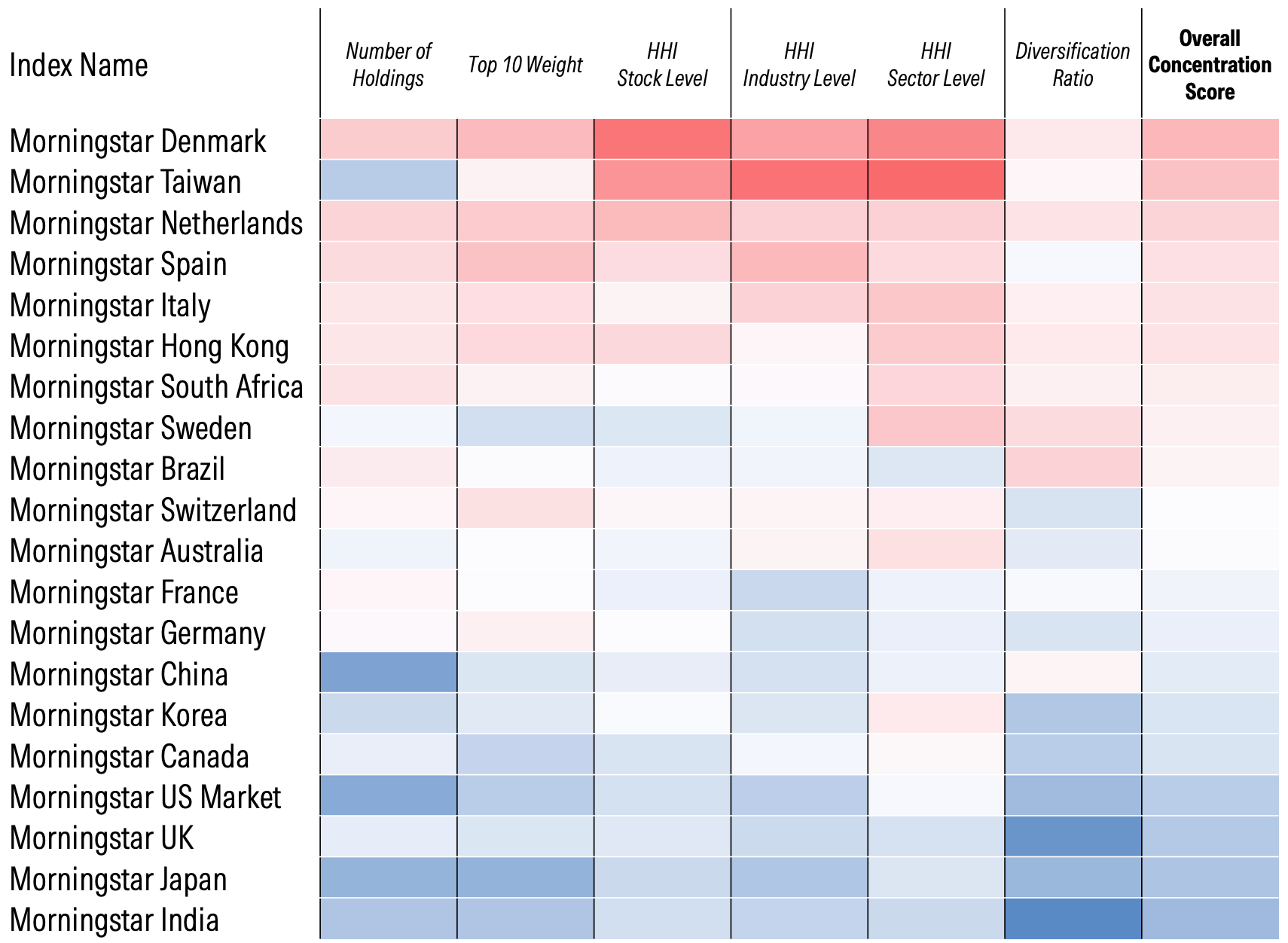
Source: Author’s calculation based on Morningstar data. Data as of Sept. 30, 2025.
Passive Funds Offer Greater Diversification
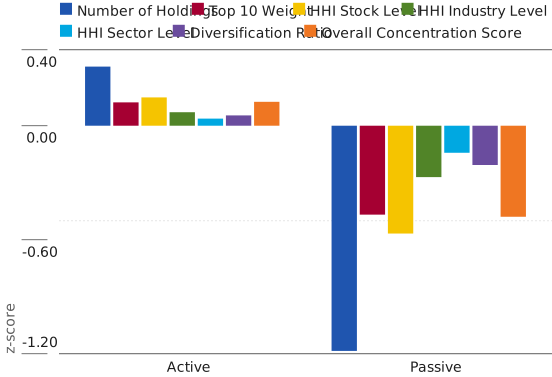
Passive funds typically show lower concentration because they replicate broad market indexes that include many stocks across sectors and industries. In the Morningstar Categories we analyzed, passive funds were less concentrated across all dimensions.
The chart below compares active and passive funds across components of the concentration score. In our study, passive funds tended to:
- Contain fewer portfolio holdings.
- Give less weight to their top 10 holdings.
- Invest in more diverse companies.
Concentration Factors—Active and Passive
Source: Authors’ calculation based on Morningstar data. Data as of Sept. 30, 2025.
Concentration Leads to More Extreme Investment Outcomes
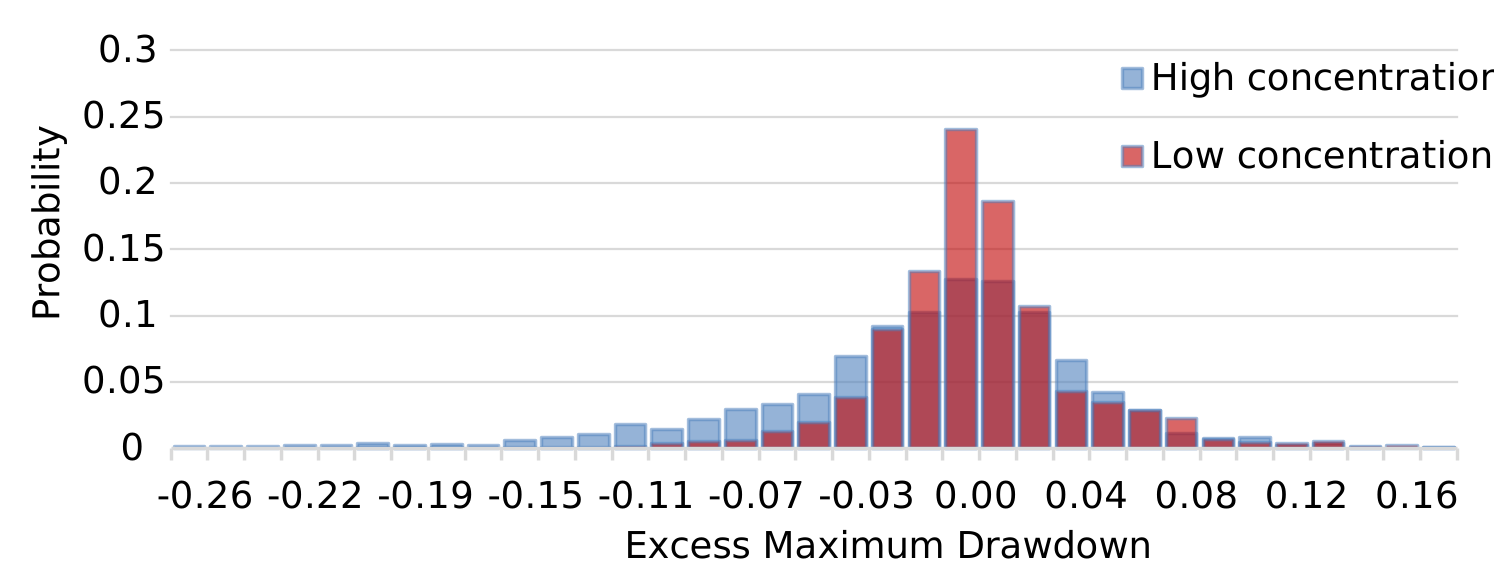
Highly concentrated funds show more variation in returns, deeper drawdowns, and higher volatility than less concentrated ones, with a larger gap between winners and losers.
The chart below compares the range of maximum drawdowns between funds with high and low concentrations. Highly concentrated funds were more likely to have higher maximum drawdowns, indicating a higher likelihood of severe losses.
Concentrated portfolios can still produce strong positive returns when high-conviction managers are skilled, which means that choosing the right fund manager matters.
Deviations From Average Maximum Drawdown by Concentration, All Funds
Source: Authors’ calculation based on Morningstar data. Data as of Sept. 30, 2025.
Concentrated Funds Tend to Charge More, But Don’t Always Outperform
High-conviction strategies to be more expensive across both active and passive funds. This likely means fund managers can charge higher fees for their expertise and active decision-making, which require intensive research and are often marketed as offering greater alpha potential.
However, those higher fees don't always result in higher performance. Historically, concentrated funds have generated slightly lower average returns than diversified peers across most regions. This likely reflects cyclical factors as well.
The most concentrated funds were the most expensive on average in all regions we examined.
Growth Funds Are the Most Concentrated Segment
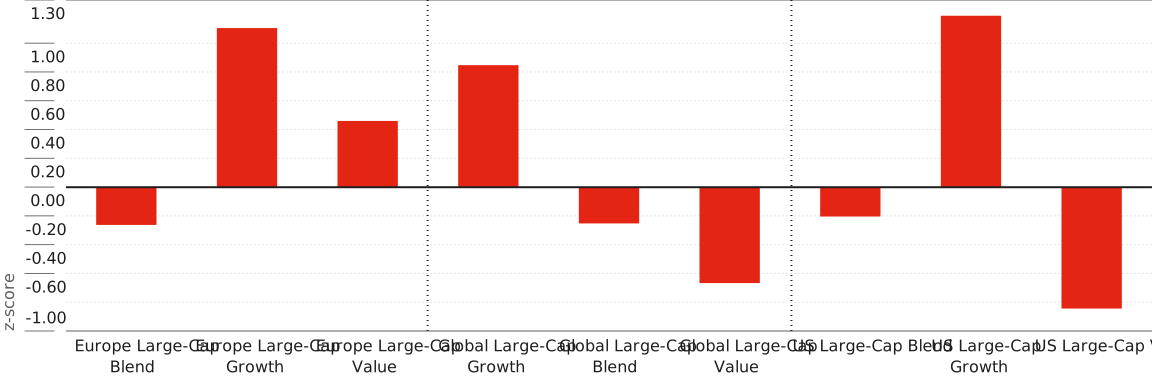
Market leadership is increasingly dominated by a handful of high-growth mega-cap winners. While growth funds tend to weight their top 10 holdings higher, other factors also affect their market concentration.
Growth-oriented funds tend to hold fewer stocks, display heavier sector tilts, and carry lower diversification ratios. This trend has intensified over the past decade.
Concentration Scores by Morningstar Category (Average z-Scores)
Source: Authors’ calculation based on Morningstar Data. Data as of Sept. 30, 2025.
How Concentrated Are Our Highest-Rated Active Funds?
While concentration isn’t good or bad, diversification matters. More-diversified funds can be easier to own and carry lower risks of missing out on the few stocks that sometimes drive an outsize proportion of market gains.
The table below compares European active funds based on their concentration scores and pillars of the Morningstar Medalist Rating, a forward-looking assessment of a fund’s likelihood of outperformance.
Our Highest-Rated Active Funds and Their Overall Concentration Score
Source: Authors’ calculation based on Morningstar Data. Data as of September 30, 2025, for concentration score, and January 2026 elsewhere.
How to Use the Concentration Score
In Morningstar Direct, portfolio managers and asset allocators can use the score to:
- Get a fuller view of concentration beyond any single metric.
- Jointly account for the number of holdings, position weights, sector exposure, and return-based diversification.
- Compare concentration levels against fees and performance when evaluating investment opportunities.
- Monitor and detect changes in a managers' style and positioning.